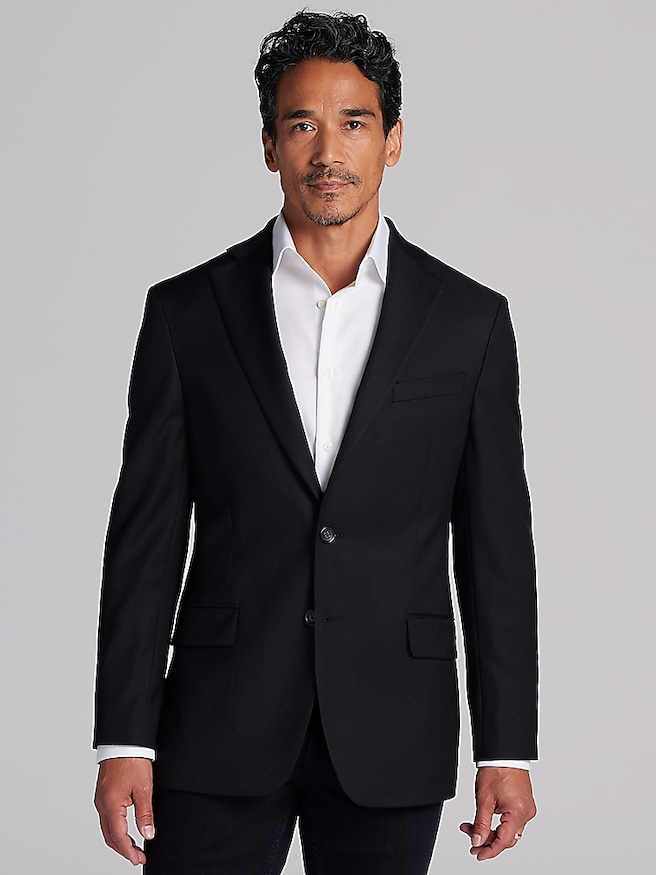
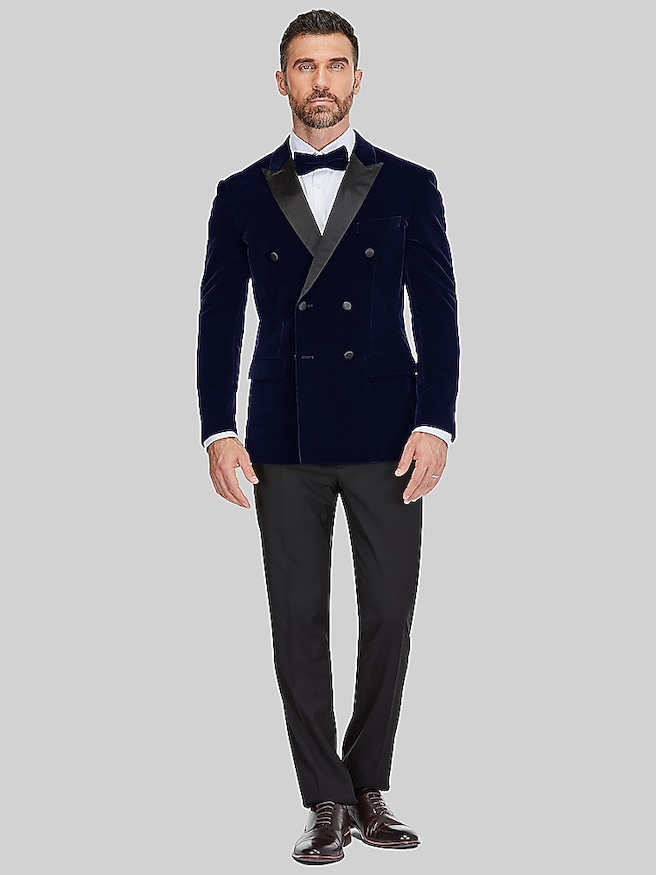
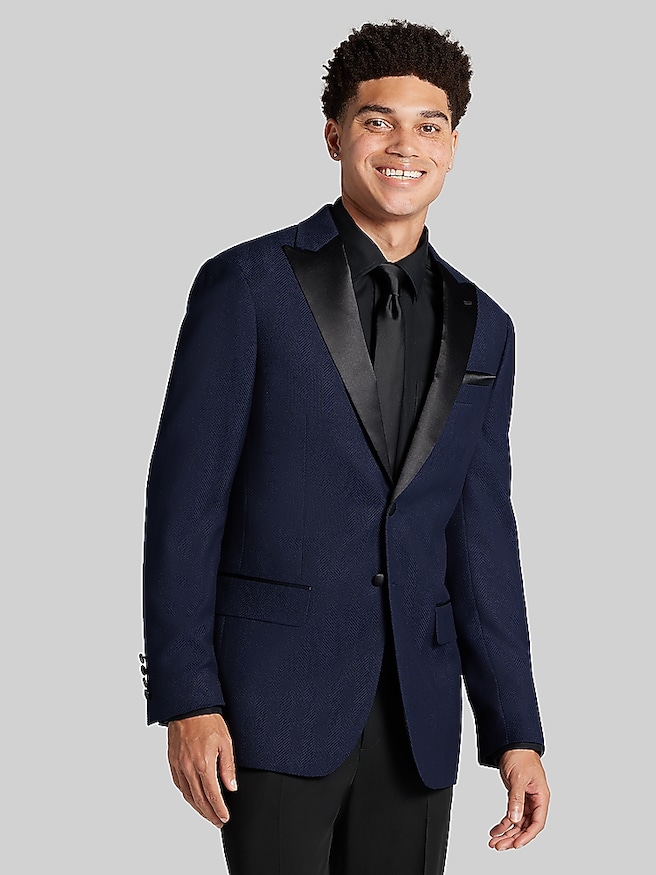
Men’s velvet cocktail dinner jackets combine the structure of tailored eveningwear with a soft, dimensional surface that gives an outfit distinctive character. They suit cocktail receptions, wedding celebrations, anniversary dinners, and black-tie-optional events when the invitation allows a departure from a conventional matching suit. Velvet catches light differently across its surface, creating subtle shifts in color as the wearer moves from a seated dinner to conversation across the room. That visual depth gives even a simple black jacket presence without requiring a bold pattern or elaborate accessories. Midnight blue offers a similarly understated effect, while burgundy, deep green, and other saturated shades make the jacket a more prominent part of the outfit. Velvet is defined by its short, raised pile rather than by a single fiber; cotton, silk, synthetic fibers, and blends can each contribute different qualities to its feel, drape, and sheen. Cotton velvet often has a relatively matte, substantial character, while silk-containing constructions can have a more fluid hand and luminous appearance. Synthetic fibers and blends may contribute resilience or a smoother finish, although performance depends on the fabric’s construction and care requirements. Fabric weight, lining, and internal tailoring also influence whether a jacket feels softly structured or holds a more defined silhouette. These details matter as much as color when choosing a piece for repeated occasions. A smooth shawl collar creates a continuous line around the neckline, while peaked lapels bring sharper angles and a more pronounced eveningwear identity. Satin or grosgrain trim can add contrast against the pile, whereas self-fabric lapels keep the texture more consistent throughout. The appeal of Dressy Velvet Jackets lies in that balance of familiar tailoring and distinctive texture: an expressive piece that can remain restrained enough for a formal dinner or become the focal point of a celebratory outfit.
Fit gives a velvet dinner jacket its polish, particularly because the fabric’s surface makes folds, pulling, and changes in direction easy to notice. Shoulders should follow the wearer’s natural shoulder line without extending into an exaggerated shelf, and the collar should sit close to the shirt rather than lifting away at the back of the neck. A clean fit through the chest leaves room for comfortable movement without creating tight horizontal lines when the jacket is fastened. The waist can suggest shape without gripping the torso, and the jacket’s length should balance the wearer’s proportions rather than simply follow a trend. Sleeve length generally allows a narrow edge of shirt cuff to show, giving the wrist a crisp finish against the softer texture. Slim, tailored, and roomier silhouettes can all look considered when the shoulders, chest, and overall length work together. Comfort also matters during the actual occasion: sitting through dinner, reaching for a glass, and greeting other guests should not cause persistent pulling across the back or upper arms. For a black-tie-optional reception, a velvet dinner jacket paired with appropriate formal trousers, a white dress shirt, a black bow tie, and polished dress shoes can create a cohesive evening look. A traditional black-tie invitation deserves closer attention, since expectations vary and a conventional tuxedo may be the more appropriate choice. At a cocktail dinner with a less formal dress code, dark tailored trousers and an open-collar shirt can give velvet a quieter expression. The trousers need not match the jacket’s surface; a smooth, understated fabric often provides useful contrast. Black trousers are especially adaptable with richly colored velvet, while a shirt with a neat collar helps frame the face without competing for attention. Accessories work best when they have a clear purpose. A simple pocket square, discreet cuff links, or a refined watch can finish the outfit, while several competing textures or conspicuous patterns may distract from the jacket itself. Footwear should reflect the event’s formality, with well-maintained leather dress shoes offering a dependable foundation for many dinner and reception settings.
Velvet’s long-term appearance depends on preserving the pile as well as the jacket’s tailored shape. Its plush surface can develop flattened areas from repeated pressure or friction, especially at the elbows, seat contact points, and places where a shoulder strap rests. Careful handling helps limit unnecessary wear without turning the jacket into something reserved for only the rarest invitation. A broad, supportive hanger helps maintain the shoulders between occasions, and enough closet space prevents adjacent garments from pressing firmly against the fabric. A breathable garment bag can protect the surface from dust during storage, provided the jacket is clean and fully dry before it is put away. Cleaning and pressing should follow the garment’s care label, since fiber content, dyes, trims, and internal construction can require different treatment. Direct ironing can flatten velvet’s pile, so professional attention is often the better choice when a tailored jacket needs pressing or stain treatment. Any brushing or surface care should also be appropriate for the particular fabric rather than assumed safe for every velvet finish. For travel, room in a garment bag helps reduce compression; hanging the jacket promptly upon arrival gives it a chance to settle before dressing. These practical details are especially relevant for someone who attends destination weddings, benefit dinners, or formal business celebrations and wants a distinctive jacket that remains presentable across repeated wears. Velvet can also make a thoughtful gift for a partner, parent, graduate, or close friend who enjoys dressing for memorable occasions. Familiarity with the recipient’s jacket measurements, preferred fit, and usual dress codes makes the choice more personal than color alone. A restrained shade may suit someone building an evening wardrobe, while a deeper jewel tone can appeal to someone already comfortable with expressive tailoring. The strongest choice is one that fits naturally into the wearer’s life: comfortable enough for a long dinner, distinctive enough for a milestone photograph, and versatile enough to feel welcome at more than one kind of celebration.