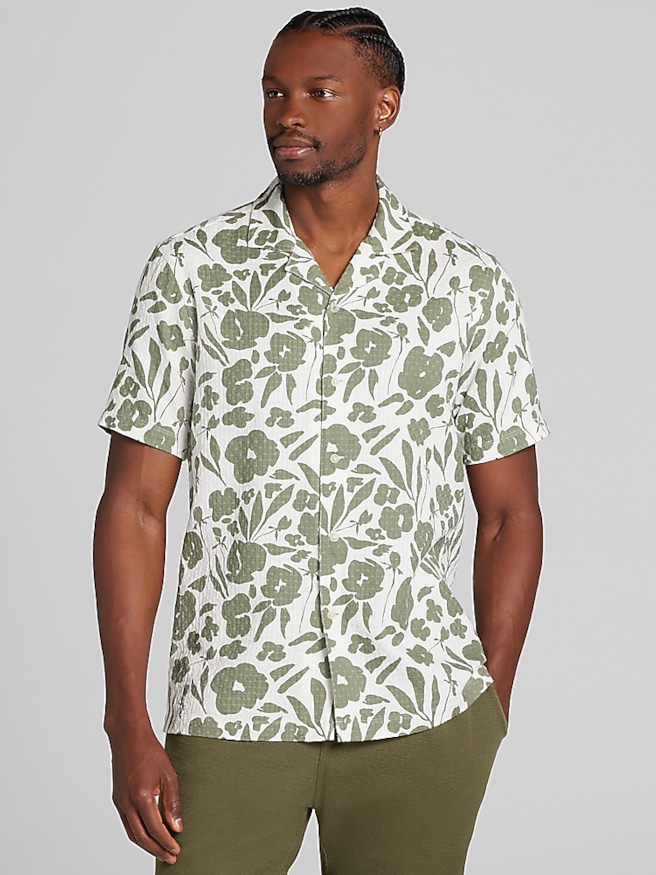
Men’s vacation fashion works best when breathable fabrics, versatile layers, and relaxed tailoring carry an outfit from daytime plans to dinner. The balance depends less on the destination than on what a day there looks like. A morning by the beach, lunch on a shaded patio, and dinner at a restaurant with a dress code call for clothes that feel easy in the first two settings without looking out of place in the last. A relaxed cut gives fabric room to move, while clean lines at the shoulders and hems lend an outfit enough polish for a dinner reservation. On a city trip, a similar combination holds up through long stretches of walking, a museum visit, and a meal without a stop back at the hotel. Soft neutrals make it easier to wear the same layer over several combinations, while a textured weave or a muted pattern can change the look without taking up much room in a carry-on. Color matters most where layers overlap: two shades can be close without matching exactly, especially if there’s enough contrast in texture to make the pairing look intentional. Texture can also set the tone on its own. A matte finish tends to look at home in casual settings, while a smoother surface can give an otherwise simple outfit a dressier feel. Men’s Vacation Casual Fits focuses on the laid-back side of travel dressing, where pieces can be worn on their own or layered for a little more polish. The easier those combinations are to put together, the less likely it is that part of a packed wardrobe will spend the whole trip folded in the suitcase.
Fabric affects how vacation clothing feels after several hours of wear and how it looks the next time it comes out of the bag. Linen is valued for its airy feel and visible texture, and its natural creases often look right at home in a casual outfit. A linen blend can offer a smoother look, depending on the fibers and weave. Cotton can feel soft against the skin, but the fiber name alone says little about airflow: an open weave lets more air pass through than a dense one, and a substantial knit can feel quite unlike a lightweight woven fabric. Some synthetic blends dry quickly after a wash, which can be useful on a trip with limited access to laundry. Draping a fabric over the hand offers a clue to how it will sit on the body: a fluid fabric falls close and moves easily, while one with more body holds its shape and creates a cleaner outline. Neither quality is better across the board. An easy drape can be comfortable for a long travel day, while a fabric that holds its shape may look neater after hours of sitting. Care matters just as much when the same clothes are likely to be worn more than once. The care label tells whether a fabric can handle a regular wash or needs gentler treatment. Hanging clothing after unpacking can help creases relax, although tightly pressed folds may still need attention. For repeat wear, look beyond softness to the areas that take the most strain. Even seams, secure stitching at pocket openings, and fabric that returns to shape after a gentle stretch are useful signs that clothing can handle regular movement and packing.
A relaxed fit should feel comfortable in motion without looking oversized at rest. Through the shoulders, there should be room to reach for an overhead bin or carry a bag without the fabric pulling across the back. Through the seat and waist, the fit should feel as natural when sitting through a long meal as it does when standing in front of a mirror. Hems that fall cleanly and sleeves that don’t bunch help a relaxed outfit look deliberate. When layering, the outer fit needs enough room to go over what’s underneath without dragging at the shoulders or twisting at the seams. Stretch can add comfort, but it won’t make up for a cut that binds or a waist that needs constant adjustment. What counts as a useful fit also changes with the trip. Someone spending most of the day on foot may value ease of movement and simple care, while someone traveling for a destination celebration may want a cleaner shape that still feels comfortable through dinner and a long evening. For a gift, familiar measurements and a sense of what the recipient already likes to wear are more useful than guessing what looks right for a particular destination. A traveler who favors understated clothes is more likely to get repeat wear from a familiar color or subtle texture, while someone who already wears bolder patterns may welcome a more noticeable one. The most useful vacation clothes tend to earn a place in the everyday rotation after the trip: the fit still feels right at a weekend lunch back home, the fabric is straightforward to care for, and the pieces work with clothes already in the closet.