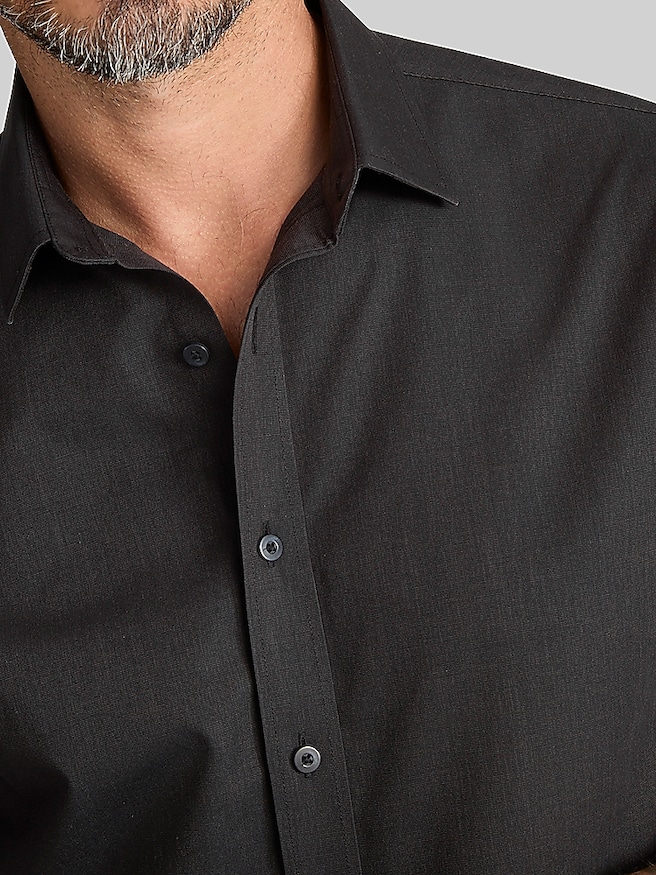
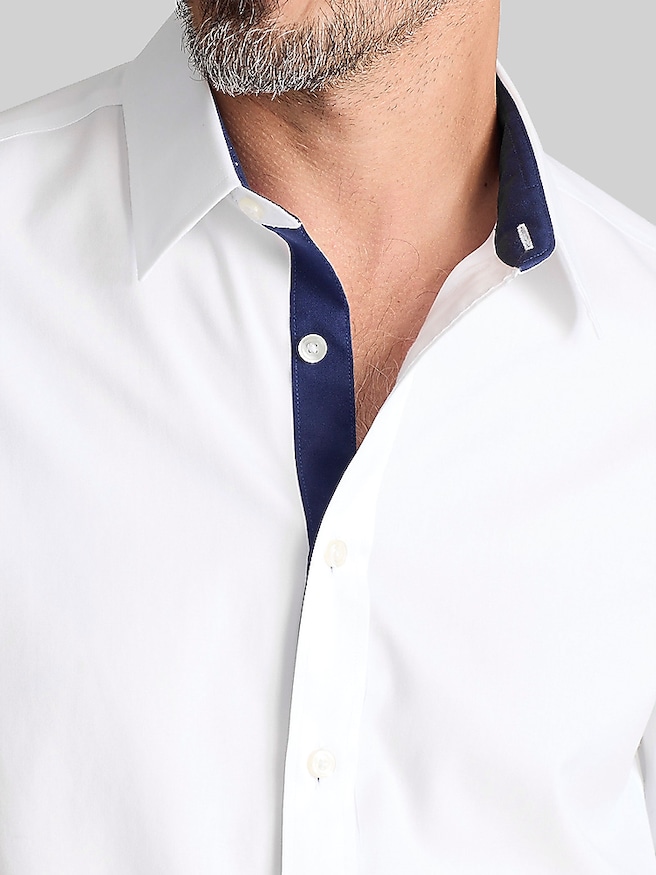
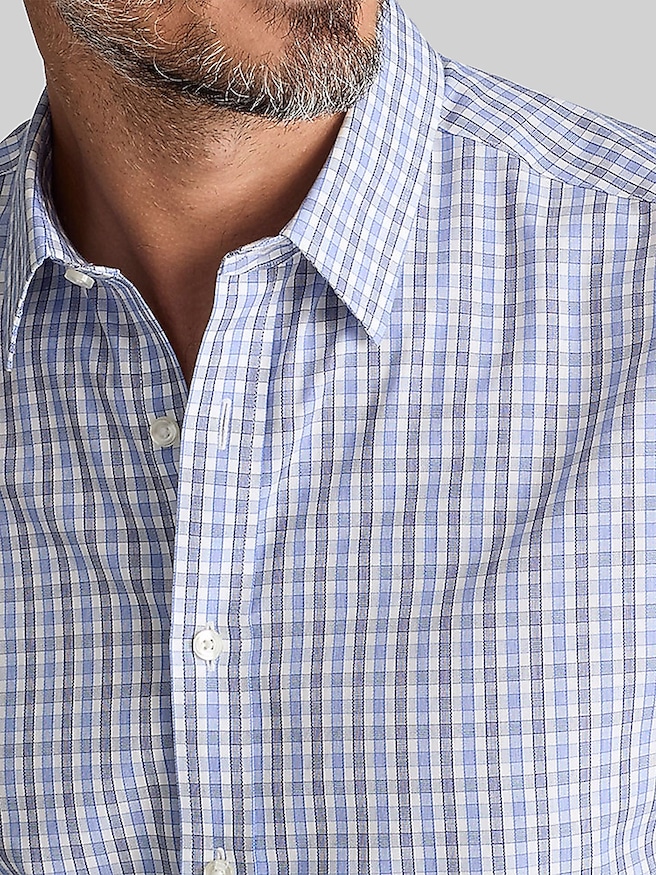
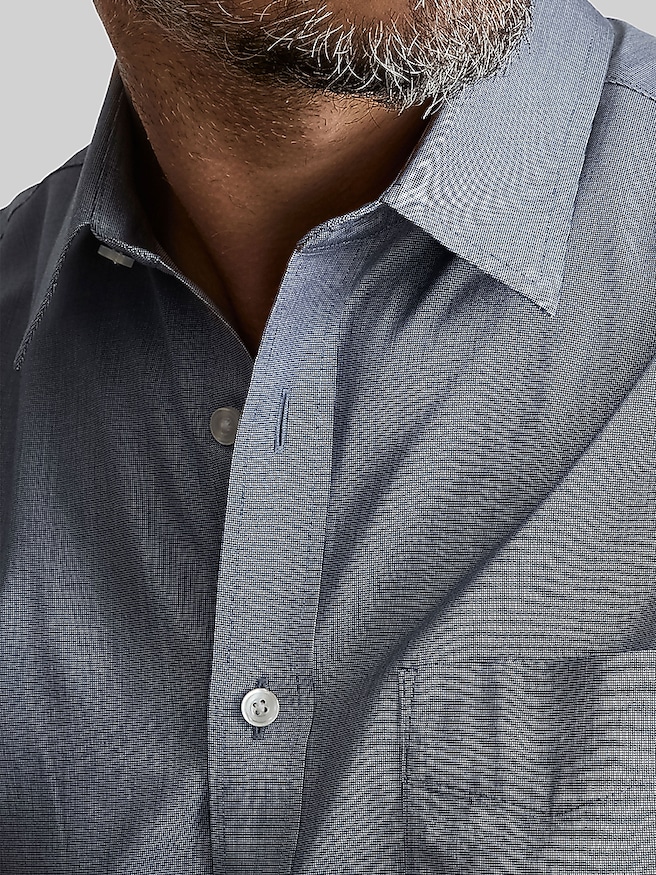
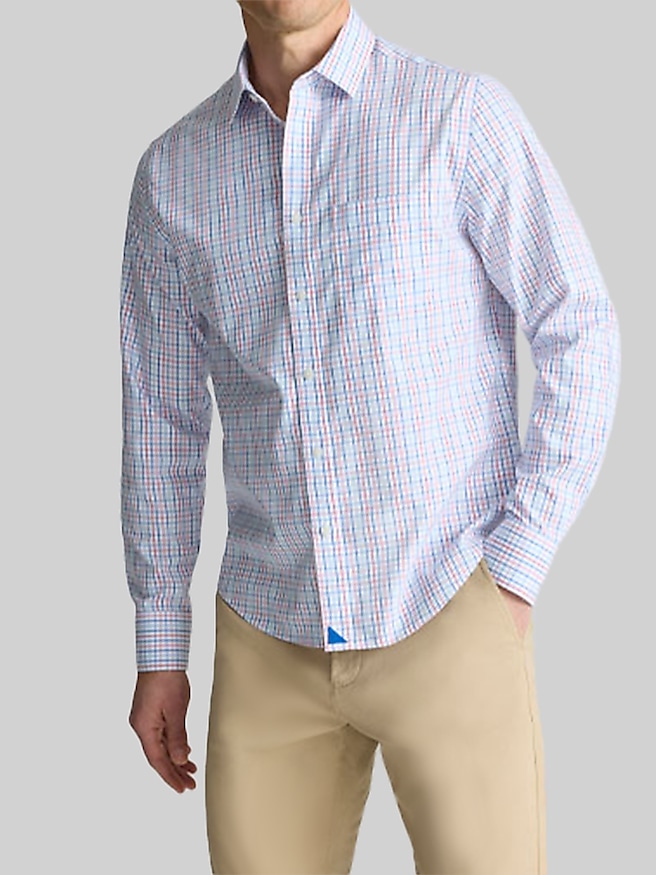
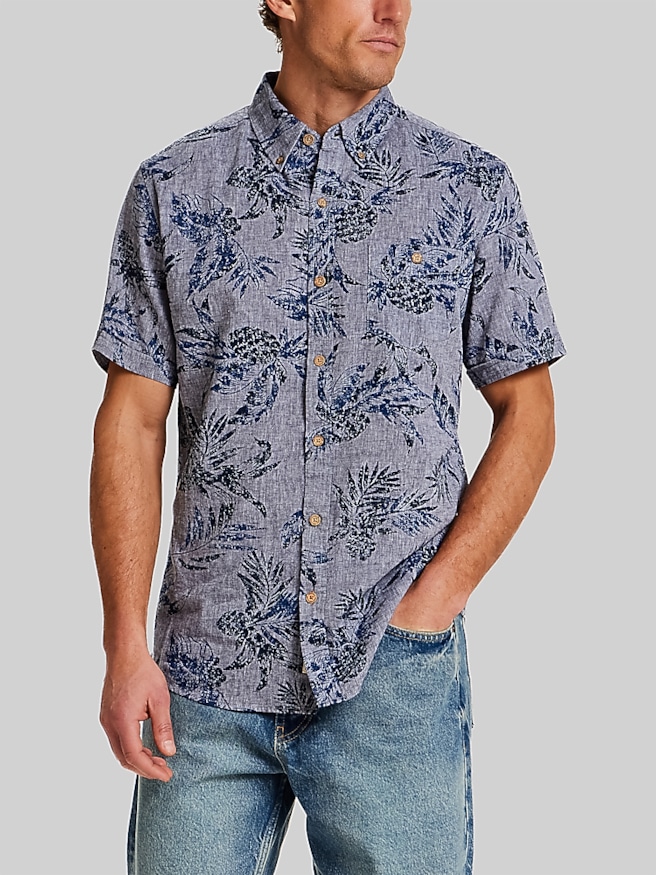
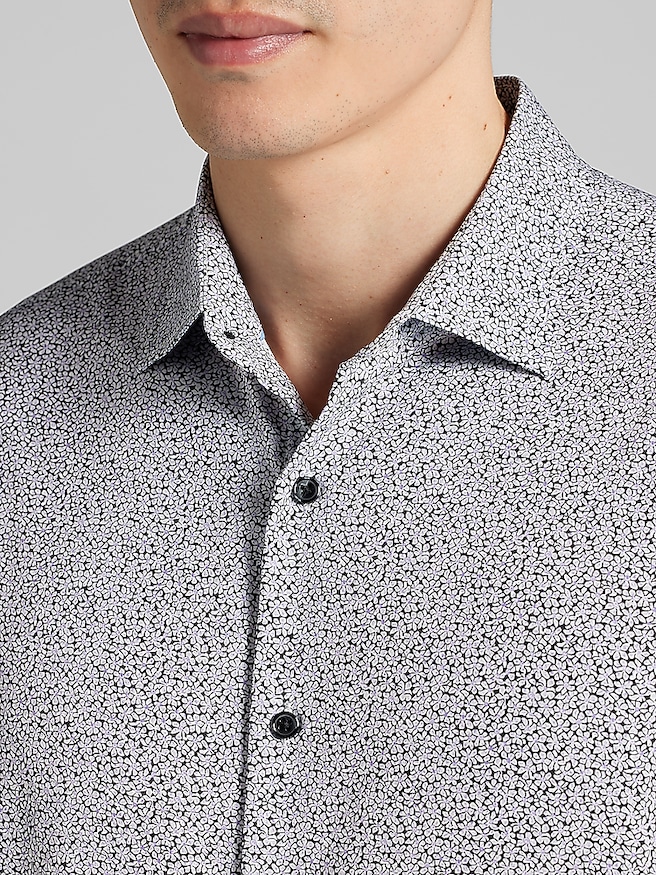
Men’s untucked summer shirts bring the structure of a button-front shirt to a relaxed look, with shorter hems that sit neatly over shorts, chinos, or lightweight trousers. The defining feature is proportion: a shirt designed to stay untucked generally finishes around the middle of the fly, although the best length depends on torso length, rise, and personal preference. It should cover the waistband without extending so far down that it hides most of the front pockets or makes the legs appear shorter. A straight hem creates a clean, easygoing outline, while a gently curved hem offers a little more coverage without the long tails associated with traditional dress shirts. That balance works especially well for a patio lunch, a coastal vacation, or a casual office where a collared shirt is appropriate but a tucked-in outfit feels unnecessary. Fit matters as much as length. Shoulder seams should sit near the shoulder edge, the button placket should lie flat, and the body should allow enough room to sit and reach comfortably without billowing at the waist. Slim cuts follow the torso more closely; classic or relaxed cuts offer additional room through the chest and midsection. Neither needs to look tight or oversized to look intentional. On short-sleeve styles, sleeves that finish around mid-biceps with a little space around the arm usually give a balanced appearance. Long sleeves offer another option, particularly for an indoor dinner after time outside, and can be rolled neatly below the elbow for a less structured finish. Among Men's Summer Shirts, untucked silhouettes are particularly useful for outfits that need to feel comfortable while still looking considered. A collar that sits smoothly, a hem that clears the seat rather than covering it completely, and enough ease through the back make a bigger difference than simply choosing a smaller size in a longer shirt.
Fabric determines much of how an untucked summer shirt feels, drapes, and holds up through repeated wear. Lightweight cotton is a familiar choice for softness and moisture absorption, but its comfort also depends on the weave and fabric weight. A fine cotton poplin can look smooth and crisp, while an airy woven texture may feel less close against the skin. Linen has a distinctive dry hand and an open, textured appearance that suits relaxed summer clothing. Its natural creases are part of that character rather than evidence of poor care, making it especially appealing for a beachside meal or an afternoon spent walking between outdoor stops. Cotton-linen blends can soften that texture and provide a balance of structure and ease, though the exact feel varies with the fiber proportions and construction. Seersucker uses a puckered surface that keeps portions of the cloth lifted away from the skin, giving even a simple stripe visible depth. Performance fabrics offer another approach, sometimes combining synthetic fibers with stretch for easier movement. Moisture-wicking, quick-drying, and wrinkle-resistant qualities depend on the material and any applied finishes; those benefits should be confirmed on the garment label rather than assumed from the word “performance.” Wrinkle resistance also does not mean a shirt will remain completely crease-free after hours in a suitcase or a car seat. Fabric opacity deserves attention, too, especially with pale colors and very light weaves. A low-contrast undershirt can add coverage, but another layer may change how the shirt feels in the heat. For durability, useful details include even stitching, firmly attached buttons, tidy buttonholes, and smooth seams without puckering. Lightweight cloth does not automatically mean short-lived construction, although delicate, loosely woven fabrics may need more protection from rough surfaces and bag straps. The strongest everyday choice is often the fabric that suits both the planned activity and a realistic care routine, whether that means easy laundering for frequent use or a little pressing to maintain a crisper finish.
Color, pattern, and styling give men’s untucked summer shirts a wide range of uses without requiring complicated combinations. A solid pale blue shirt with stone-colored chinos creates a quiet, polished outfit for a casual lunch, while a textured neutral shirt with olive shorts feels at home on a vacation afternoon. Fine stripes and small checks add detail without dominating the outfit; larger botanical or geometric prints make more of a statement and tend to pair easily with solid bottoms. When shorts are part of the look, a well-proportioned shirt hem leaves enough of them visible to avoid a top-heavy silhouette. With trousers, a straight or gently tapered leg usually provides a clean counterpoint to the shirt’s relaxed shape. Low-profile sneakers, loafers, or simple sandals can each work when the setting allows, with the footwear setting much of the outfit’s level of formality. An untucked shirt is not a substitute for a dress shirt when an invitation calls for formal attire, but it can suit informal celebrations and gatherings where a collar adds just enough polish. It can also be a thoughtful gift for someone who prefers uncomplicated outfits, particularly when the choice reflects a familiar fit, favorite colors, and preferred sleeve length. Care helps preserve those details beyond the first few wears. Follow the sewn-in instructions for washing, drying, and ironing, since natural fibers, blends, and finishes may require different treatment. When machine washing is permitted, similar colors, a suitable gentle cycle, and avoiding an overcrowded load can help limit abrasion and deep creasing. Remove the shirt promptly after drying, smooth the placket and hem, and hang it with the collar resting naturally. Use steam or an iron only at a temperature appropriate for the fabric. For travel, folding along existing seams and unpacking soon after arrival can reduce stubborn fold lines. These small habits help an untucked summer shirt retain its shape, comfortable feel, and deliberately relaxed appearance through repeat wear.