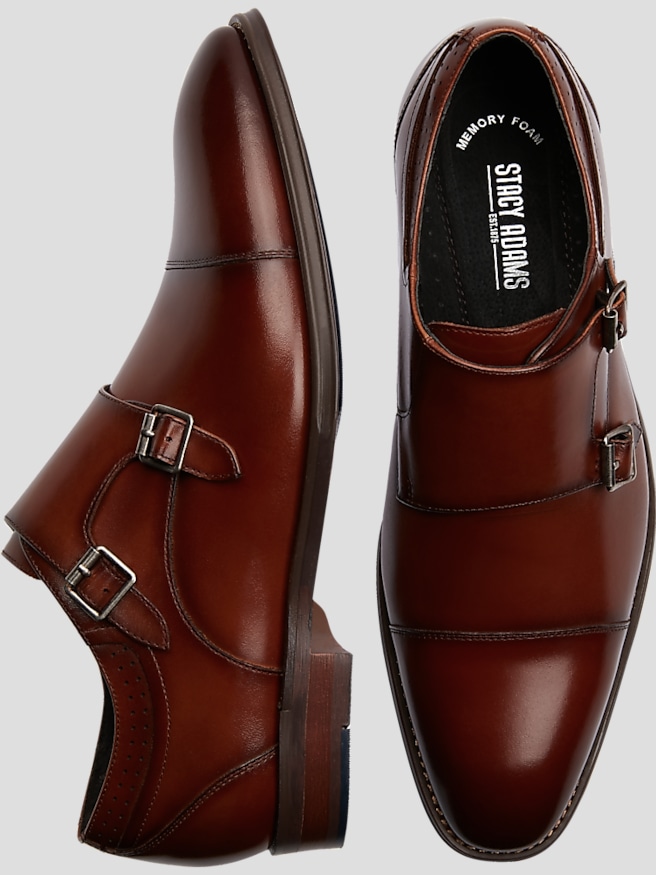
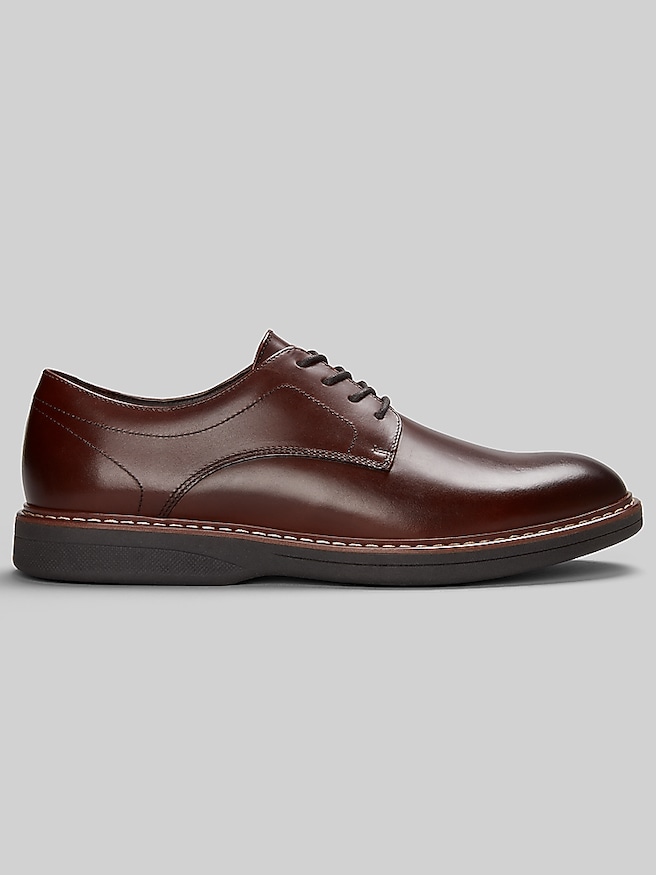
Men’s two-tone dress shoes combine two distinct colors, shades, or materials in a single design, creating contrast across the toe, vamp, quarters, or heel. The effect can be bold, as with black and white, or understated, as with cognac and dark brown. Spectator shoes are a familiar expression of this style, traditionally pairing contrasting panels with an Oxford or another lace-up silhouette, often accented with wingtip detailing and decorative perforations known as broguing. Not every two-tone shoe is a spectator, however, and not every brogue uses two colors. A wingtip describes the sweeping, W-shaped toe detail, while an Oxford describes closed lacing, where the eyelet sections sit beneath the vamp. A Derby has open lacing, with those sections attached on top. These distinctions explain why two pairs with similar colors can have very different personalities: one may look sleek and restrained, while another feels more substantial and decorative. Smooth black leather against a white panel creates a crisp, graphic outline; two shades of brown produce a softer contrast that can blend naturally with navy, gray, olive, or tan clothing. Differences in texture can be just as expressive as differences in color. A suede panel beside polished leather adds depth without requiring a dramatic color change. Men’s two-tone dress shoes work particularly well when the rest of an outfit gives that contrast room to stand out. A navy suit with a pale shirt creates a quiet backdrop for brown-and-cream footwear, while charcoal trousers and a solid sport coat can support a sharper black-and-white combination. The appeal of Stacy Adams Two Tone Shoes fits this broader approach to dressing: footwear becomes a deliberate part of the outfit rather than an afterthought. For wedding guests, dinner hosts, performers, or anyone who enjoys distinctive tailoring, the right contrast adds character without requiring a head-to-toe vintage look.
Materials, construction, and fit matter as much as the color arrangement, especially when dress shoes need to carry someone from an afternoon ceremony through an evening reception. Leather uppers can develop creases and a patina with wear, while their finish influences both appearance and upkeep. Smooth leather generally responds well to appropriate conditioning and polishing; suede needs a gentler brushing routine that preserves its nap. Pebbled leather introduces visible grain that can soften the appearance of minor surface marks, although no finish makes a shoe immune to scuffs. Patent leather has a glossy surface and requires care suited to that finish rather than the same treatment used on ordinary smooth leather. On mixed-material shoes, each panel may need its own approach. Inside, smooth linings and neatly finished seams help reduce friction, while cushioning can make prolonged standing more comfortable. A leather outsole offers a traditional appearance, but traction depends on its surface and the floor beneath it. Rubber outsoles or rubber inserts can provide additional grip, though performance varies by design. Construction also affects long-term maintenance: some stitched designs may allow resoling, while other constructions are less practical to repair. Fit should be assessed independently of those details. Toes need room to rest naturally without pressing against the front or being squeezed at the sides, and the widest part of the foot should align comfortably with the widest part of the shoe. The heel should feel secure without painful pressure or excessive movement. A longer, pointed-looking toe does not necessarily mean that the usable interior is longer, so choosing by appearance alone can be misleading. Trying shoes with the dress socks intended for regular wear gives a more useful sense of fit. Laces can adjust the hold across the instep, but they cannot correct a shoe that is fundamentally too narrow, too short, or poorly matched to the foot. Mild leather stiffness may ease with use; pinching, numbness, and concentrated pressure are not signs to ignore.
Keeping two-tone dress shoes sharp requires particular attention to the boundary between colors. Dark polish transferred onto a pale panel can leave an obvious stain, so separate applicators and soft cloths are useful for each shade. Brush away loose dirt before applying any treatment, and test cleaners or conditioners on an inconspicuous area first. Neutral polish may suit some smooth leather finishes, but it is not a universal solution for every material or coating. Suede panels should be treated with tools and products intended for suede, with care taken to keep neighboring leather treatments off their surface. After wear, let shoes air out before storing them, and use correctly sized shoe trees to help maintain their shape. Cedar trees can also help absorb interior moisture. Avoid direct heat, which can dry leather unevenly or damage adhesives, and check heels and soles periodically for wear that affects balance or traction. A worn heel edge deserves attention before it changes the way the shoe sits underfoot. These habits help preserve the clean contrast that makes the design distinctive. Outfit choices can be equally practical. Match a belt to one of the shoe’s main colors rather than trying to reproduce the entire pattern, and let socks connect the footwear to the trousers. Navy socks with navy trousers create continuity above brown-and-white shoes; a restrained patterned sock can echo one accent color without competing with broguing. Trouser hems that meet the shoe neatly keep decorative panels visible without excessive fabric bunching around the ankle. For conservative offices, tonal combinations generally draw less attention than stark black and white. For celebrations with a flexible dress code, stronger contrast can be part of the occasion’s personality. Strict formal dress codes call for their own footwear conventions, so two-tone styling should not automatically replace traditional formal shoes. As a gift for a father, partner, friend, or graduate who enjoys dressing well, this category feels most personal when the recipient’s usual colors, preferred width, and everyday occasions shape the choice.