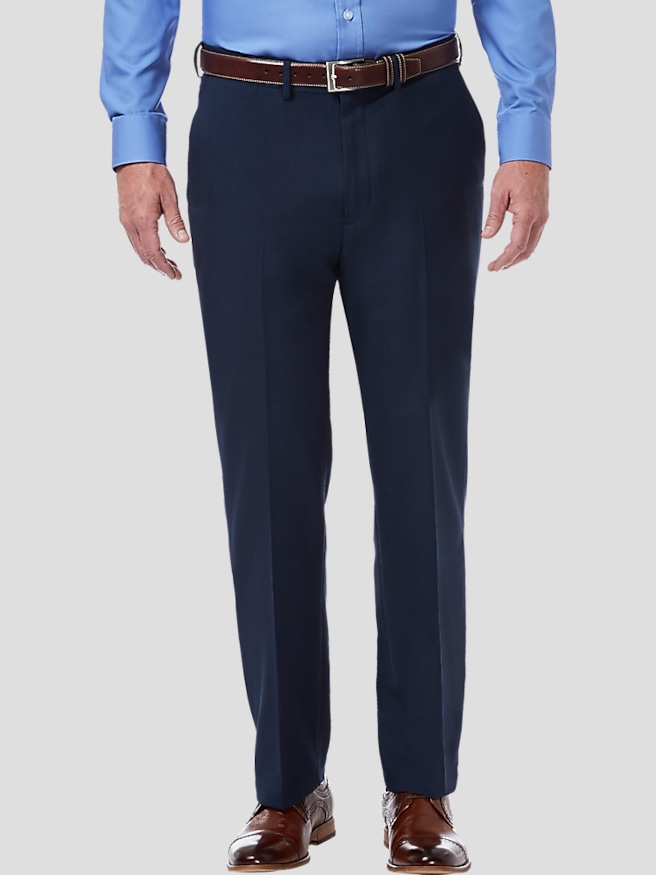
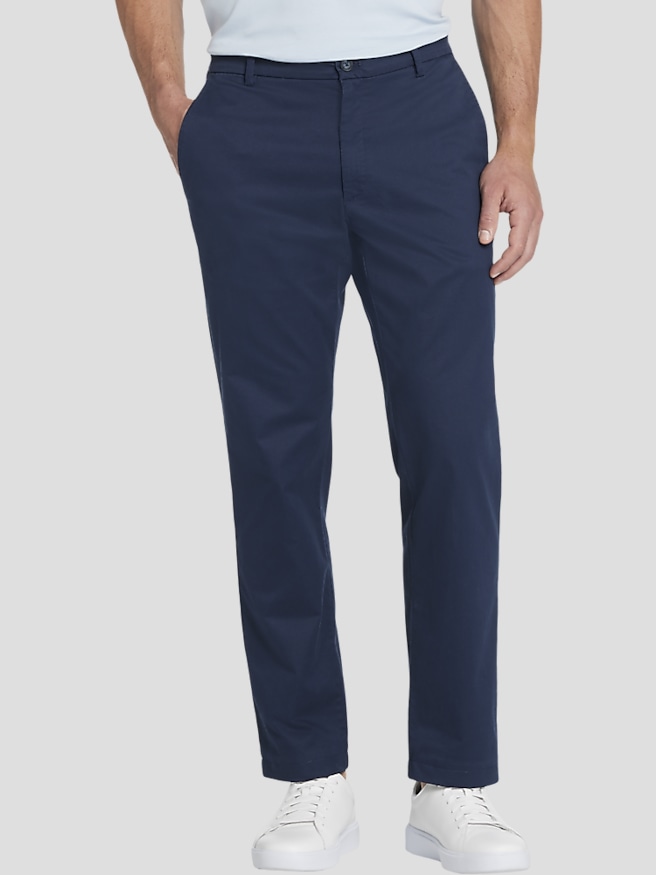
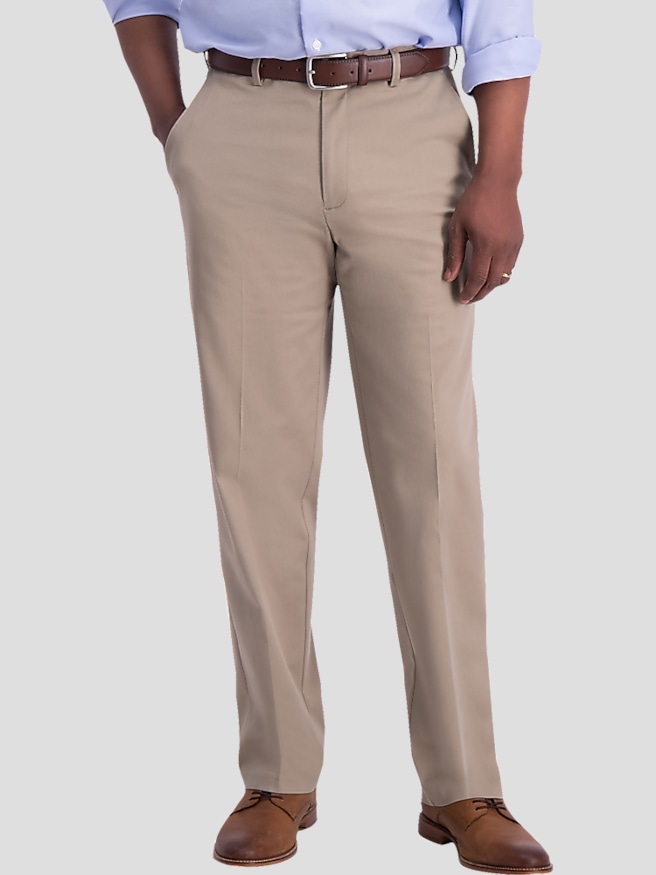
Men’s twill pants bring a useful balance of structure and ease to everyday dressing, with enough polish for a business-casual office and enough versatility for a relaxed weekend. Their defining feature is the weave: twill has a diagonal pattern that can appear subtle and smooth or more pronounced, depending on the yarn and construction. That texture gives the fabric visual depth without requiring a bold pattern, so it pairs comfortably with everything from a crisp button-down to a softly textured sweater. Twill describes how the fabric is woven, not what it is made from. Cotton twill often has a familiar, breathable feel, while blends may add stretch, help the fabric hold its shape, or influence how quickly it dries after washing. Wool twill can have a more tailored drape, making the overall effect dressier even when the silhouette remains straightforward. Fabric weight matters as much as fiber content. A lighter cloth can feel comfortable in a heated office, while a more substantial twill lends itself to cool commutes, outdoor errands, and evenings when a jacket becomes part of the outfit. Heavier fabric may also hang with a firmer line through the leg, whereas a softer, washed finish tends to look more relaxed. Neither finish determines quality on its own; each serves a particular purpose. Neutral shades such as navy, charcoal, khaki, and olive make twill pants easy to repeat throughout the week without making every outfit feel identical. Navy works naturally with pale blue shirts and brown leather shoes, while olive offers a grounded contrast to cream knitwear or a gray overshirt. For someone building a dependable wardrobe, that flexibility is part of the appeal. The same category of pants can suit a morning meeting, lunch with friends, or a family gathering, with the shirt, shoes, and outer layer setting the tone rather than the pants demanding attention.
Fit shapes both the appearance and the everyday comfort of twill pants. A waistband that sits securely without pinching provides a better starting point than relying on a tightly fastened belt, and the rise should feel comfortable when sitting as well as standing. Through the seat and thighs, enough room for natural movement helps the fabric fall cleanly instead of pulling across the pockets or forming persistent horizontal lines. Slim fits generally follow the leg more closely, straight fits maintain a more consistent line, and tapered cuts narrow toward the ankle while potentially leaving more space above the knee. Those labels can vary by maker, so measurements and the actual cut are more useful than a fit name alone. Someone who spends much of the day at a desk may value ease through the waist and thighs, while someone who walks between appointments may notice flexibility at the knees. For a closer silhouette with added give, men’s stretch twill pants bring another fabric consideration into the mix. Stretch fibers can help accommodate bending and sitting, though they do not replace the need for a well-proportioned fit. Length also changes the impression: a slight break over the shoe feels traditional, while a hem that meets the top of the shoe with minimal folding can look especially clean. Excess fabric collecting at the ankle may make even a neatly tailored upper half seem less finished. Footwear helps establish the right balance. Loafers or lace-up leather shoes complement a tucked-in shirt and a blazer; understated sneakers suit an untucked casual shirt or a crewneck sweater. During the cooler months, boots pair well with twill that has enough weight to hold its line over the shaft. Texture can make these combinations feel considered without becoming fussy. A fine-gauge knit keeps the outfit smooth and restrained, while a brushed shirt or ribbed sweater introduces contrast. The result can be polished without looking overly formal, especially for workplaces and social occasions where a full suit would feel unnecessary.
Long-term satisfaction with twill pants depends on construction, fabric choice, and care as much as the initial fit. Twill’s close weave can support durability, but fabric weight, yarn quality, and finishing all affect how a pair responds to repeated wear. Secure stitching at pocket openings, a smoothly operating closure, and well-finished seams are useful details to consider because those areas experience regular movement and friction. Cotton-rich fabric may soften over time, developing a more relaxed feel, while some blends are designed to retain a crisper appearance. Deep colors and washed finishes can age in distinct ways, so care should always follow the garment label rather than a single rule for all twill. For machine-washable pants, turning them inside out and washing with similar colors can help limit surface abrasion and color transfer. Excessive dryer heat may contribute to shrinkage or affect stretch fibers; the recommended drying method is especially important when a precise fit matters. Removing pants promptly after drying and smoothing the seams can reduce unnecessary creasing. If ironing is permitted, the appropriate temperature depends on the fiber blend, and a pressing cloth can help protect the surface from shine. A sharp center crease may suit a tailored pair, while a flat front without a pressed crease often fits a more casual design. Hanging pants neatly between wears helps preserve their shape, and giving them room in the closet keeps folds from becoming deeply set. These practical qualities also make twill pants a thoughtful gift for someone starting an office job, refreshing a business-casual wardrobe, or simply wanting an alternative to denim. A familiar waist size, preferred rise, and usual inseam make that choice more personal and useful than color alone. For travel days, dinners, and ordinary mornings when getting dressed needs to be straightforward, the strongest choice is a pair whose material, proportions, and finish suit the wearer’s actual routine. Comfortable movement and a clean silhouette give men’s twill pants their lasting place in an everyday wardrobe.