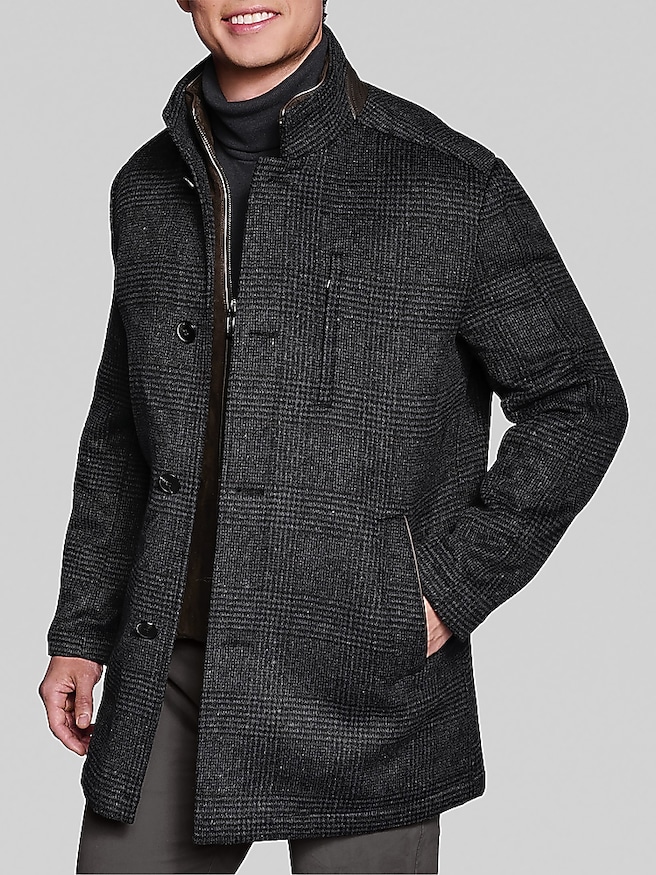
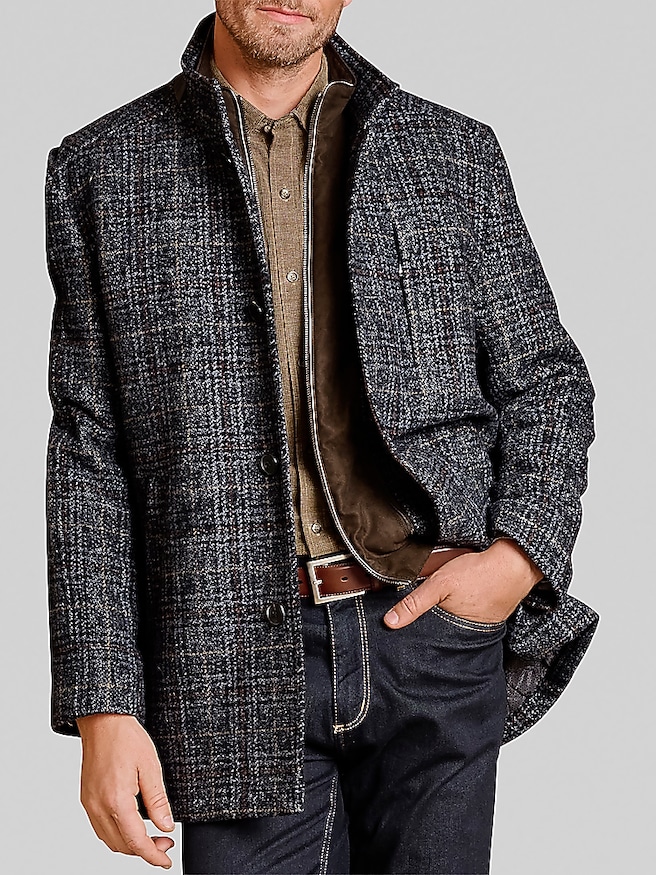
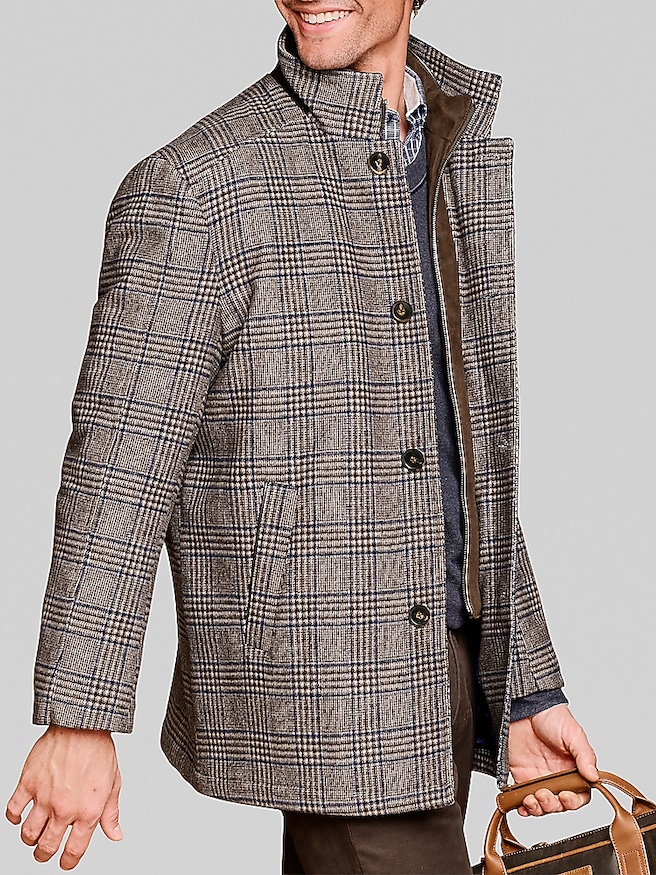
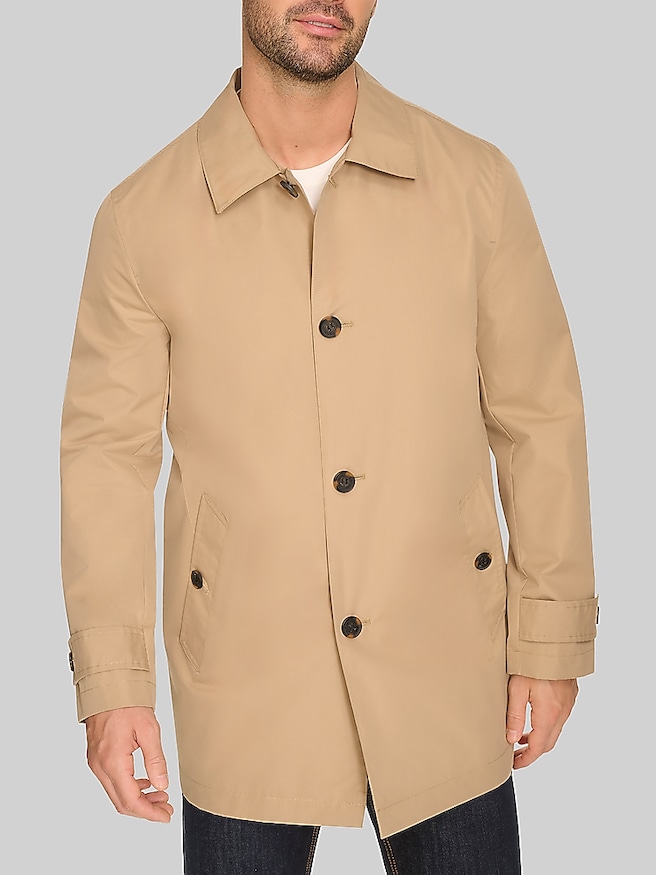
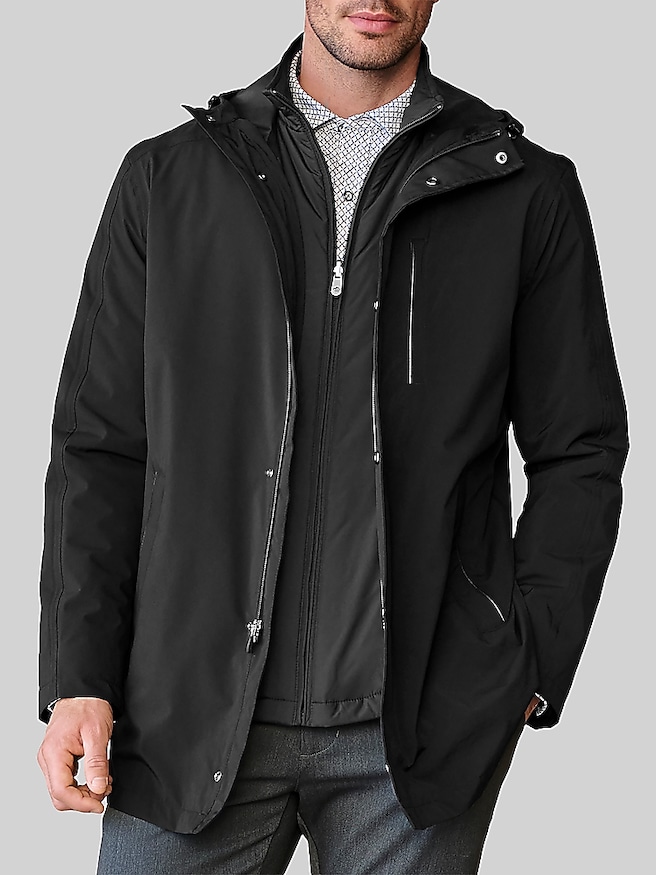
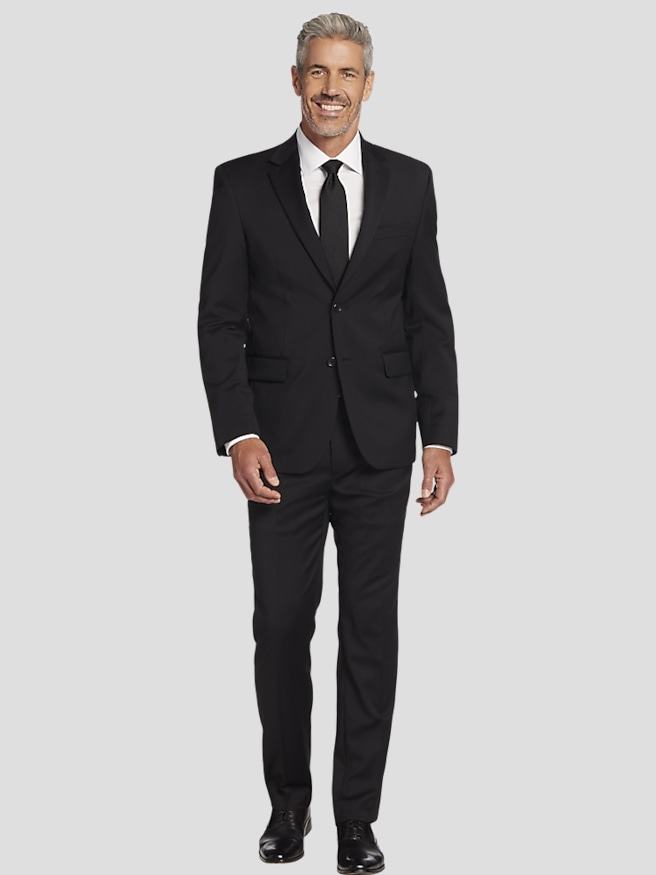
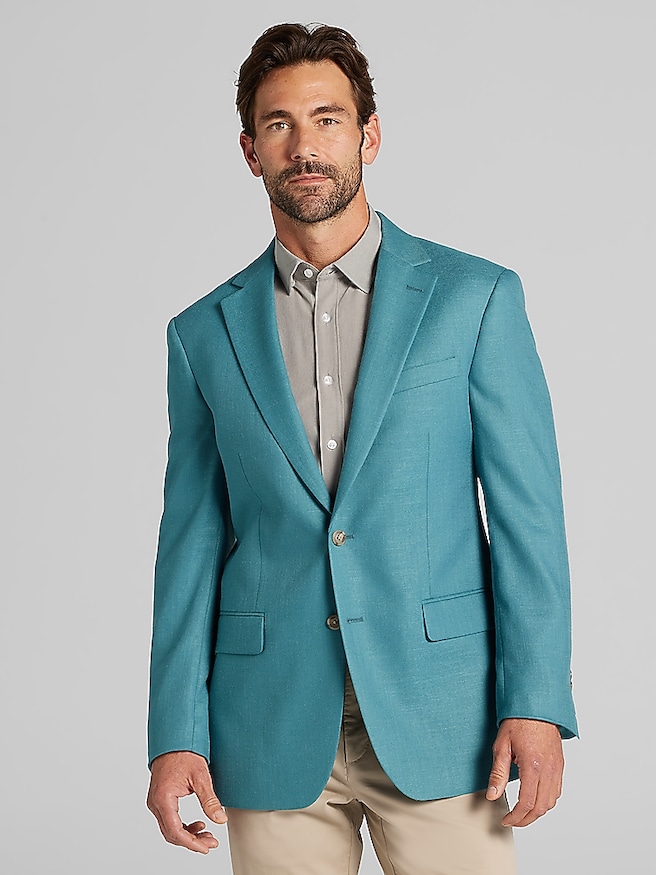
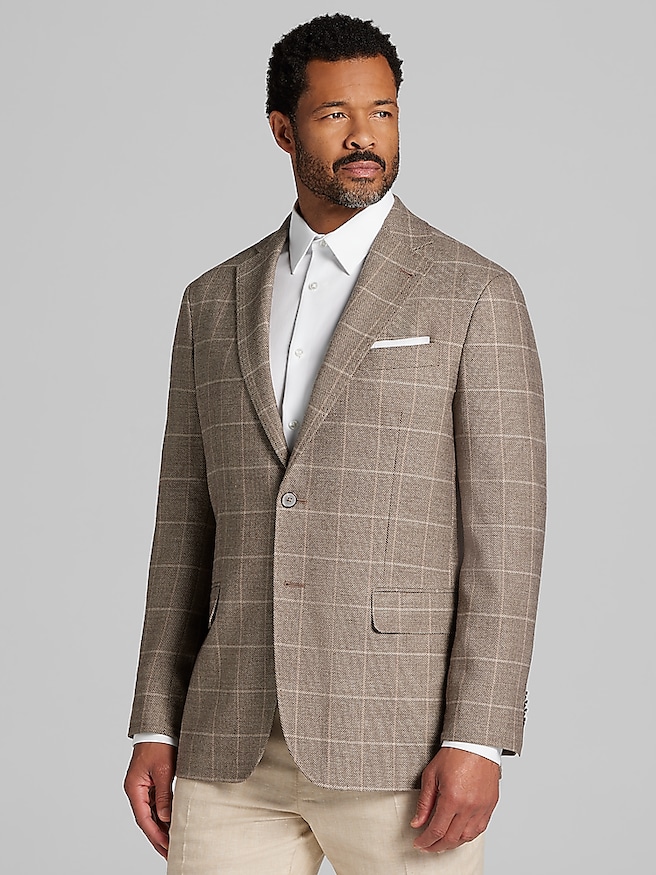
A men’s topcoat is a tailored outer layer designed to fit over a suit, sport coat, or sweater, adding warmth without losing the clean lines of the clothing underneath. Typically lighter than a heavy winter overcoat, a topcoat often falls around the knee or slightly above it, though fabric weight and length vary by design. Its appeal is practical as much as visual: a longer hem covers a suit jacket, a structured collar frames a shirt and tie, and a smooth front creates a finished look on the walk from the train station to the office. Wool is a traditional choice because its naturally crimped fibers help retain warmth while allowing moisture vapor to escape. Wool blends can combine that character with other qualities, such as added strength or a smoother surface, depending on the fibers and construction. Cashmere lends a softer hand, whether used alone or blended with wool, while brushed finishes give the fabric a plush appearance. A tightly woven surface generally feels more compact than a loosely woven one, but fabric density, lining, and the layers underneath all affect comfort. A topcoat is not automatically waterproof, and a wool shell should not be mistaken for dedicated rainwear. Single-breasted styles have a straightforward profile that works easily over business clothing or casual layers. Double-breasted designs bring a broader, more defined front, with overlapping fabric that can provide additional coverage when fastened. Notch lapels feel familiar and versatile; peak lapels create a sharper line through the chest and shoulders. Details such as an undercollar that sits neatly, evenly finished seams, and pockets positioned comfortably for the hands contribute to the experience of wearing the coat. A back vent helps the hem move when walking or sitting, while a smooth lining allows the coat to slip over a jacket without pulling at the sleeves. These construction choices matter on an ordinary commute just as much as they do at a dressed-up evening event.
The best-fitting men’s top coat leaves enough room for its intended layers while maintaining a clear shoulder line and a balanced shape through the body. A coat worn mainly over suits needs to accommodate a jacket’s shoulder structure and chest, not simply fit over a thin shirt. When the front is fastened, the lapels should lie reasonably flat, and the fabric should not pull into pronounced lines around the buttons. Reaching forward to hold a steering wheel or carry a briefcase gives a more useful sense of movement than standing with the arms at rest. Sleeves need to cover the jacket sleeves beneath them without extending so far that they interfere with the hands. A close fit can look sharp, but compression through the upper arms or back makes everyday layering uncomfortable. A fuller cut offers flexibility for substantial knitwear, although excessive fabric through the shoulders can overwhelm the silhouette. Length changes the effect as well: a knee-length coat creates a long, continuous line and more coverage, while a shorter version can feel less restrictive when moving between a car and an office. The hem should still cover the jacket it is meant to accompany. Color and texture help determine how easily the coat fits into an existing wardrobe. Navy and charcoal sit comfortably with gray trousers, dark denim, and most business suits. Black creates a crisp contrast with formal clothing, while camel and medium brown introduce warmth against blue tailoring or cream knitwear. Herringbone and subtle checks add visual interest without relying on strong color. A smooth, understated coat works well with polished leather shoes and a briefcase; a slightly textured finish looks equally at home with boots and a substantial sweater. For someone buying a topcoat as a gift, the recipient’s usual suit size is a useful starting point, but preferred layers, sleeve length, and overall proportions are just as important. A person who wears tailored clothing daily may appreciate a different cut than someone who wants an occasional coat for dinners, performances, and celebrations.
Long-term durability depends on both construction and care. A substantial fabric can still show wear if a shoulder bag repeatedly rubs the same spot, and even a beautifully finished coat benefits from space between wears. Consistent stitching, securely attached buttons, and neatly finished pocket openings are useful details because these areas handle repeated movement and tension. Pockets are convenient for gloves and small essentials, but heavy keys, an overfilled wallet, or a phone carried in the same outer pocket every day can distort the shape over time. A broad, supportive hanger helps preserve the shoulders, while room around the coat allows the fabric to air out rather than remain compressed against other clothing. Care instructions should govern cleaning, particularly for wool, cashmere, blends, and structured designs with internal shaping. Many tailored coats call for professional dry cleaning rather than machine washing, and unnecessary cleaning can be avoided by addressing dust and surface lint gently between visits. A soft clothing brush used with the direction of the fabric’s nap can help lift loose particles without roughening the surface. If a coat becomes damp, natural air-drying away from direct heat helps protect its shape; it should be fully dry before being stored. Breathable storage and appropriate moth protection are especially relevant for animal-fiber fabrics during extended periods without wear. These habits support the qualities that make a topcoat useful across a busy wardrobe: an easy layer over a suit for work, a polished finish over knitwear for dinner, or added coverage when arriving at a winter wedding. The right weight depends on how much time is spent outdoors, how actively the wearer moves, and what sits underneath the coat. A long walk calls for a different balance of warmth and mobility than a short trip from a garage to a reception. For occasions that call for less insulation, Spring Coats For Men offers a related outerwear direction. A well-considered topcoat earns its place through comfortable layering, dependable construction, and a shape that works with the clothes already worn most often.