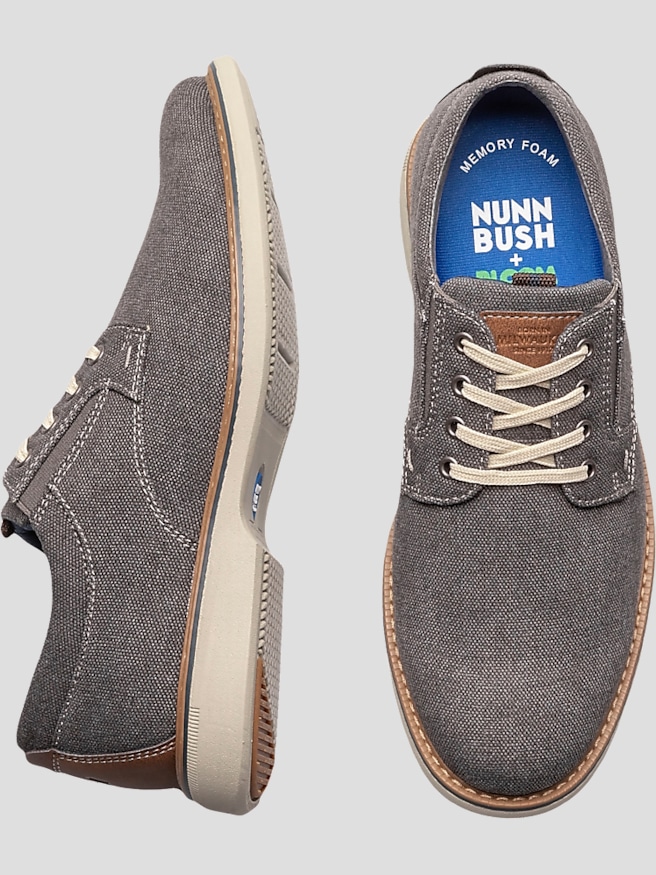
Men’s textile shoes have uppers made primarily from fabric rather than leather, bringing woven texture, flexible construction, and a relaxed finish to everyday footwear. The category includes canvas sneakers, knit lace-ups, mesh athletic styles, and fabric slip-ons, with each construction offering its own balance of structure and softness. Canvas is a woven fabric often made from cotton or a cotton blend; its closely packed threads give it a recognizable surface and a more defined shape than many lightweight knits. Knitted uppers use interlocking yarns that can flex around the foot, while mesh has a more open structure that encourages airflow. Synthetic fibers such as polyester and nylon may be used alone or blended with other fibers to influence weight, stretch, moisture handling, and resistance to wear. Some textiles also incorporate plant-derived cellulose fibers, although the finished shoe’s performance depends on its full construction, not simply the source of its yarn. Fabric uppers are often light and breathable, but linings, overlays, padding, and sole thickness all affect how a shoe feels in use. An airy mesh sneaker and a lined canvas slip-on can feel noticeably distinct even though both belong to the same category. For a closer look at the woven side of this footwear family, Men's Canvas Shoes highlights a familiar fabric construction with an easygoing character. Textile footwear works especially well for casual routines: heading to a coffee shop, walking across campus, meeting friends for lunch, or spending a relaxed afternoon with family. Its appeal is as much visual as practical. A matte fabric upper softens the look of dark denim, while subtle stitching and tonal laces can keep an outfit neat without making it feel dressed up. Neutral shades blend easily with chinos, five-pocket pants, and casual layers, allowing the texture of the shoe to add interest without competing with the rest of an outfit. The result is footwear that can feel understated, approachable, and useful across a broad casual wardrobe.
Comfort in men’s textile shoes comes from the relationship between the upper, footbed, and sole rather than softness alone. A knit upper may accommodate movement comfortably, but a shoe still needs enough room through the toes and a secure hold at the heel. Toes should be able to move without pressing into the front or sides, and the foot should not slide forward with every step. Fabric can relax with wear, especially around natural flex points, but a tight fit is not something to count on stretching away. Trying shoes with the socks intended for everyday wear gives a more realistic sense of space; thicker socks during the cooler months can change the fit substantially. Lace-up construction allows adjustments over the instep, while slip-ons depend more heavily on their shape, collar, and any elastic panels to stay secure. Seams and reinforced edges deserve attention, too, particularly where they cross the toes or meet the heel. Underfoot, cushioning can soften the feel of hard floors, but support and stability depend on the shoe’s overall design. A flexible sole may feel natural for short walks and casual errands, whereas extended time on foot may call for a more supportive platform and a footbed that suits the wearer’s needs. A removable insole can be useful for someone who uses an orthotic, provided the shoe has sufficient depth to accommodate it without crowding the foot. Outsole tread also matters: a smooth casual sole does not provide the same grip as a pattern designed for a particular activity or surface. Textile sneakers with an athletic appearance are not automatically suitable for running, gym training, or long-distance walking. Their intended use should match the day ahead. For a casual office, a clean, low-profile fabric shoe can complement chinos and an unstructured jacket when the dress code permits. For a weekend trip, a secure fit and comfortable sole may matter more than a streamlined silhouette, especially when the schedule involves sidewalks, stairs, and several hours away from a place to sit.
The durability of textile shoes depends on fabric density, reinforcement, stitching, and how the upper is attached to the sole. Closely woven canvas can hold its shape well, while an open knit may offer greater flexibility but be more vulnerable to snagging on rough edges. Reinforcement at the toe, heel, or lace openings can help protect areas exposed to repeated stress. No single fabric guarantees a longer-lasting shoe; wear patterns, walking surfaces, and regular care all play a part. Breathable construction also should not be confused with weather protection. Unless a shoe is specifically designed and labeled for water resistance, fabric uppers may absorb moisture or allow it through. During the cooler months, textile footwear is often more comfortable for dry days, indoor gatherings, and outings that do not involve prolonged exposure to wet or freezing conditions. A lined upper may add warmth, but it does not automatically make the shoe waterproof. Routine care starts with the maker’s instructions, since adhesives, dyes, trim, and internal components can react poorly to cleaning methods that seem harmless to the fabric itself. Machine washing is appropriate only when those instructions expressly allow it. For many styles, removing loose dirt with a soft brush and gently spot-cleaning with a mild solution is a more cautious approach. Testing an inconspicuous area first can help reveal color transfer or changes in texture before cleaning a visible section. Air-drying away from direct heat helps avoid unnecessary stress on the upper and sole; a dryer or radiator can damage materials and bonding. Giving shoes time to dry fully between wears also helps manage moisture inside. These practical details make textile footwear a thoughtful gift for someone who favors relaxed dressing, travels frequently, or appreciates an easy transition from home to casual plans. The most useful choice reflects the recipient’s usual size, preferred fastening, and daily routine rather than appearance alone. With suitable fit, sensible care, and an intended use that matches their construction, fabric shoes can become a dependable part of an everyday rotation, pairing tactile character with the uncomplicated feel of casual footwear.