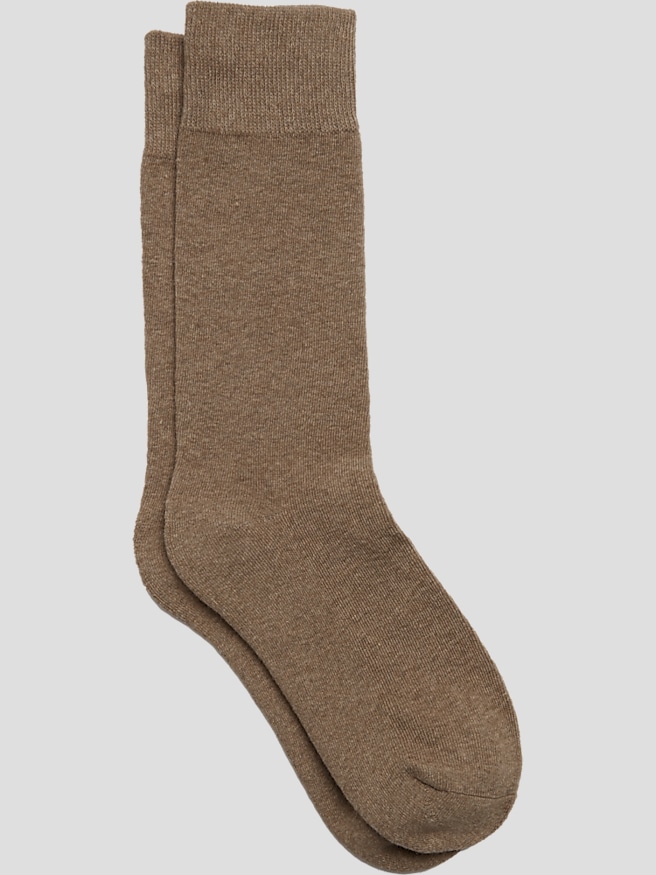
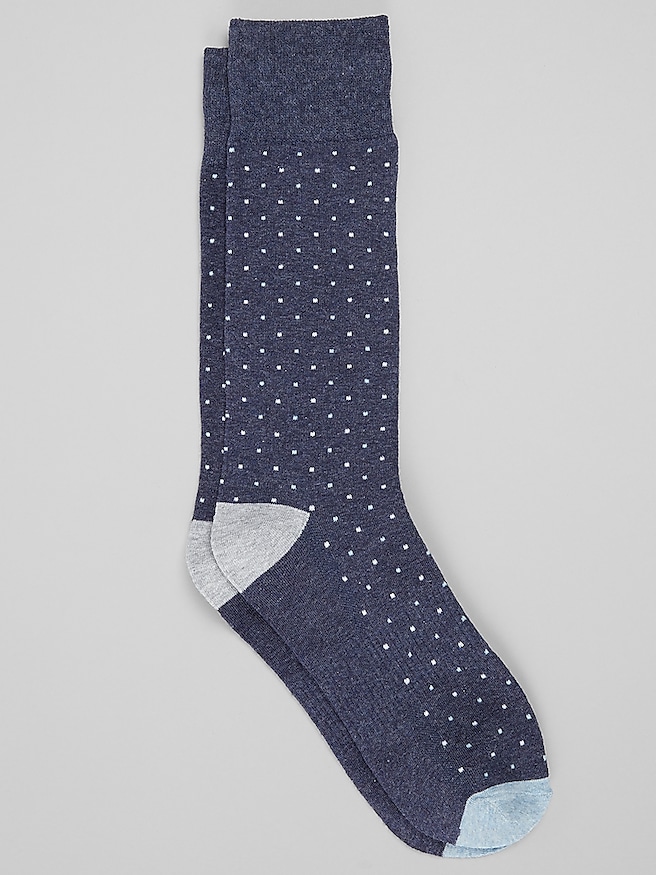
Men's tan socks are a versatile neutral, ranging from casual cotton crews to fine-gauge merino wool dress socks. Their understated color works with tailored trousers, chinos, and denim, making them useful for office outfits, relaxed dinners, and occasions that call for a more polished finish. Tan covers a nuanced family of shades: pale sand feels light and subtle, beige offers an easy middle ground, and deeper camel tones add richness alongside brown leather. The right shade depends on the rest of the outfit rather than a rigid matching rule. With khaki trousers, socks in a similar depth of color can create a continuous line from the hem to the shoe. With navy trousers, tan introduces a deliberate contrast that feels especially natural beside brown footwear. Charcoal pants can also work with tan socks when another detail, such as a belt or patterned shirt, brings a related neutral into the outfit. Pairing them with men's tan shoes creates a coordinated foundation without requiring every shade to match exactly. A slight variation between the leather and the knit often looks more considered than an exact match, particularly when their undertones work together. Smooth, fine-knit socks suit sleek lace-ups and tailored clothing, while a visible rib adds texture beside suede loafers or more substantial casual shoes. Small-scale patterns can bring interest to an otherwise quiet outfit, but a solid tan sock keeps attention on the shape of the trousers and the finish of the footwear. When sitting down exposes the ankle, that narrow strip of color becomes part of the overall look. A sock that relates to either the trousers or the shoes helps the outfit feel complete, whether the setting is a client meeting, a restaurant table, or a family celebration. For a wardrobe built around navy, brown, cream, and olive, tan socks offer plenty of ways to connect pieces already worn regularly.
Material and construction influence how men's tan socks feel throughout the day, how they sit inside a shoe, and how neatly they hold their shape. Cotton is valued for its soft feel and absorbency, making cotton-rich socks a familiar choice for everyday wear. Merino wool has fine fibers that can feel smooth against the skin and help manage moisture, which makes it useful in dress socks as well as more textured everyday styles. Blends that include nylon or polyester can add strength and help the fabric recover its shape, while a small amount of elastane supplies stretch. Fiber percentages matter because two socks with a similar appearance can feel noticeably unlike each other once worn. A fine-gauge knit generally takes up less space inside a close-fitting dress shoe, while a cushioned sole adds padding underfoot but also requires enough room in the shoe to avoid crowding. Ribbing through the leg can provide flexible structure, and a well-finished toe seam helps reduce the chance of an irritating ridge across the toes. Reinforcement at the heel and toe can support durability in areas that experience repeated friction. Fit deserves just as much attention as fabric. The heel pocket should sit around the heel rather than underneath the arch or above the back of the foot, and the toe area should allow comfortable movement without excess fabric bunching inside the shoe. Crew-length socks work with many everyday trouser and footwear combinations. Longer dress socks offer more coverage when a trouser hem rises while seated, helping keep bare skin from interrupting a tailored outfit. Shorter cuts suit outfits where less sock should show, provided the shape stays secure around the heel. A comfortable cuff holds its position without feeling overly tight. For someone moving between a desk, a commute, and an evening out, those details can matter more than a sock's appearance on its own. The most useful pair is one that works with the shoes actually being worn and stays comfortable through normal movement.
Good care helps tan socks maintain their color, stretch, and finish, especially when they are part of a regular rotation. The care label should determine washing and drying methods, since cotton-rich blends and wool-rich knits may need distinct treatment. Turning socks inside out before washing can help limit abrasion on the visible surface, and washing with similar colors reduces the risk of unwanted dye transfer. A mesh laundry bag can keep pairs together and prevent them from getting caught on fasteners. Gentle handling is particularly helpful for fine knits, while excessive dryer heat can affect elastic fibers and contribute to shrinkage in some fabrics. Wool socks may call for a wool-safe detergent, a gentle cycle, or hand washing, depending on their construction. Letting socks dry fully before wearing them again supports comfort, and alternating pairs gives each one time between uses. Keeping toenails smooth and checking the inside of shoes for rough spots can also reduce unnecessary wear at the toe and heel. When storing dress socks, placing them together without tightly stretching one cuff over the other helps avoid prolonged tension on the opening. These practical details are worthwhile for socks worn frequently with work clothes or saved for dressier occasions. Tan socks can also make a thoughtful, useful gift for someone who prefers understated accessories, wears chinos throughout the week, or is building a wardrobe for a new job. Shoe size, preferred sock height, and fabric sensitivity are more helpful considerations than color alone. Someone who wears slim dress shoes may appreciate a fine knit, while someone who spends much of the day standing may prefer a little cushioning, as long as it fits comfortably inside the shoe. For travel, a neutral shade that works with several trouser colors can simplify outfit planning. From a quiet finishing touch beneath a suit to an easy companion for casual pants, men's tan socks balance everyday practicality with a clean, considered appearance.