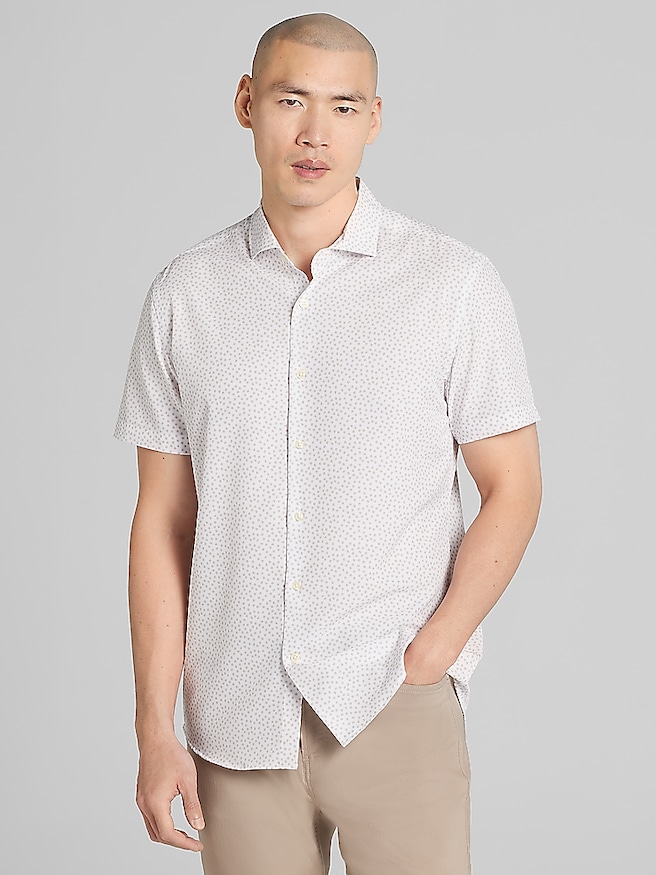
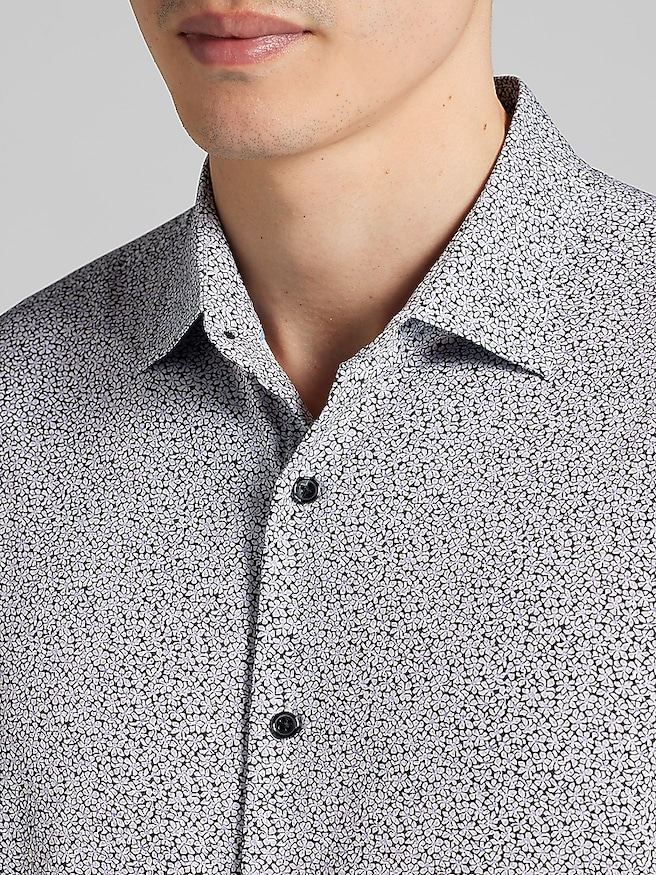
Men's tailored short sleeve shirts combine the ease of a casual shirt with a more defined shape through the chest, waist, and sleeves. A tailored fit generally follows the body more closely than a traditional relaxed fit, with gentle tapering that reduces excess fabric around the middle. The term describes the silhouette rather than necessarily indicating a custom-made garment, and its exact proportions can vary between makers. That distinction matters: a shirt should look shaped without pulling across the chest, catching at the upper arms, or drawing tight when seated. Shoulder seams that sit near the natural edge of the shoulders help the sleeves fall neatly, while a smooth button placket keeps the front looking composed. When reaching for a laptop bag or leaning across a restaurant table, there should still be room to move comfortably. Sleeve openings also affect the overall impression. An opening that follows the upper arm without gripping it creates a cleaner line than one that flares outward. For men who prefer a polished appearance without the structure of a long sleeve dress shirt, these proportions strike a useful balance. They work particularly well for business-casual offices that permit short sleeves, dinners with friends, travel days, and informal celebrations. The hem helps determine how the shirt fits into those settings. A shorter hem with modest shaping often looks balanced untucked, while a longer shirttail generally provides better coverage when tucked into trousers. Neither approach should require constant adjustment throughout the day. Collar construction adds another layer of distinction: a button-down collar tends to hold a tidy shape, a point collar creates a straightforward, versatile look, and an open camp collar gives the shirt a more relaxed character. Together, the collar, sleeve shape, body taper, and hem establish whether a tailored short sleeve shirt feels closer to everyday casual clothing or a more refined separate.
Fabric influences how that tailored shape looks and feels after several hours of wear. Cotton is a familiar choice for its softness, absorbency, and range of textures, but the weave can make two cotton shirts feel quite distinct. Poplin has a relatively smooth surface and a crisp appearance that pairs naturally with tailored trousers. Oxford cloth has a more visible basketweave texture, giving the shirt a slightly more substantial, casual character. Linen has an airy feel and an irregular surface, with creasing that is part of its natural appearance rather than necessarily a sign of poor care. A linen blend may soften that effect, depending on the other fibers and the construction. Cotton blends can also change a shirt's drape, drying time, or resistance to wrinkling. A small amount of elastane can provide useful give across the back and shoulders, although stretch does not replace the need for an appropriate size. Performance properties such as moisture management or wrinkle resistance should be evaluated according to the garment's stated features, not assumed from the fit description. Likewise, a non-iron designation refers to a fabric treatment or construction intended to simplify upkeep; it does not mean every shirt will look freshly pressed after being packed tightly in a bag. Everyday durability depends on details as well as fiber content. Secure buttons, evenly sewn seams, tidy buttonholes, and a collar that retains its shape all contribute to a shirt that continues to look presentable with repeated wear. Care instructions deserve particular attention with blended fabrics, stretch fibers, and textured weaves. Washing at the recommended temperature, avoiding excessive dryer heat, and removing the shirt promptly after drying can help preserve its dimensions and finish. When ironing is permitted, the appropriate setting protects the fabric while smoothing the collar, placket, and hem. Hanging the shirt with its shoulders supported helps maintain the clean outline that makes a tailored fit appealing.
The most useful styling choices let that outline do some of the work. A solid short sleeve shirt tucked into flat-front chinos creates a straightforward outfit for an office lunch or an evening reservation, especially when the waistband lies flat and the shirt has enough length to stay secure. Worn untucked with dark denim, the same general silhouette feels more relaxed without becoming shapeless. Tailored shorts can also complement a short sleeve shirt when the occasion is casual, with the shirt's hem and sleeve length helping keep the outfit in proportion. Footwear shifts the tone: loafers give the combination a dressier finish, while simple sneakers keep it easygoing. Personal taste comes through in men's stylish short sleeve shirts through details such as subtle texture, small-scale patterns, and restrained color combinations. A fine stripe or compact geometric pattern adds interest without demanding an elaborate outfit; a larger print makes more of a statement and often works best with uncomplicated pants. Lighter shades may also make fabric opacity more noticeable, so the shirt's weave and any undershirt deserve consideration together. For a cohesive result, the collar should sit comfortably at the neckline, and the shirt should look intentional whether the top button is open or closed. Short sleeves remain a casual feature, even on a sharply fitted shirt, so a tailored silhouette should not be mistaken for a substitute for formal attire or a long sleeve dress shirt where one is expected. As a gift, this category can suit someone who enjoys neat everyday clothing, prefers an untucked look with definition, or wants an alternative to a polo. A familiar shirt's chest measurement, shoulder width, and body length provide more useful reference points than a size label alone. Comfort, proportion, and realistic care requirements ultimately matter more than an especially close fit. The right balance leaves the shirt looking clean and considered while allowing the person wearing it to move naturally through an ordinary day.