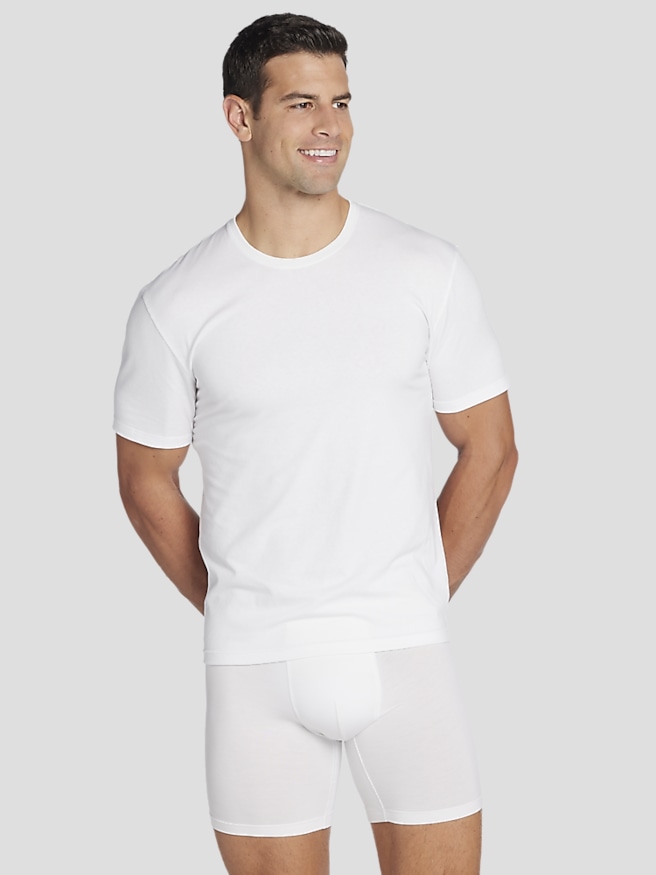
Comfortable men's summer T-shirts balance lightweight, breathable fabrics with a fit that leaves room for movement and airflow. They form the foundation of warm-weather casual dressing, whether the day involves a backyard cookout, a coastal getaway, or a walk to a neighborhood coffee shop. Fabric makes a noticeable difference in how a tee feels over several hours. Cotton jersey has a familiar softness and an easy drape, making it a dependable choice for everyday wear. Lighter cotton knits can feel airy, although fabric weight alone does not determine breathability; knit structure, yarn, and fit also matter. Cotton can absorb moisture and may stay damp longer than some performance fabrics, a useful distinction for anyone planning a long afternoon outdoors. Cotton blends can combine that familiar hand feel with added stretch, shape retention, or faster drying, depending on their fiber content and construction. Linen-blend knits often have subtle texture and a relaxed appearance, while fabrics containing modal or lyocell can feel smooth against the skin and fall softly through the body. Moisture-wicking performance knits are another consideration for active days, especially when moving between errands, travel, and outdoor plans. A lightweight T-shirt does not have to feel flimsy: an even knit, neatly finished seams, and a neckline that lies flat can give a simple tee a more substantial feel without unnecessary bulk. Opacity matters, too, particularly with pale colors. A fabric that looks comfortable on a hanger may appear more revealing when stretched across the chest or shoulders. Smooth jersey creates a clean backdrop for casual outfits, while a slub texture adds visual depth without relying on a bold pattern. For summer use, the most useful combination is often a soft surface, enough coverage to wear confidently on its own, and a fabric weight suited to the day's activities. That balance helps a tee feel appropriate for both an unhurried morning and an afternoon spent on the move.
Fit gives men's summer tees their character, from a neat silhouette that works beneath an open shirt to a roomier shape suited to laid-back weekends. A classic set-in shoulder seam generally sits near the edge of the shoulder; dropped shoulders create a deliberately more relaxed outline. Through the chest and waist, the fabric should follow the body without pulling into horizontal lines or clinging whenever the wearer sits down. A relaxed fit can encourage airflow, but excessive fabric may bunch under another layer or overwhelm the proportions of an outfit. Sleeve length and opening also influence the overall impression. Sleeves that end around the middle of the upper arm create a familiar casual shape, while longer or wider sleeves lend a looser look. The hem needs enough length to maintain coverage when reaching overhead, with a length near the hip often working well for untucked wear. Torso length and personal preference matter more than a size label alone, so garment measurements are useful when comparing silhouettes. Crewnecks provide a clean, versatile frame, while V-necks open up the neckline and can feel less enclosed. Neither needs to be unusually tight or deep to look considered. Solid neutrals such as white, navy, gray, and black make easy companions for chino shorts, lightweight trousers, and denim. Muted blues, earthy greens, or sun-washed tones can add variety without making an outfit difficult to coordinate. A textured tee with tailored shorts and clean sneakers feels relaxed but intentional for a casual lunch; a smooth tee beneath an unbuttoned woven shirt adds depth for an evening gathering. The broader category of Men's Summer Shirts provides context for coordinating tees with other warm-weather shirt styles. T-shirts remain casual pieces, however, and occasions with a stated dress code may call for a collared shirt or more structured clothing. Within everyday settings, a tidy neckline, balanced proportions, and fabric that drapes comfortably often make more impact than extra details.
Care and construction help determine how well a summer T-shirt keeps its place in a regular rotation. Even stitching, secure hems, and a resilient neckband are useful details to examine because these areas experience repeated stretching and friction. A soft fabric can still be durable, just as a heavier fabric is not automatically more resistant to wear. Fiber quality, knit density, and finishing all contribute to how the garment holds its shape. The care label is the best reference for washing and drying, particularly for blended fabrics or tees with decorative finishes. When the label permits, cool washing and lower drying temperatures can help limit shrinkage and preserve color, while washing similar colors together reduces the risk of unwanted color transfer. Turning a tee inside out can reduce abrasion on its outer surface. Excessive dryer heat may affect both cotton dimensions and stretch fibers, so removing a garment promptly and reshaping it gently can help maintain a neat appearance. Some moisture-managing fabrics also have specific guidance about fabric softener, which can interfere with their intended performance. Folded storage avoids the shoulder bumps that hangers can leave in lightweight knits, and allowing a freshly washed tee to dry fully before putting it away helps keep the fabric fresh. These everyday details are especially relevant for travel, when a small group of versatile tees may handle sightseeing, casual meals, and time spent relaxing. Packing colors that work with the same shorts and trousers makes outfit planning simpler without requiring every shirt to look alike. Men's summer T-shirts can also make thoughtful gifts for someone who favors comfortable, practical clothing. A familiar neckline, preferred fit, and color that already appears in the recipient's wardrobe offer better direction than guessing at an unfamiliar style. Whether intended for a gift, a vacation bag, or everyday use, the most dependable tee is one whose fabric, proportions, and care requirements suit the person wearing it.