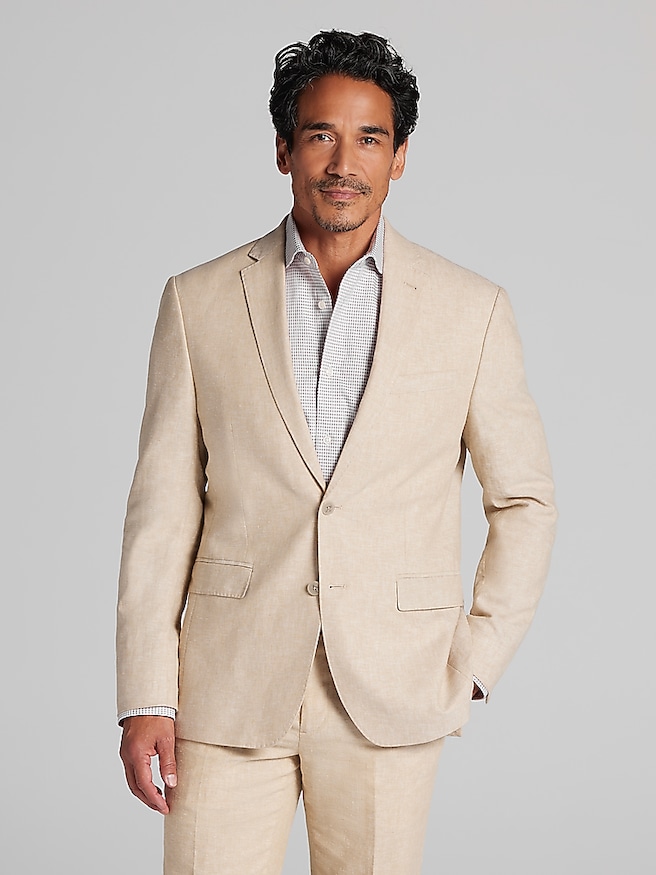
Men’s summer style centers on breathable fabrics, comfortable fits, and versatile clothing that feels appropriate for everything from a relaxed afternoon to a dressed-up evening. Linen shirts, lightweight cotton chinos, knit polos, tailored shorts, and softly constructed jackets bring shape to warm-weather outfits without unnecessary weight. Fabric construction matters as much as fiber content: an open weave allows more airflow than a dense one, while a lighter fabric can still feel restrictive if the cut sits too close to the body. Linen has a distinctive, slightly irregular texture and a natural tendency to wrinkle, making it especially suited to outfits that look good with a little ease. Cotton offers a familiar, soft feel across everything from smooth poplin shirts to textured pique polos. Seersucker’s puckered surface holds portions of the fabric away from the skin, giving it a practical role in summer clothing as well as a recognizable appearance. Lightweight wool can also work well in tailored clothing, particularly in airy weaves that provide drape without the heft associated with heavier suiting. Blended fabrics may balance softness, stretch, and wrinkle resistance, although their feel and performance depend on the construction and fiber mix. These distinctions give summer outfits variety beyond simply choosing short sleeves. A camp-collar shirt has a relaxed neckline that works naturally with shorts or chinos, while a button-down collar brings more definition to an outfit for lunch, travel, or a casual office. Knit polos sit comfortably between the two, with enough texture to look considered on their own or beneath a lightweight jacket. White, cream, pale blue, and muted earth tones create easy combinations, while deeper navy, olive, and tobacco shades add contrast. Small patterns and subtle textures can give an outfit character without making every piece compete for attention. A softly striped shirt against solid trousers, for example, creates interest through proportion and texture rather than a complicated mix of colors. The result is summer clothing with a clear purpose: comfortable enough for everyday movement, yet finished enough to suit the setting.
Fit gives men’s summer outfits their shape, especially when fewer layers leave the shirt and trousers doing most of the work. A comfortable summer fit leaves room through the chest, seat, and thighs without creating excess fabric that bunches beneath a belt or jacket. Shoulder seams should generally sit close to the shoulder’s natural edge, and a shirt worn untucked looks more balanced when its hem does not overwhelm the trousers or shorts beneath it. Shorts with a clean leg opening and a length that suits the wearer’s proportions can look relaxed without appearing oversized. Chinos and lightweight dress pants offer more coverage for offices, restaurants, and occasions where shorts would feel too casual. A slight break or a clean hem helps keep lighter trousers from pooling around the shoes. These details become especially useful on days that include several settings, such as an afternoon gathering followed by dinner on a patio. A knit polo and chinos can bridge those plans, while a linen shirt with tailored shorts fits a more informal afternoon. For business-casual settings, a breathable collared shirt, lightweight trousers, and an unstructured sport coat provide definition without the rigidity of heavier tailoring. Summer weddings and other dressier celebrations call for closer attention to the invitation, venue, and dress code. Lightweight tailoring may suit a daytime outdoor ceremony, but an evening event can still require a dark suit or more formal attire. Men's Summer Formal Wear brings that dressier side of seasonal clothing into focus, where fabric weight, jacket construction, and polished finishing details matter alongside the occasion’s expectations. Footwear completes the distinction: loafers can complement tailored separates, understated sneakers suit casual combinations, and dress shoes maintain the formality of a suit. A belt that works with the shoes and a pocket square with a restrained pattern can finish an outfit without adding visual clutter. Even a lightweight jacket needs enough room to sit comfortably over the shirt beneath it, with sleeves and a hem that keep the overall silhouette balanced.
The lasting appeal of summer clothing depends on how well it holds up to repeated wear, packing, and care. Strong seams, secure buttons, neatly finished buttonholes, and fabric that returns to shape after movement are useful signs of thoughtful construction. Stretch can make trousers more comfortable when sitting through a long meal or traveling, but the waistband and seat should still fit properly without relying on the fabric to pull tight. Care requirements deserve the same attention as appearance. A washable cotton shirt can be practical for frequent casual wear, while a lined jacket or tailored wool garment may need professional cleaning according to its care label. Linen’s creases are part of its character; a crisp finish and a softly rumpled appearance are simply two distinct ways to wear it. Washing instructions vary by fabric, dye, and construction, so the label is a better reference than assuming every summer shirt belongs in the same wash cycle. Excessive dryer heat can contribute to shrinkage and wear, and prompt removal from the dryer, when machine drying is permitted, can help limit deep wrinkles. Jackets benefit from supportive hangers and time to air between wears, while folded knitwear is less likely to develop stretched shoulders than pieces left hanging. For travel, a coordinated palette makes it easier to combine a few shirts with both shorts and trousers, leaving room in a suitcase without making every outfit look identical. A textured polo can work for a casual dinner, and a linen-blend button-front shirt can pair with chinos for an outing that calls for a little more polish. These versatile categories can also make thoughtful birthday or Father’s Day gifts when the recipient’s size, preferred fit, and daily routine are familiar. Someone who spends the week in a business-casual office may appreciate different fabrics and silhouettes than someone planning a coastal vacation. Summer style feels most natural when those practical details support the wearer’s habits, with comfortable clothing that looks intentional rather than overly arranged.