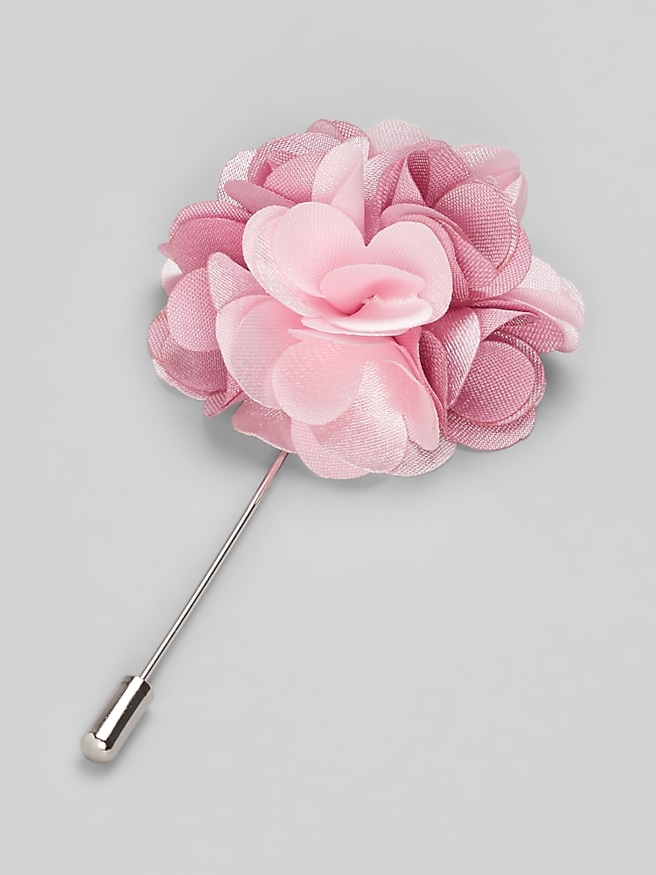
Men’s suit pins are decorative accessories worn on a jacket lapel to add color, texture, or personal meaning to tailored clothing. Often called lapel pins, they range from understated metal shapes to fabric flowers and more expressive brooches with chains or ornamental details. Their appeal is in the scale: a small accent near the face can give a familiar navy suit or charcoal blazer a distinctive finish without changing the entire outfit. A brushed metal pin offers a quiet accent for a business reception, while a sculpted floral design can bring softness to a wedding look. For a groom, a graduate, or someone celebrating a professional milestone, the right motif can also carry a story beyond its appearance. Initials, meaningful symbols, and designs connected to a hobby or achievement make these accessories thoughtful gifts, especially for someone who already enjoys dressing up. Suit pins work with more than formal matching suits, too. A simple design can complement a sport coat and open-collar shirt, while a more decorative brooch suits an evening celebration with a dressier atmosphere. The occasion helps establish the level of ornament: restrained shapes tend to blend easily into professional settings, while expressive designs have more room at festive gatherings. At events with a specified dress code, the pin should support the expected level of formality rather than distract from it. During the cooler months, the texture of a fabric flower or the muted gleam of metal can look particularly rich against flannel, tweed, and other substantial jacket fabrics. The most successful combinations feel connected to the wearer and the clothing, whether that means a nearly tonal accent on a dark lapel or a small point of contrast against a lighter jacket. Viewed as part of the whole outfit, a suit pin provides a finishing detail that feels intentional rather than added at the last minute.
Materials and construction influence how a suit pin looks, how comfortably it sits, and how well it holds up to repeated wear. Metal designs may use brass, stainless steel, or other alloys, with polished, brushed, plated, or enamel finishes creating distinct effects. Polished surfaces catch the light and read more prominently across a room; brushed textures offer a softer reflection that can sit comfortably alongside textured tailoring. Plating is a surface finish rather than a solid-metal composition, so its appearance depends partly on handling, storage, and exposure to moisture or friction. Enamel adds defined areas of color, though hard knocks can chip some finishes. Fabric lapel flowers introduce dimension through folded or layered petals made from materials such as silk, satin, felt, or other textiles. Satin describes a weave rather than a fiber, so the material information matters when assessing care and feel. These softer designs can echo the texture of a tie or pocket square without repeating its pattern. For a closer look at elevated interpretations of the category, Men's Luxury Lapel Pins offer a related point of reference. Across suit pin styles, careful finishing matters as much as decoration: smooth edges, securely attached embellishments, and a fastening that closes reliably all contribute to comfortable wear. Common closures include butterfly clutches, locking backs, and long stick pins with protective end caps. Each has its own profile behind the lapel, and the fastening should feel secure without creating an obvious lump beneath the fabric. Fit here means proportion, weight, and stability rather than a clothing size. A narrow lapel generally accommodates a compact design more easily, while a broader lapel offers visual space for a larger flower or brooch. A heavy ornament can pull a lightweight jacket out of shape, even when the pin itself is well made. Chain details also need enough room to drape without catching a pocket edge or interfering with the jacket’s natural movement. For someone wearing a pin through a ceremony, photographs, and a seated dinner, a balanced design that rests flat is often more comfortable than one that needs frequent adjustment.
Placement and coordination bring the final look together. A men’s suit pin is traditionally worn on the left lapel, near the lapel buttonhole when one is present. A usable buttonhole can accommodate some pin styles, but not every opening or fastening is compatible; a stitched-shut buttonhole should not be forced open simply to attach an accessory. Pins that pass through the jacket fabric can leave marks or disturb delicate fibers, so there is no universally damage-free method for every suit. Fine wool, loose weaves, and satin-faced tuxedo lapels deserve particular care, and a tailor can assess an appropriate attachment point when the fabric is especially delicate. The pin should rest on the lapel without twisting it, with the sharp point fully covered and the backing secured before the jacket is worn. Visually, a little breathing room around the ornament helps its shape read clearly. A floral pin beside a full boutonniere, for example, can crowd the same area; one focal accent often looks cleaner. Color coordination is usually more natural when the pin picks up a secondary shade in the tie or pocket square instead of duplicating every accessory. A muted burgundy flower can echo a fine stripe in a tie, while a silver-tone geometric shape can relate to a watch case or cuff links. Exact metal matching is not essential, but a consistent warm or cool tone can make a formal outfit feel cohesive. After wear, removing the pin before hanging or cleaning the jacket helps protect both the accessory and the cloth. A soft, dry cloth is suitable for gently wiping many metal surfaces, while abrasive cleaners can harm plating or decorative finishes. Fabric flowers benefit from storage that keeps their petals from being crushed, and any material-specific care directions should take priority. Keeping pins dry, separated from pieces that could scratch them, and stored with their protective backs attached helps preserve their appearance. With thoughtful handling, a suit pin can become a familiar part of dressing for meaningful occasions, adding personality without overwhelming the tailoring beneath it.