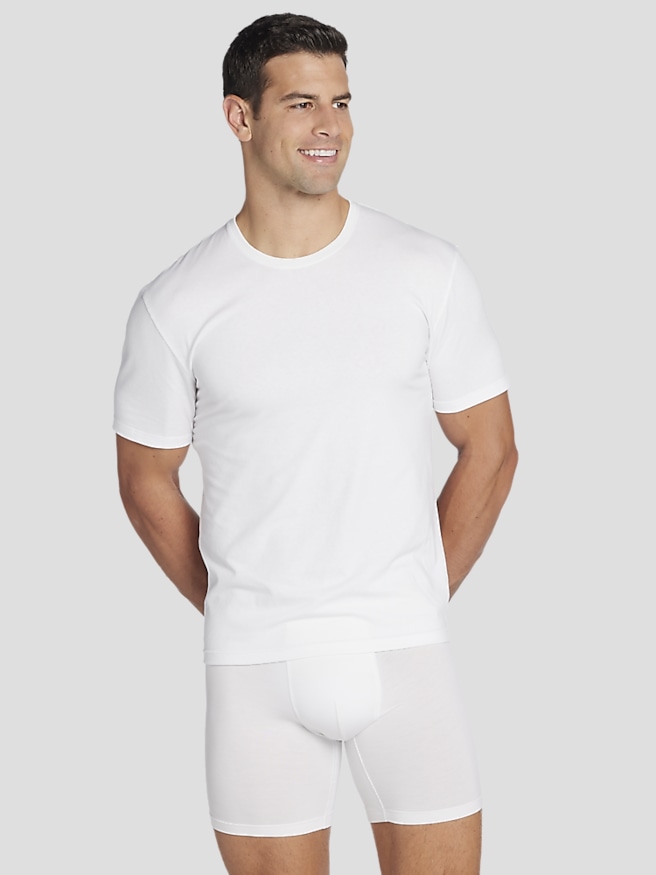
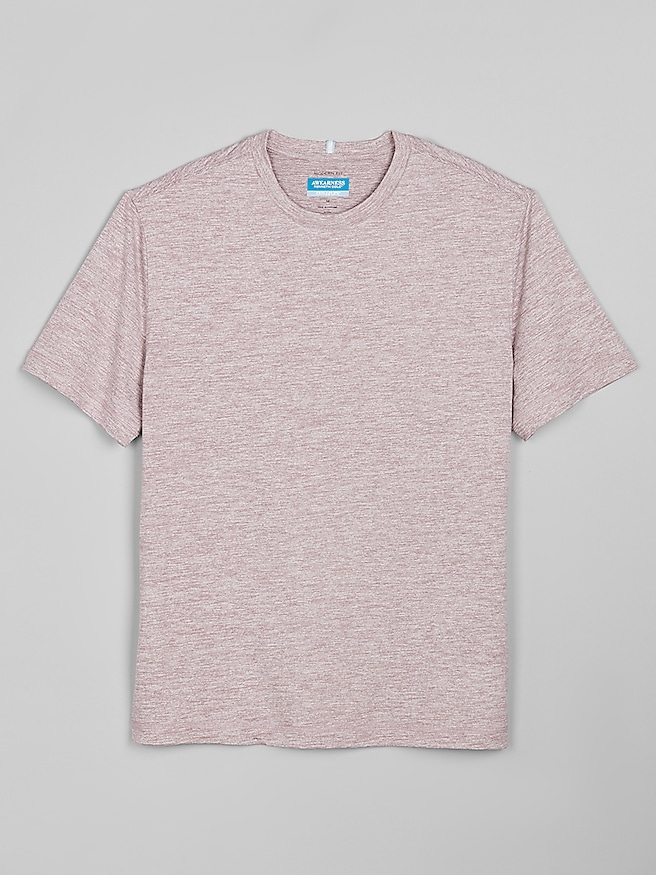
Stylish men's T-shirts combine an easy, familiar shape with details that make an outfit feel considered: a neckline that sits flat, sleeves that fall comfortably, fabric with a pleasing feel, and a silhouette that works with the rest of the wardrobe. A clean crew neck has a balanced, understated look that pairs naturally with jeans, chinos, or casual trousers. A V-neck opens up the neckline and can sit neatly beneath an unbuttoned shirt, while a pocket adds a small visual detail without making the design feel busy. Solid colors create a simple foundation for layering; stripes, subtle textures, and restrained graphics give a T-shirt more presence when worn on its own. White, black, gray, and navy are familiar starting points, while muted earth tones and richer shades can bring variety without requiring a completely new approach to getting dressed. Fit has just as much influence as color. On a traditional fit, the shoulder seams generally sit close to the outer edge of the shoulders, the chest has room for movement, and the fabric falls without pulling across the torso. A deliberately relaxed shape may have dropped shoulders and more volume, but its proportions should still look intentional. For a closer silhouette, men's slim fit casual T-shirts offer a streamlined direction that works especially well beneath an overshirt or casual jacket. Slim should not mean restrictive: sitting, reaching, and crossing the arms should feel comfortable. Sleeve length and body length complete the picture. Sleeves around the middle of the upper arm create a classic proportion, while an untucked hem typically looks balanced when it falls below the waistband without covering too much of the seat. The right length also depends on the rise of the pants and whether the T-shirt will be tucked in. Together, these details help a simple tee look deliberate rather than like an afterthought.
Fabric gives a T-shirt much of its character, from the way it drapes to how it feels after repeated wear. Cotton is a familiar choice for its soft hand and absorbency, though cotton fabrics can vary considerably in smoothness, weight, and structure. Combed cotton has been processed to remove shorter fibers and impurities, which can create a more even surface. Longer-staple cotton fibers can contribute to smoother yarns and good durability, but fiber length alone does not determine the quality of a finished garment. Yarn construction, knitting, finishing, and care all matter. Cotton blends introduce other characteristics: polyester can help a fabric dry more quickly and hold its shape, while a small amount of elastane adds stretch and recovery. Fabrics containing modal or lyocell often have a fluid drape and smooth feel, making the finished T-shirt look less structured than a dense cotton knit. Fabric weight is another useful distinction. A lightweight jersey tends to fall softly and layer with less bulk, while a heavyweight knit can create a firmer outline with more body. Weight is not a quality ranking; a substantial tee and a lighter, smoother tee serve different styling preferences. Slub yarns create subtle variations across the surface, giving a solid color more texture, while an even jersey knit keeps the appearance clean. Construction details deserve equal attention. Flat, secure seams are less likely to feel distracting against the skin, and an evenly attached neckband helps the opening maintain its shape. Reinforcement at the shoulders or back neckline can support areas that receive repeated stress. A straight hem and consistent stitching contribute to a neat finish whether the shirt is tucked or left loose. Opacity also depends on the combination of fabric, color, and fit, not simply thickness. A pale T-shirt stretched tightly across the chest may reveal more than the same fabric worn with a little ease. These distinctions explain why two seemingly simple tees can feel and wear quite differently.
The appeal of a well-chosen T-shirt is its range of everyday uses. With dark jeans and clean sneakers, a solid crew neck suits a casual dinner, an afternoon gathering, or a relaxed date. Worn beneath an open button-front shirt, it provides a simple base that lets pattern or texture take the lead. With chinos and an unstructured jacket, a smooth, understated tee can work for a workplace that explicitly permits casual attire, although a collared shirt remains the better choice wherever the dress code calls for one. A T-shirt intended for everyday dressing is also distinct from technical exercise clothing; softness and appearance do not necessarily indicate moisture-management performance. For travel, familiar fits and coordinating colors make it easier to combine pieces without packing a separate outfit for every activity. The same versatility makes T-shirts thoughtful gifts for someone who appreciates useful wardrobe staples. A known size, a preferred neckline, and a color that already appears in the recipient's wardrobe are more reliable starting points than guessing at an unfamiliar silhouette or graphic. Measurements from a well-fitting tee can help clarify length and chest width when comparing size charts. Keeping the garment looking good begins with its care label, since blends, dyes, prints, and finishes may require different treatment. Turning tees inside out can reduce friction against the outer surface during washing, especially on printed designs. Washing with similar colors and avoiding unnecessary heat can help limit fading and shrinkage, while prompt removal from the washer reduces time spent sitting creased. Drying flat or using a lower dryer setting may be appropriate when the label allows it; reshaping the neckline and hem while damp can help preserve an even outline. Folding often prevents the shoulder bumps that hangers can leave in softer knits. Rotating everyday favorites spreads out wear, and treating small stains promptly according to the fabric's care instructions helps keep a dependable T-shirt part of the regular wardrobe.