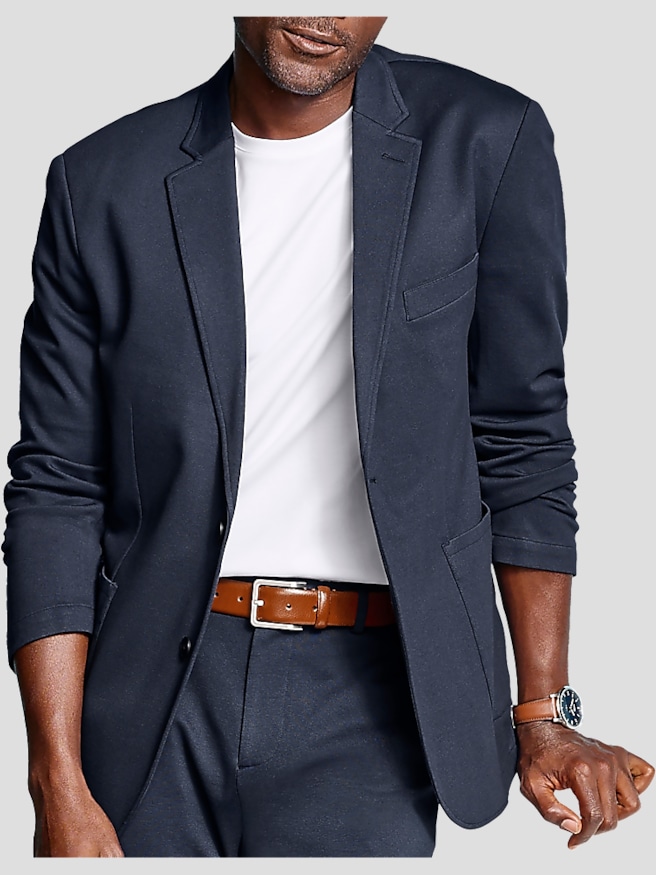
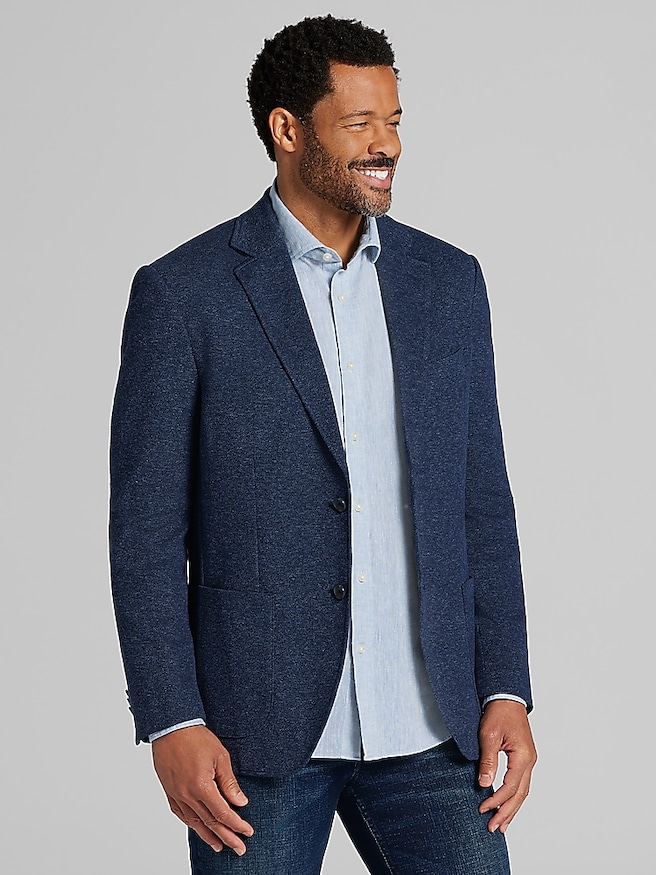
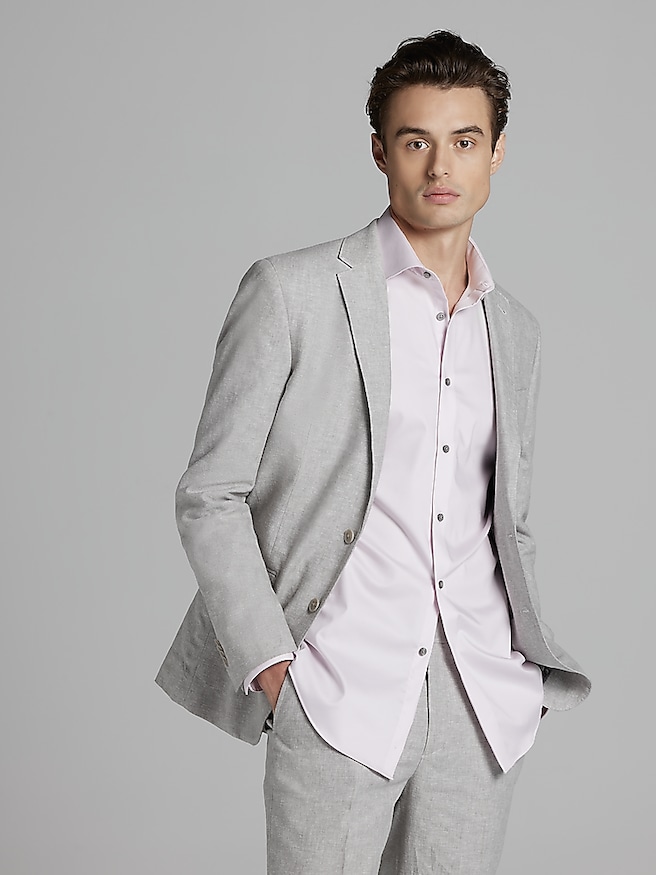
Men’s striped blazers bring a defined pattern to a tailored jacket, offering an alternative to solid colors for office outfits, dinners, celebrations, and polished everyday dressing. Their character comes largely from the width, spacing, and contrast of the stripes. Fine pinstripes create a restrained effect, especially when the lines sit close in color to a navy, charcoal, or gray background. Wider stripes have a more pronounced presence and can give a blazer a club-inspired or distinctly casual feel. Soft, slightly irregular lines tend to look less formal than sharp, evenly spaced stripes. Vertical patterns draw the eye along the jacket, while the overall silhouette still depends on the cut, proportions, and way the fabric hangs. A navy striped blazer with gray trousers and a white shirt creates a composed business outfit; the same jacket with dark denim and a plain knit shirt feels more relaxed. Unlike a matching suit, a blazer worn with separate trousers allows deliberate contrast between the upper and lower halves of an outfit. That distinction works best when the trousers are clearly different in color or texture rather than an almost-match. Subtle stripes can suit a client presentation, a restaurant reservation, or a celebration with a smart-casual dress code. Bolder patterns are better suited to settings where personal style has more room to stand out. For an occasion that specifically requires a suit or black tie, a striped blazer is not an equivalent substitute. Lapels, buttons, and pockets also influence the impression: patch pockets often look more casual, while flap pockets and a defined shoulder can feel more structured. Single-breasted designs generally offer a straightforward look that works across several settings. Double-breasted designs place more emphasis on the front of the jacket, making button placement, lapel width, and the alignment of the stripes especially noticeable. The result can be understated or expressive without losing the familiar shape of a tailored blazer.
Fabric and construction determine how a striped blazer feels throughout a full day of sitting, walking, and moving between appointments. Wool typically provides a clean drape and natural resilience, helping the jacket settle back into shape after ordinary wear. Cotton often has a drier, more casual texture, while linen brings visible texture and characteristic creasing that is part of its relaxed appearance. Blends combine fiber qualities, and a small amount of stretch may add ease, though comfort still depends on a well-proportioned cut. Fabric weight, weave, lining, and internal structure matter as much as the fiber name. A fully lined blazer has a finished interior that can slide smoothly over a shirt, while partial lining leaves more of the inside construction exposed and may create a less built-up feel. Neither construction automatically makes a jacket better; each produces a different wearing experience. For a softer approach to tailored dressing, Mens Knit Blazer styles provide a related option, with knitted construction that can offer natural give and a less rigid drape. In a striped blazer, fit is especially visible because the pattern makes pulling and distortion easier to spot. Shoulder seams should sit near the natural shoulder, and the collar should rest against the shirt collar without a noticeable gap. When the jacket is buttoned as intended, the lapels should lie smoothly rather than bow outward, and the front should not form deep X-shaped wrinkles. Slim fits follow the torso more closely, while classic or relaxed cuts leave additional room through the chest and waist. The right choice leaves enough space to sit comfortably and reach forward without obvious strain. Sleeve length generally allows a small amount of shirt cuff to show, and jacket length should balance the torso and trousers. Trying the blazer with the type of shirt normally worn underneath gives a more useful impression than checking it over an unusually bulky or thin layer.
A striped blazer is easiest to incorporate into a wardrobe when the surrounding pieces support the pattern rather than compete with it. Solid shirts, clean trouser fronts, and shoes with restrained detailing give the stripes room to register. A pale blue dress shirt can soften the contrast of a dark jacket, while a white shirt makes the pattern appear crisper. A plain crewneck or fine-gauge knit creates a more relaxed combination without adding another competing motif. If a tie is part of the outfit, a solid color or a pattern noticeably different in scale from the blazer’s stripes usually produces a clearer result than several similar narrow patterns. Dark, unfaded jeans can work for an informal dinner, while chinos or wool trousers make the outfit feel more tailored. Loafers, derbies, and minimal leather sneakers each shift the overall impression, subject to the setting’s dress code. For frequent wear, durability depends on appropriate fit, sound stitching, and care that respects the fabric. Strain at the elbows, pocket openings, or button closure can shorten a jacket’s useful life, so pockets are better kept free of bulky keys and overfilled wallets. A broad, shaped hanger supports the shoulders between wears, and allowing the blazer to air out before returning it to the closet helps keep it fresh. The care label should determine whether professional cleaning or another method is appropriate; striped fabrics may combine fibers or finishes with different requirements. Gentle brushing can remove surface dust from suitable woven fabrics, while pressing requires care to avoid shine, flattened texture, or damage to the lining. A striped blazer can also make a thoughtful gift for someone who regularly wears tailored separates, particularly when their jacket size, preferred fit, and usual colors are already known. A subtle stripe offers versatility for an established wardrobe, while a stronger pattern suits someone who enjoys making the jacket the focal point of an outfit.