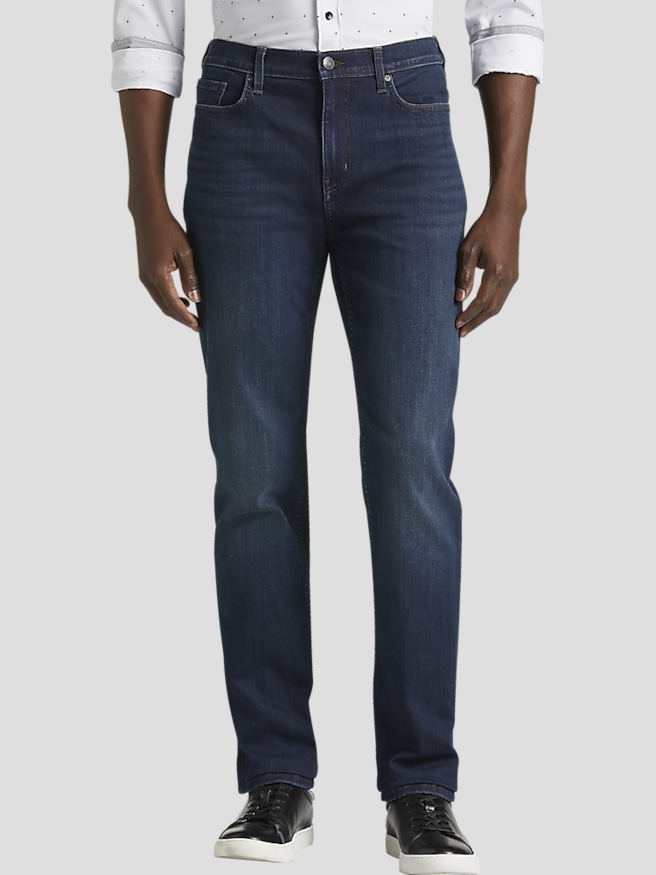
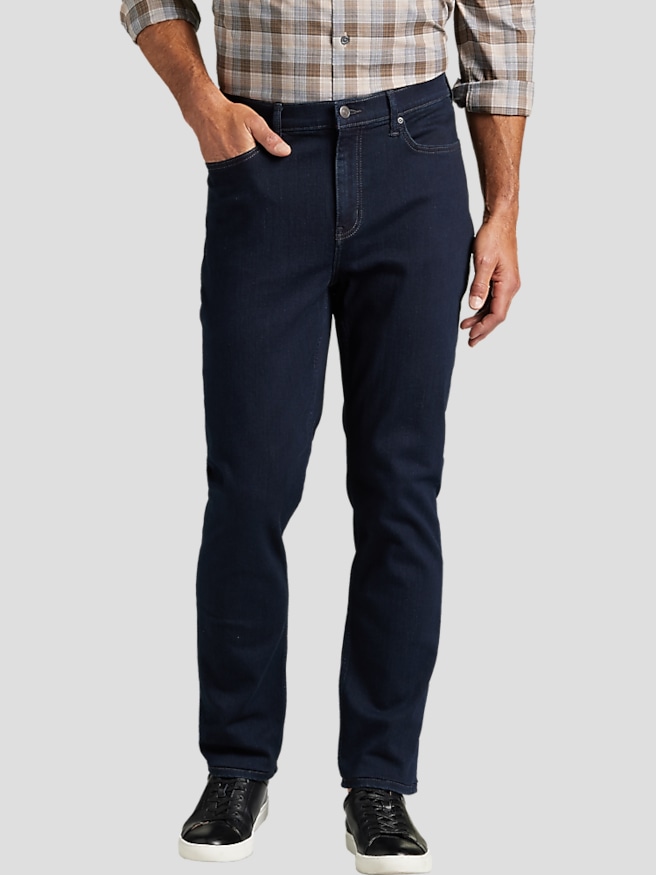
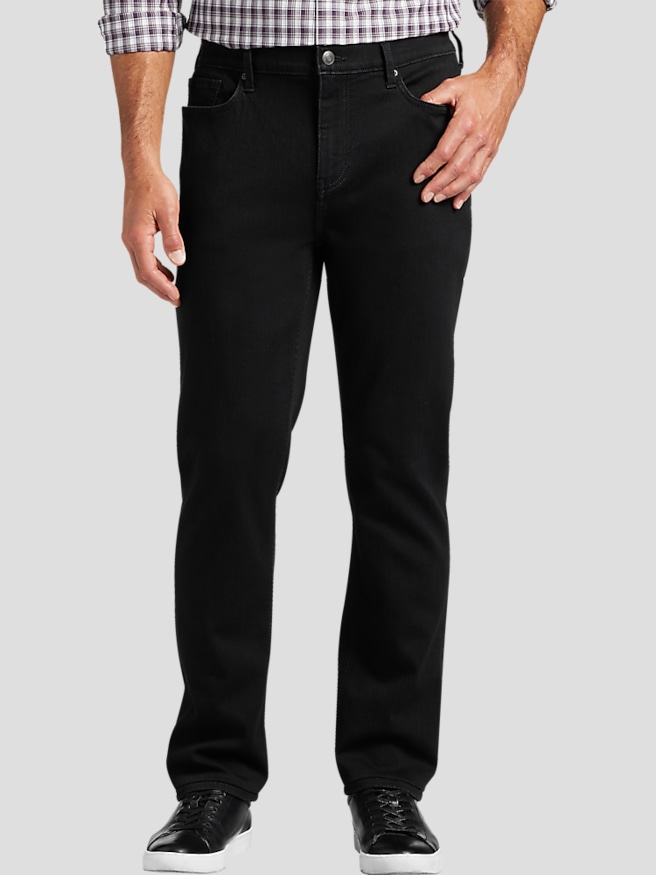
Men's slim straight jeans offer a clean silhouette without the close grip of a skinny leg or the extra volume of a relaxed cut. The shape generally sits closer through the seat and thighs, then follows a straighter line from the knee toward the hem. That balance makes the style useful for men who like their denim neat but still want room to move through an ordinary day, from a commute and a desk chair to a long walk or dinner with friends. Slim straight is a description of the cut, not a guarantee that every pair will feel identical. Rise, waistband construction, thigh measurements, and leg opening all influence how the jeans sit on the body. A mid-rise shape often works comfortably with both tucked and untucked shirts, while other rises can change where the waistband rests and how much room there is through the seat. A good fit stays in place without relying on a tightly cinched belt, lies reasonably smooth across the front pockets, and allows comfortable sitting without pulling sharply at the thighs. Persistent horizontal tension lines or pockets that flare outward can signal that the cut is too close in that area. Length matters just as much as waist size: a hem that lightly meets the shoe keeps the line tidy, while a small cuff adds a more casual finish. Excess fabric stacked around the ankle can obscure the straight-leg shape, especially with low-profile footwear. Men with fuller thighs may prefer a little stretch or additional room through the upper leg, even when the lower leg looks right. For someone with a leaner build, the appeal may be a defined outline that does not taper tightly at the ankle. The goal is proportion and comfort together, with enough ease for everyday movement and a leg shape that complements the rest of the outfit.
Denim's character comes from both its fiber content and its construction. Cotton gives jeans their familiar feel, with a twill weave that creates the subtle diagonal texture visible on the fabric's surface. All-cotton denim can feel more structured at first and gradually soften with repeated wear, while blends containing elastane or other stretch fibers can offer greater flexibility at the waist, seat, and knees. Stretch content alone does not tell the whole story; fabric weight, weave, and recovery also affect whether jeans hold their shape after hours of sitting and moving. Lighter denim tends to drape more softly, while a more substantial fabric can give the straight leg a firmer outline. Neither is automatically better, since the right feel depends on how the jeans will be worn. A pair intended for frequent travel may benefit from flexibility, while someone who enjoys traditional denim texture may prefer a more structured hand. Wash and finish change the overall impression, too. Deep indigo and black often look understated with a collared shirt, while faded blue, subtle whiskering, and visible wear effects create a more casual appearance. Durability depends on more than thickness: secure stitching, reinforced pocket openings, and a well-constructed waistband all contribute to how jeans handle repeated use. Care should follow the garment label, particularly when stretch fibers or special finishes are involved. Washing inside out with similar colors can help limit surface abrasion and reduce the chance of transferring dye to other clothing. Cool water and a suitable detergent are often appropriate when permitted by the care instructions. Excessive heat can affect fit, color, and elastic fibers, so the recommended drying method matters. Dark denim may also transfer color onto light upholstery or footwear, especially early in its wear. Letting jeans dry fully before putting them away and addressing small seam or pocket repairs promptly are practical ways to keep frequently worn denim in good condition.
The versatility of slim straight jeans becomes clear in the details around them. A plain T-shirt and clean sneakers make a straightforward combination for errands, a casual lunch, or an afternoon spent walking around town. An Oxford shirt, knit polo, or fine-gauge sweater brings a little more definition without making the denim feel out of place. For a workplace that permits jeans, an even dark wash with minimal distressing can sit comfortably alongside a tucked-in shirt and an unstructured jacket, provided the office dress expectations support that level of casual clothing. Jeans still have a distinctly informal character, so they are not a substitute for tailored trousers at events that call for a suit or more formal dress. Footwear can shift the proportions noticeably: low-profile sneakers emphasize a clean hem, loafers create a sharper finish, and boots benefit from a leg opening that clears the shaft rather than catching above it. A straight lower leg is especially useful when a very narrow opening would bunch against the shoe. Men drawn to a closer overall silhouette may also consider men's casual slim fit jeans, keeping in mind that the amount of taper and room through the thighs can differ among cuts. Slim straight denim can also make a thoughtful gift for a father, brother, partner, or adult son who already wears jeans regularly and appreciates a streamlined shape. The most helpful clues are an existing pair's waist and inseam, the recipient's preferred rise, and whether he tends to choose rigid or stretch denim. Color preference matters as well: someone who wears crisp button-down shirts may reach for a darker finish, while someone whose wardrobe centers on T-shirts and casual footwear may feel more at home in a faded wash. With the right proportions and fabric feel, slim straight jeans become an easy foundation for familiar outfits, offering a consistent shape without demanding a complicated approach to getting dressed.