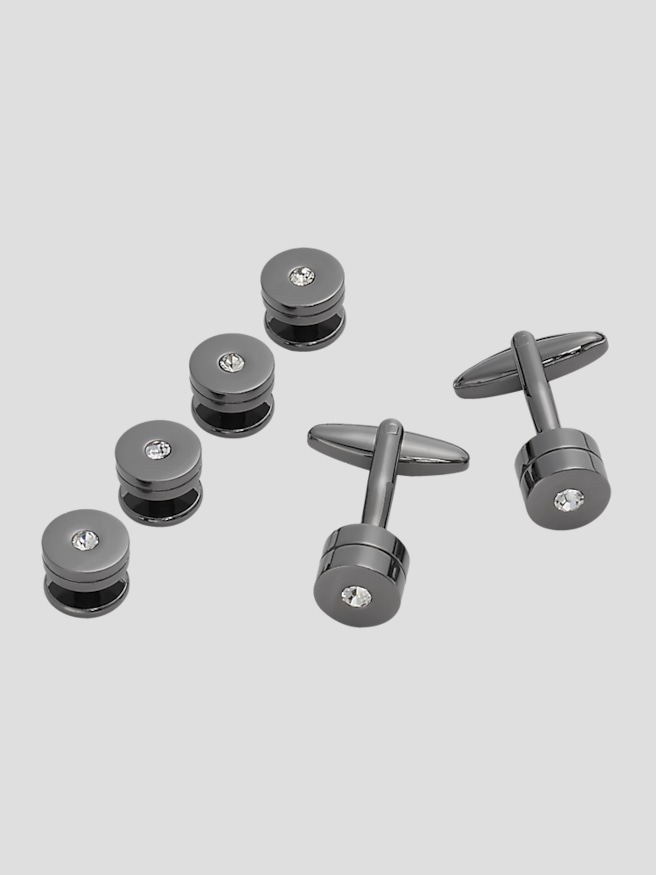
Men's statement rings are defined by bold proportions, distinctive surfaces, and details that make a ring a focal point rather than a background accessory. A broad band, raised face, sculptural shape, or contrasting stone can create that effect, but size alone does not determine the impact. A clean geometric design with a polished edge can be just as noticeable as an ornate ring with deeply carved detailing. Signet-inspired shapes bring a sense of tradition, recalling rings historically used to carry a personal emblem or seal, while angular profiles and brushed finishes have a more contemporary character. Texture changes the impression, too: hammered metal catches light unevenly, engraved patterns reward a closer look, and a smooth, high-polish surface creates a crisp reflection. These details give men's statement rings a place alongside both tailored clothing and relaxed everyday outfits. Against a navy suit and white shirt, a substantial ring can provide a deliberate finishing touch without competing with the clothes. With dark denim and a plain knit shirt, the same general style can become the outfit's main visual detail. The darker palette of Men's Black Rings offers another way to create contrast, particularly alongside pale shirt cuffs, silver-tone accessories, or textured fabrics. Coordination does not require every metal surface to match exactly. A shared finish, similar shape, or repeated dark accent can connect a ring with a watch, belt buckle, or cuff links while keeping the overall effect relaxed. Wearing one prominent ring often gives its design room to stand out; combining several creates a more expressive look when their widths and profiles feel balanced across the hand. For someone whose wardrobe is mostly neutral, a statement ring adds personality without requiring a dramatic change in clothing. Its appeal lies in that flexibility: a small accessory can carry a strong visual signature, whether the preference is understated geometry, traditional symbolism, or a richly detailed surface.
Materials influence a statement ring's weight, feel, maintenance, and long-term appearance as much as its color does. Sterling silver has a recognizable brightness and can develop tarnish over time, making occasional cleaning part of its upkeep. Some designs use darkened recesses intentionally to emphasize engraving, so aggressive polishing may alter the intended contrast. Gold offers a different character, with durability influenced by its karat and alloy composition rather than its color alone. Stainless steel generally resists everyday corrosion and has a substantial feel, although polished surfaces can still show scratches. Titanium is comparatively lightweight, which can make a broad design feel less substantial on the hand than its appearance suggests. Tungsten carbide is known for hardness and scratch resistance, but hardness is not the same as toughness: a hard impact can cause chipping or breakage. Resizing options also vary by material and construction, especially with alternative metals, continuous patterns, and stone-set designs. A ring's finish deserves similar attention. Matte surfaces soften reflections, polished edges sharpen the outline, and applied dark coatings may gradually show wear at high-contact points. None of these characteristics automatically makes one material better for every wearer; the right balance depends on how the ring will be used and how much maintenance feels practical. Someone who wears a ring mainly to dinners and celebrations may prioritize sculptural detail, while frequent wear calls for close attention to comfortable edges and straightforward care. A soft cloth is useful for removing fingerprints, and gentle soap and water may suit some plain metal designs when permitted by their care instructions. Stones, adhesives, coatings, and intentionally darkened details can require different treatment. Abrasive cleaners, chemical dips, and ultrasonic devices are not universally appropriate. Separate storage helps prevent rings from rubbing against other jewelry, and removing them before lifting weights, swimming, handling strong chemicals, or working with tools protects both the finish and the hand. Even a durable ring benefits from avoiding unnecessary impact and pressure, particularly when its design includes raised settings or projecting details.
Fit becomes especially important with men's statement rings because wider bands and larger faces occupy more space on the finger. A broad band may feel tighter than a narrow ring in the same nominal size, so a measurement taken with a similar width provides a more useful starting point. The ring should pass over the knuckle with some resistance and sit securely at the base without pinching, leaving a deep indentation, or restricting normal movement. Rounded inner edges can improve comfort, while the height of a setting affects how easily the ring moves beneath a shirt cuff or into a pocket. A prominent face that looks balanced on the middle finger may feel awkward on another finger if it presses against neighboring knuckles. The most wearable design is one that feels natural while holding a phone, typing, fastening a jacket, or reaching for a wallet. Daily routines matter as much as appearance: hands-on work and activities involving machinery may require leaving jewelry off entirely, while office settings and social occasions offer more opportunities for expressive designs. Statement rings can also make meaningful gifts for birthdays, graduations, anniversaries, and personal milestones. A familiar shape, symbolic motif, or finish that echoes the recipient's watch can make the choice feel thoughtful without relying on an inscription. Accurate sizing is particularly valuable for a gift, especially when the material or design limits later adjustments. Existing jewelry preferences provide useful clues about comfortable weight, preferred metal tones, and whether a bold face or simpler band is more likely to become a regular favorite. For weddings, celebrations, or an evening out, a statement ring can complement tailoring while remaining personal enough to wear afterward with everyday clothes. Its lasting appeal comes from the combination of distinctive design and practical comfort: a ring should look intentional when the hand is at rest, feel comfortable in motion, and suit the way its wearer actually dresses and lives.