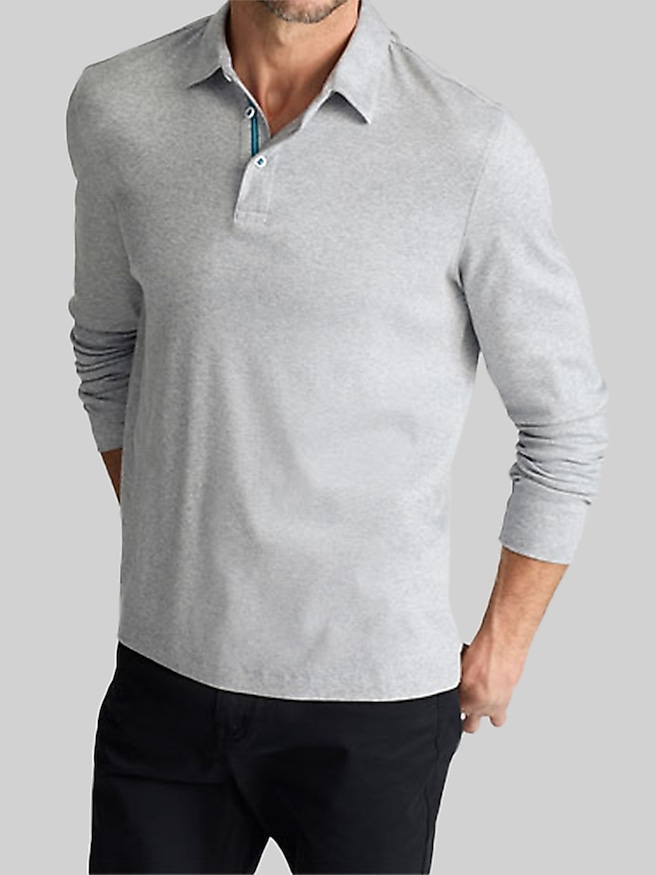
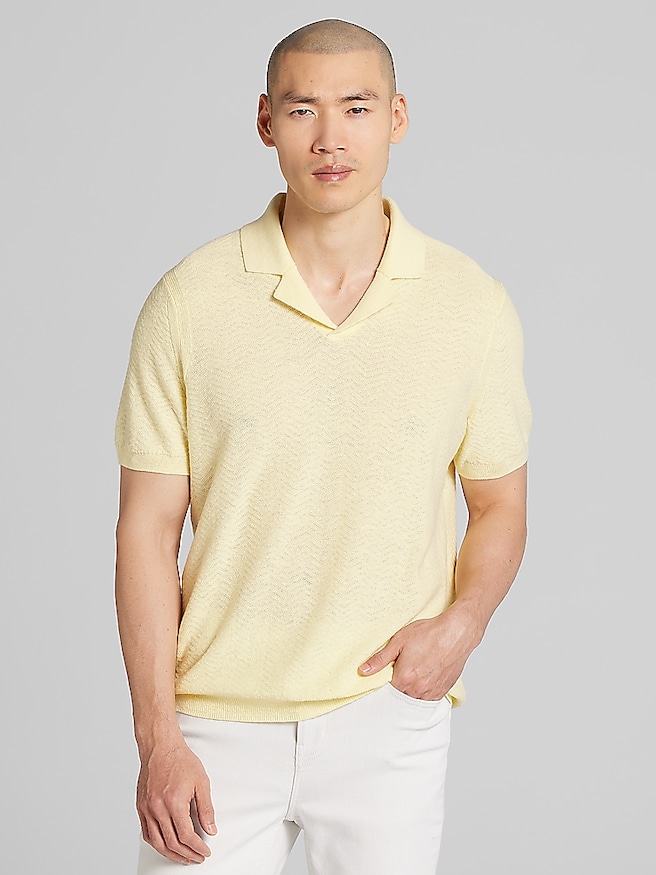
Men's solid polo shirts bridge the space between a casual T-shirt and a dress shirt, pairing the comfort of a knit with the definition of a collar and buttoned neckline. A single-color design keeps the focus on fit, fabric, and proportion rather than a print, making it easy to combine with clothing already in a wardrobe. Navy, black, gray, and white create straightforward combinations with denim and chinos, while burgundy, olive, and blue can add color without introducing a pattern. Solid polos work well for an office with a relaxed dress code, a restaurant dinner, a family gathering, or a day that moves between errands and informal plans. Their character depends as much on construction as color. Cotton piqué has a small, textured knit surface that gives a polo its familiar sporty appearance; its structure can help the shirt sit away from the body, although breathability also depends on fabric weight and knit density. Cotton jersey has a flatter surface and a more T-shirt-like drape, while interlock is a double-knit construction that often feels smoother and more substantial. Cotton generally offers softness and absorbs moisture, but it does not necessarily dry as quickly as fabrics designed for athletic use. Polyester or nylon blends may provide quicker drying and easier wrinkle recovery, depending on their construction and finish. A small amount of elastane can add stretch for reaching, bending, or sitting comfortably through a long meeting. Moisture-wicking performance should be identified in the fabric description rather than assumed from fiber content alone. These distinctions matter in everyday use: a textured cotton polo lends character to plain chinos, a smooth knit creates a cleaner line beneath an unstructured jacket, and a stretch performance fabric can suit golf or other activities involving repeated movement. No single material is best for every setting; the right balance comes from how the shirt feels, how it hangs, and what the day requires.
Fit gives a solid polo much of its polish because there is no busy pattern to distract from the silhouette. Shoulder seams generally look most balanced near the edge of the shoulder, with enough room across the upper back to reach forward without pulling the fabric taut. The chest should lie comfortably rather than stretch into horizontal lines, and the button placket should rest flat instead of spreading open. Slim fits follow the torso more closely, classic fits typically leave additional room through the chest and waist, and relaxed fits allow greater ease; those labels are not standardized, so measurements are more dependable than the fit name alone. Sleeve length and opening also affect the overall impression. A sleeve that ends around mid-bicep creates a familiar polo proportion, while the opening should allow movement without gripping the arm. For an untucked look, a hem around the middle of the trouser fly is a useful starting point, adjusted for torso length and trouser rise. A shirt intended for tucking needs enough length to stay secure when sitting or reaching. Side vents can help the hem move over the hips, and a slightly longer back hem may provide additional coverage. Collar shape deserves attention, too: a soft ribbed collar gives a relaxed finish, while a more structured collar can maintain a defined outline beneath a jacket. The Mens Button Up Polo Shirts collection provides another way to explore this familiar collared style. For everyday combinations, a navy solid polo with stone chinos creates clear contrast, while a charcoal polo with dark denim keeps the look understated. A tucked polo with tailored trousers and a simple belt can fit a business-casual setting when the dress code allows it. Under a sport coat, a smooth body and neatly settled collar help prevent bunching around the neckline. Solid colors also leave room for textured trousers, a patterned jacket, or distinctive footwear without making every part of the outfit compete for attention.
Care and construction influence how well a solid polo keeps its shape and color over repeated wear. The care label is the best starting point because similar-looking knits can have different washing and drying requirements. Cotton may shrink with excessive heat, and stretch blends can lose resilience when exposed to care methods the label does not recommend. Washing with similar colors, turning the shirt inside out, and avoiding an overloaded machine can help limit surface abrasion. Detergent residue and repeated friction may dull the appearance of dark shades, while rough contact with zippers or hook-and-loop fasteners can snag some knit surfaces. Prompt stain treatment using a method appropriate for the fabric can help address marks around the collar and underarms before they become harder to remove. When permitted by the care label, lower-heat drying or reshaping and air-drying may help preserve dimensions; laying a damp knit flat can also prevent the shoulder bumps or stretching that a hanger may cause. Folding after drying keeps the collar from being compressed beneath heavier clothing. Durability is not simply a matter of choosing the thickest fabric. Even stitching, secure buttons, a placket that lies smoothly, and reinforcement at stress points all contribute to dependable wear. Ribbed collars and cuffs should recover after gentle stretching rather than remain visibly distorted. Pilling can occur when loose fibers rub together, so a smooth surface at first wear does not guarantee that every fabric will age the same way. For frequent office wear, easy care and reliable shape retention may matter most; for travel, wrinkle recovery and drying time can be especially useful. Solid polos can also make thoughtful gifts for fathers, partners, brothers, graduates, or anyone who favors uncomplicated clothing. A familiar color, a known size, and a fabric suited to the recipient's routine make the choice more personal. With comfortable proportions and appropriate care, a solid polo can become a dependable part of a wardrobe without needing elaborate styling.