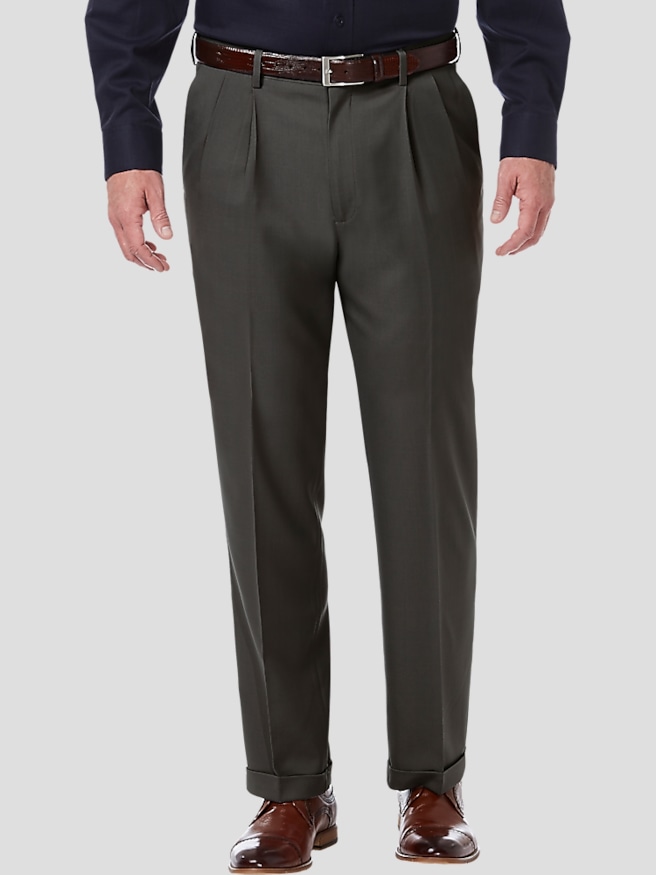
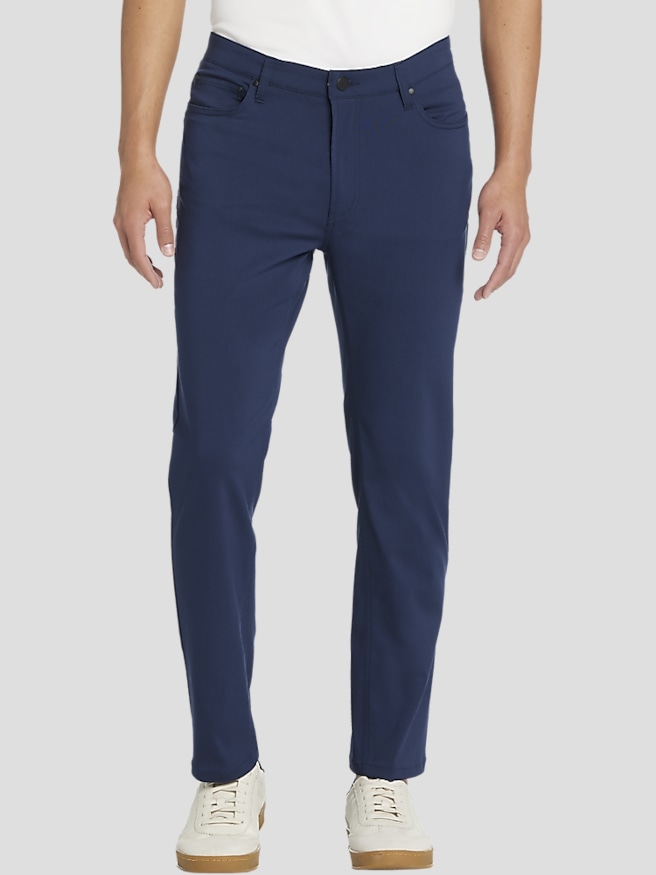
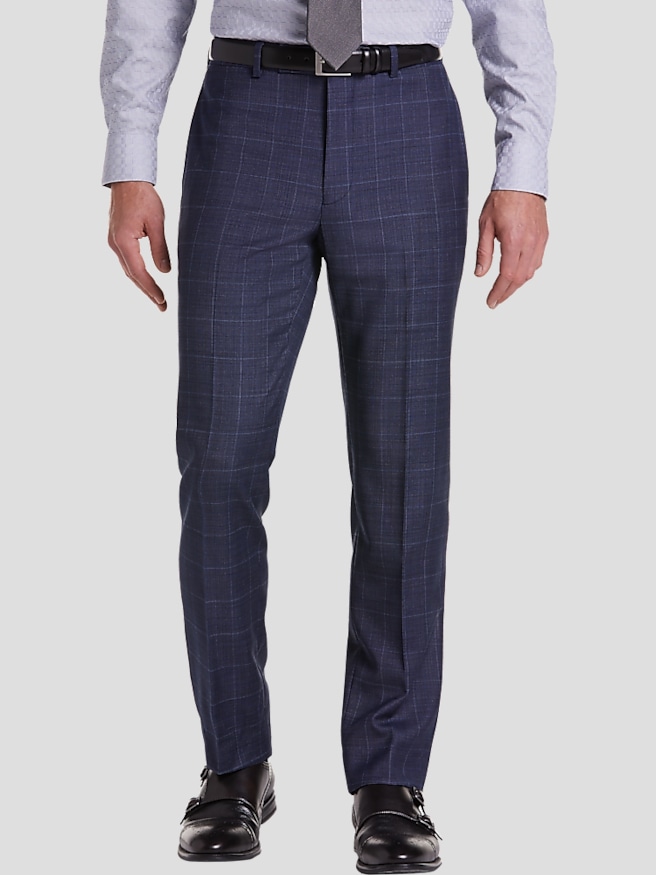
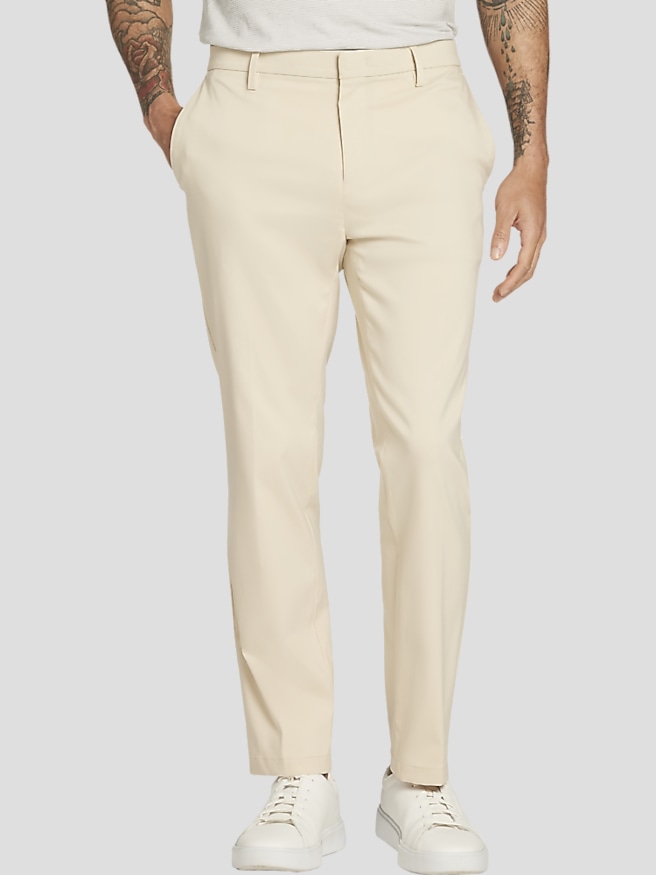
Men's slim fit cropped pants combine a streamlined shape with a shorter hem that leaves the ankle visible and keeps fabric from pooling over shoes. Slim describes the width through the seat, thigh, and leg; cropped describes the length. Those details work together, but they are not interchangeable: full-length slim pants can have a similar outline without the same ankle-revealing finish. Within the broader Men's Slim Pants category, cropped proportions put extra emphasis on the relationship between the hem and footwear. Unlike a skinny fit, a comfortable slim fit generally follows the body without gripping the calf or pulling across the thighs. The result looks intentional rather than simply too short, especially when the leg narrows smoothly toward a neat hem. For an understated crop, the hem can sit near or just above the ankle bone, with little to no break against the shoe. A higher crop reveals more ankle, though the effect depends on height, inseam, rise, and footwear rather than a fixed number of inches. A well-fitting waistband stays secure without a belt gathering excess fabric, and pockets lie reasonably flat when standing. Sitting at a desk, climbing stairs, or stepping into a car should feel comfortable rather than create strain across the lap. A little room through the seat and thigh helps preserve the clean shape while allowing everyday movement. Rise matters, too: a mid-rise cut may feel familiar for daily wear, while a higher rise can create a longer visual line with a tucked shirt. On shorter builds, a cropped inseam may land closer to a traditional ankle length; taller builds may need more length to achieve the same proportion. Comparing measurements with a comfortable pair already in rotation provides a useful starting point, especially when size labels alone do not tell the whole story.
Fabric gives slim fit cropped pants much of their character, from the relaxed texture of cotton twill to the smoother drape of fine wool and wool blends. Cotton twill has enough structure to define the tapered leg while remaining easy to pair with everyday shirts and knitwear. A small amount of elastane can add flexibility through the knee and seat, although stretch should support a good fit rather than compensate for pants that are too tight. Wool and wool-blend trousers can create a more tailored impression, particularly with a pressed crease that draws the eye down the leg. Synthetic blends may contribute wrinkle resistance or shape retention, but the fabric composition and care label provide a better picture than a broad performance description. Weight and weave also affect how a cropped hem hangs: a substantial cloth may hold a sharper outline, while a lighter, more fluid fabric can move more freely. Surface texture changes the mood without requiring a bold pattern. A matte twill reads casually with a knit polo, while a subtle woven texture can bring depth to a shirt-and-jacket combination. Navy, charcoal, and black offer a restrained foundation for office outfits where the dress code permits an ankle-length silhouette. Stone, tan, and olive can work well for less formal settings, including a restaurant dinner or a gathering with friends. A tucked button-down and an unstructured jacket give cropped trousers a polished appearance without making the outfit feel stiff. With a simple T-shirt or a fine-gauge sweater, the same general shape feels more relaxed. Shirt length deserves attention here: an untucked hem that extends too far down the thigh can overwhelm the shorter pant length, while a tidier shirt hem lets the proportions remain visible. For business meetings or celebrations with a specific dress code, the expected level of formality matters more than the appeal of the silhouette alone.
Footwear plays a particularly visible role with men's cropped pants because there is less fabric between the leg opening and the shoe. Low-top sneakers create a clean, casual finish, especially when their shape is relatively slim rather than oversized. Loafers bring a dressier note, and lace-up dress shoes can work with tailored fabrics when the hem clears the shoe without exposing an awkward amount of leg. The best balance depends on both the shoe and the opening: a very narrow hem may look crowded above bulky footwear, while a slightly more generous opening allows the line to settle naturally. No-show socks can preserve the exposed-ankle effect without requiring bare feet inside shoes; visible dress socks offer another polished approach. Socks close to the trouser color create a quieter transition, while a contrasting color makes the ankle area more noticeable. The finish at the bottom matters as much as the styling above it. A clean plain hem keeps the outline simple, while a cuff adds visual weight and can make the crop more pronounced. When alterations are needed, checking the length while wearing the intended shoes helps establish the right position before fabric is cut. Everyday care helps that shape last. Following the care label is essential, since washable cotton blends and tailored wool fabrics may need very different treatment. Emptying pockets, addressing stains promptly, and avoiding unnecessary heat can help protect the fabric and finish. Pants that require pressing benefit from the temperature and method recommended for their material; hanging them neatly also helps limit deep creases between wears. Durability depends on construction as well as fabric, with secure seams, sturdy pocket edges, and a smoothly finished hem worth examining. A fit that allows comfortable movement reduces repeated stress at the seat and inner thighs. For someone who likes tailored clothing with a modern proportion, cropped pants can also make a thoughtful gift when waist size, preferred rise, and inseam are known. Those details help turn a distinctive silhouette into a pair that feels natural in an everyday wardrobe.