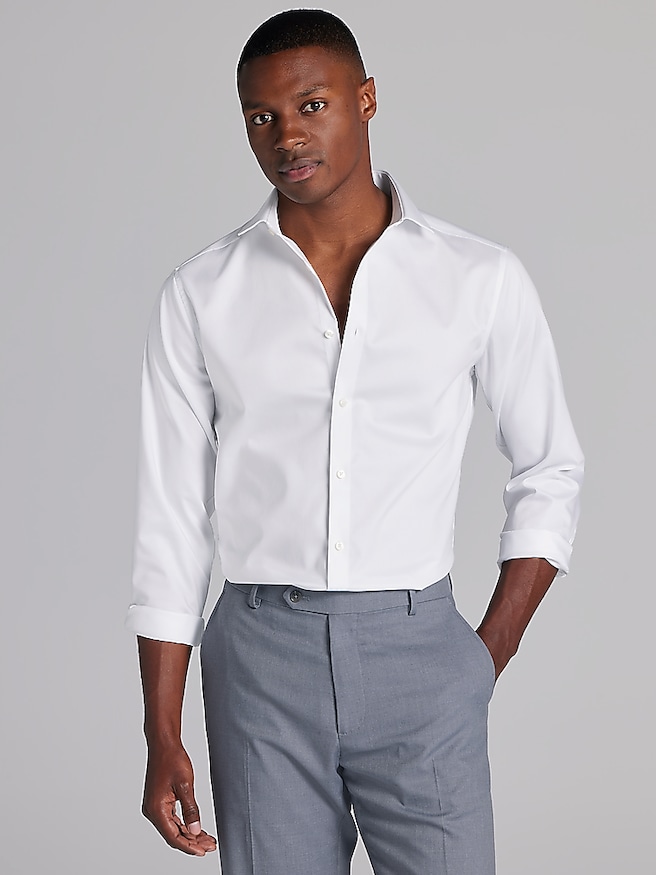
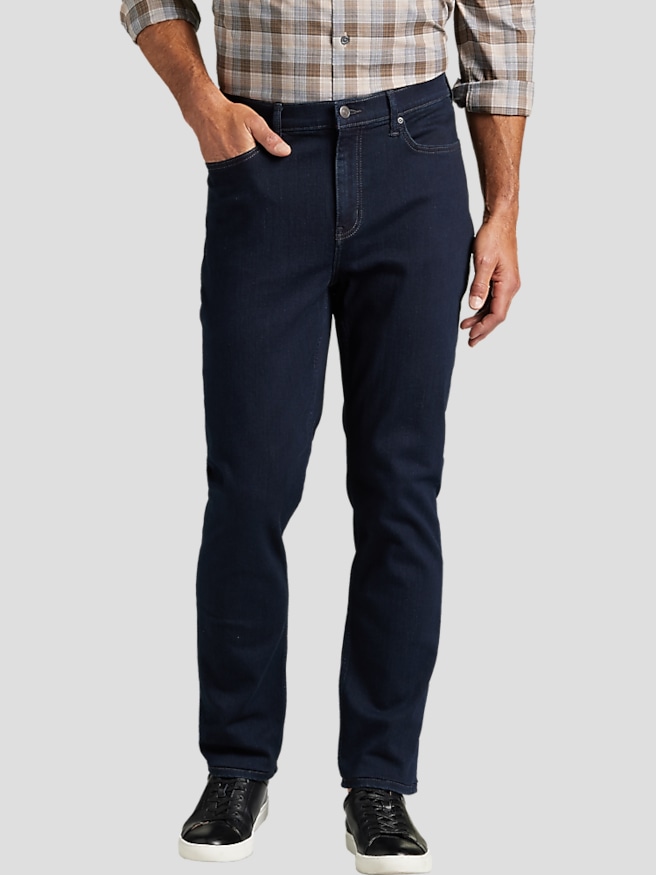
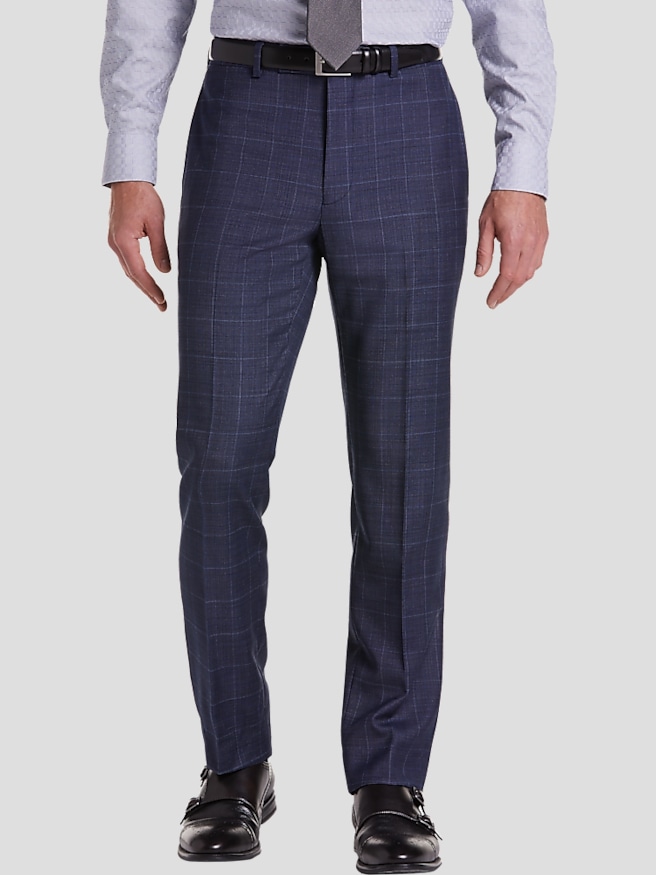
Men’s slim fit clothing follows the body more closely than a traditional or relaxed cut, creating a defined silhouette with less excess fabric through the torso, sleeves, and legs. The goal is a clean outline, not a tight squeeze: a shirt should lie smoothly across the chest, trousers should allow comfortable movement, and a jacket should close without pulling into an X around the button. Slim fit is also distinct from skinny fit, which typically sits closer to the body and narrows more sharply through the leg. Across dress shirts, suits, sport coats, chinos, jeans, and knit tops, the proportions work together to give an outfit a tailored appearance without making every piece feel formal. A neatly tucked shirt and tapered trousers can look composed at the office, while a fitted knit top and dark denim bring the same sense of proportion to dinner or a casual gathering. This cut can suit a range of builds; shoulder width, chest room, rise, and thigh space matter more than a body-type label. Someone with broader shoulders may need extra room across the upper back even when a shaped waist feels right, while someone with fuller thighs may prefer a gentler taper below the knee. Fit names are not standardized, so garment measurements and the way clothing sits during everyday movement provide a more useful reference than the label alone. Sitting at a desk, reaching forward, or walking up stairs should not cause pronounced pulling at seams or pockets. Shoulder seams should generally sit near the shoulder’s edge, and shirt buttons should stay flat rather than spread apart. These small details distinguish clothing that simply looks narrow on a hanger from clothing that feels balanced on the person wearing it. A well-proportioned slim fit leaves enough ease for the fabric to drape naturally while keeping the overall shape close and intentional.
Fabric and construction influence how men’s slim fit clothing looks, moves, and holds its shape throughout the day. Cotton shirting can offer a crisp surface and comfortable breathability, while cotton jersey has a softer feel suited to T-shirts and other casual layers. Oxford cloth brings visible texture, and finer, smoother weaves create a more polished impression beneath a jacket. Wool suiting fabrics are valued for their drape and resilience, helping tailored clothing follow the body without appearing stiff. Cotton twill gives chinos a defined shape, while denim adds texture and substance to everyday outfits. A small amount of elastane can provide useful give through a fitted seat, knee, or elbow, though stretch should support a good fit rather than compensate for clothing that is too small. Fiber content alone does not determine performance: fabric weight, weave, finishing, and seam construction also affect softness, recovery, and durability. A knit with good recovery returns toward its original shape after movement instead of remaining stretched at the elbows or hem. For a streamlined casual foundation, men’s slim fit T-shirts offer a close, uncomplicated shape that pairs naturally with jeans or chinos and can sit smoothly beneath an open shirt. Neckline shape and body length make a noticeable difference here; a hem that extends well beyond a jacket can disrupt the proportions, while one that is too short may ride up when reaching. In dressier combinations, a slim shirt reduces bunching beneath a sport coat, and trousers with a gradual taper keep the lower half of the outfit visually balanced. Solid colors emphasize the silhouette, subtle patterns add interest without overwhelming it, and textured fabrics give simple combinations more depth. Navy, charcoal, white, and earth tones are useful starting points for clothing intended to move between professional settings and informal plans. The result can be understated or expressive depending on the combination, with the fit providing continuity across the outfit.
The practical appeal of slim fit clothing is its ability to support a cohesive wardrobe for work, celebrations, dates, and everyday routines. A suit with a shaped jacket and tapered trousers can serve interviews or wedding attendance when its fabric and details match the occasion’s dress expectations. A sport coat with chinos offers a less formal alternative for a business lunch, while a simple knit and jeans can feel put together without looking dressed up. Length is especially important in these combinations. Jacket sleeves should allow an appropriate glimpse of shirt cuff, and trouser hems should meet the shoes cleanly rather than collect in heavy folds. A slight break or little break often complements a tapered leg, although footwear and personal preference influence the final choice. Alterations may refine sleeve length, trouser hems, or the waist, but shoulders and the overall structure should feel right from the start. Care also plays a significant role in preserving a close-fitting garment’s proportions. Following the care label helps protect against shrinkage, distortion, and damage to finishes; washable clothing may benefit from gentle cycles and lower drying heat when permitted. Knitwear is best stored folded when hanging could stretch the shoulders, while structured jackets benefit from supportive hangers that maintain their shape. Prompt attention to stains, secure buttons, and small seam repairs can help clothing stay presentable through repeated wear. Clothes that pull constantly at the seat, thighs, or upper arms place added strain on fabric and stitching, making adequate movement room part of durability as well as comfort. For someone building a professional wardrobe or refining an everyday style, slim fit clothing offers a consistent visual foundation without requiring every outfit to look alike. It can also make a thoughtful gift when the recipient’s measurements, preferred cut, and care habits are known. Pieces that suit an established routine are more likely to be worn often, whether that means shirts that tuck neatly for office days or comfortable casual layers with a defined shape.