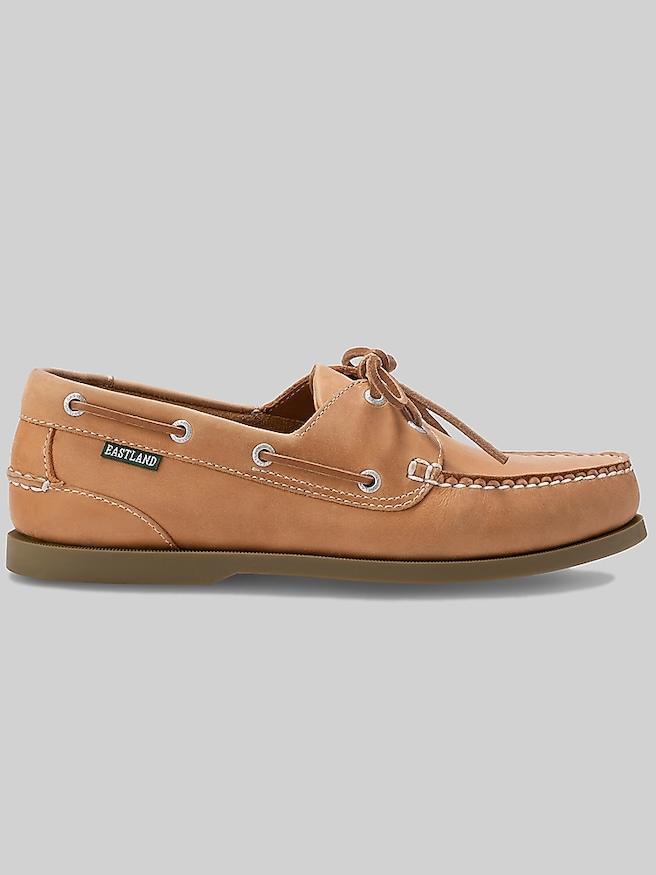
Men’s size 9.5 boat shoes bring a relaxed, nautical shape to everyday outfits without the bulk of an athletic shoe or the formality of a dress shoe. Their familiar profile often includes a low-cut collar, moccasin-inspired stitching around the toe, and laces threaded through eyelets along the sides. Those details give the category its character, but the appeal extends well beyond a dock or deck. Boat shoes look at home beneath straight-leg chinos at a casual dinner, with tailored shorts for a waterfront lunch, or alongside dark denim when sneakers feel a little too sporty. Brown and tan leather create a classic pairing with navy, olive, and stone-colored pants, while darker shades offer a quieter finish with charcoal or indigo. For a brighter contrast, Mens White Boat Shoes can complement light-colored trousers, a striped shirt, or a simple knit polo. Material makes a noticeable difference in both appearance and feel. Smooth leather often develops creases and a subtle patina with wear, giving the shoe a more lived-in character over time. Suede has a softer, matte surface that works especially well with textured fabrics, while canvas can create a more casual look with less structure around the foot. The right choice depends as much on daily habits as on personal style: a pair intended for dinners and relaxed office settings serves a different purpose from footwear chosen for regular time around a marina. Boat shoes sit most naturally within casual and smart-casual wardrobes rather than occasions calling for a suit and polished dress shoes. Their low profile also makes trouser length worth noticing. A clean hem with little excess fabric lets the stitching and lacing remain visible, while a heavy stack of denim can overwhelm the shape. The overall effect is easygoing but considered, particularly when the rest of the outfit keeps a similarly simple line. A braided belt or understated watch can finish the outfit without turning a nautical influence into a costume.
Size 9.5 is a useful starting point, but a comfortable fit depends on more than the number printed inside the shoe. Foot width, instep height, toe shape, and the proportions of the shoe’s last all influence how a boat shoe feels once it is laced. A well-fitting pair should hold the heel securely without pinching the back of the foot, leave room for the toes to move naturally, and feel supportive across the middle rather than tight along the edges. Some heel movement may be noticeable in a low-cut shoe, but repeated slipping can cause friction and make each step feel less secure. The lacing found on many boat shoes can help adjust the fit around the upper, though it cannot correct a shoe that is fundamentally too narrow or too short. Leather may soften with wear, but uncomfortable pressure should not be treated as a necessary break-in stage, and a shoe should not be expected to gain meaningful length. Sock choice matters, too. No-show socks preserve the familiar bare-ankle look while adding a layer between the foot and lining; a thicker sock can change the fit enough to make an otherwise comfortable size feel crowded. Interior details deserve attention for anyone planning to spend several hours on foot. Cushioning can soften the feel underfoot, while lining materials and interior seams affect contact against the skin. A flexible forefoot helps the shoe move with the foot, but substantial walking may call for more structured support than a traditional boat shoe provides. Outsole design also varies. Rubber soles with fine grooves, often called siping, are associated with the category’s boating heritage, although grip depends on the sole material, tread condition, and surface beneath it. A boat-shoe silhouette alone does not establish slip resistance, and non-marking soles should be confirmed through the footwear’s stated details. These distinctions matter whether the day involves a short drive to lunch, standing at a casual gathering, or walking between a dock and the clubhouse.
Regular care helps size 9.5 boat shoes keep their shape and finish, especially around the toe stitching, heel lining, and flex points where everyday wear becomes visible first. Smooth leather generally benefits from having loose dirt brushed away and surface marks wiped with a soft cloth, followed by a suitable leather-care treatment when recommended for the material. Too much conditioner can alter the finish or leave residue, so a light application and a discreet test area are sensible precautions. Suede needs its own approach: a suede brush can lift the nap and loosen dry dirt without flattening the texture, while a treatment intended for smooth leather may darken or stain it. Canvas care varies with the construction, adhesives, and trim, making the care directions more reliable than an assumption that the entire shoe can go into a washing machine. Contact with water also deserves a little perspective. Boating roots do not make every boat shoe waterproof, and leather, suede, and fabric can react differently to moisture. If a pair becomes wet, allowing it to dry naturally away from direct heat helps limit damage to the upper and sole assembly. Removing loose insoles when the construction allows, opening the laces, and using clean absorbent paper can help the interior dry without forcing the shape. Between wears, brushing away grit and giving the shoes time to air out can reduce buildup around seams and lining. Durability is influenced by how the shoes are used as well as how they are made; repeated scraping against rough pavement is harder on an upper than occasional wear to a restaurant. For a gift, men’s size 9.5 boat shoes make the most sense when the recipient’s usual size, preferred width, and wardrobe are already familiar. A person who regularly wears chinos, polos, and casual button-down shirts is likely to find plenty of natural pairings. Attention to those everyday preferences makes the choice more personal than relying on size alone.