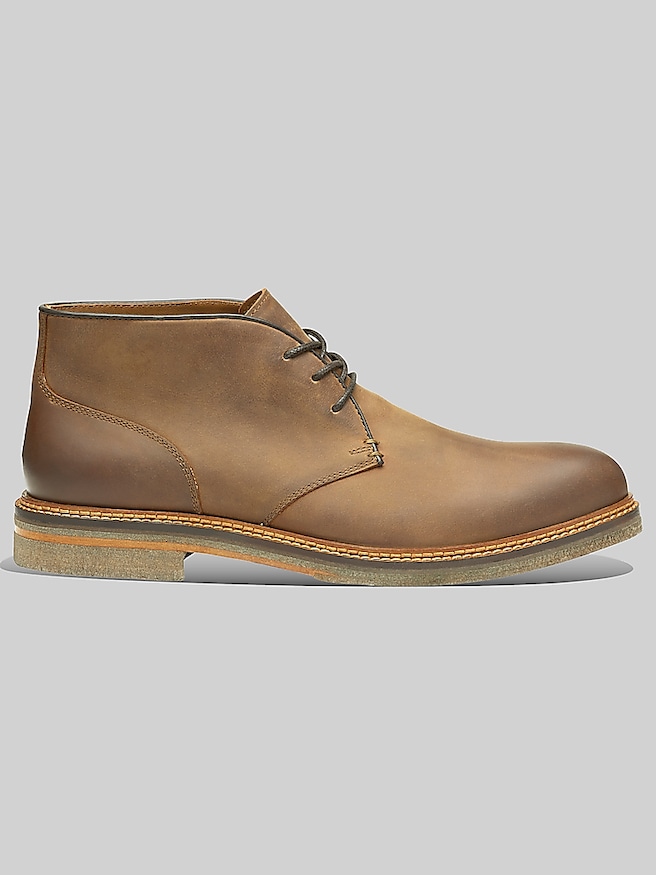
Men’s size 11.5 chukka boots bring the clean lines of a lace-up shoe together with the relaxed character of an ankle boot. Traditionally shaped with an ankle-height upper, open lacing, and two or three pairs of eyelets, chukkas have a straightforward profile that works with much of an everyday wardrobe. Their appeal lies in that middle ground: less formal than an oxford, more structured than a sneaker, and easy to wear with chinos, dark denim, or textured trousers. For someone who wears a US men’s size 11.5, the key distinctions go beyond the number on the box. Upper material, width, toe shape, lining, and sole construction all influence how a boot looks and feels through a full day. Smooth leather generally gives chukkas a sharper appearance, especially when paired with pressed pants and a button-down shirt. Suede has a soft, brushed surface that sits naturally alongside corduroy, knitwear, and broken-in denim. Nubuck offers a similarly velvety look, though its fine nap comes from the outer surface of the hide rather than the underside typically used for suede. Color also sets the tone. Dark brown can anchor a navy-and-gray outfit, black creates a restrained finish with charcoal trousers, and lighter brown or sand shades add contrast to deep indigo jeans. During the cooler months, an ankle-height silhouette looks balanced beneath heavier fabrics without the bulk of a taller boot. Picture a pair of dark chukkas under straight-leg wool trousers for an office day, then worn with jeans and a sweater for dinner afterward. That versatility makes the category useful for commuters, travelers, and anyone whose schedule moves between casual and dress-casual settings. A sleek shape and understated stitching tend to read as more polished, while a rounded toe, visible welt, or thicker sole usually gives the same basic silhouette a more relaxed presence.
Fit deserves close attention with men’s size 11.5 chukka boots because two pairs carrying the same size can feel noticeably unlike each other. The last—the form around which a shoe is built—determines much of its internal shape, including room across the forefoot, height over the instep, and hold around the heel. Size 11.5 describes length within a sizing system; it does not establish width or guarantee a match across every design. Toes should have space to rest naturally without touching the front, and the widest part of the foot should sit comfortably within the boot’s widest area. Lacing should secure the instep without creating pressure across the top of the foot. A small amount of heel movement may occur in a new leather boot, but repeated lifting, rubbing, or sliding forward suggests that the fit needs another look. Trying boots with the socks intended for everyday wear gives a more useful impression than switching between thin dress socks and thick cold-weather socks. Feet can also swell over the course of a day, so a late-afternoon fitting often reflects how footwear will feel after hours of use. Leather may soften and adapt with wear, but a cramped toe box should not be treated as something that will reliably stretch into the correct fit. Comfort underfoot depends on more than initial softness, too. A cushioned footbed can reduce the firm sensation of standing on hard floors, while a supportive shape and stable heel help keep the foot positioned comfortably. A removable footbed may provide room for a personal orthotic, provided the boot has sufficient depth and the resulting fit remains secure. For a day involving a train platform, several blocks of walking, and time at a desk, sole flexibility and a steady heel fit can matter as much as appearance. Boots should bend near the ball of the foot rather than press against the toes with each step. When one foot is larger, accommodating that foot without leaving the other unstable is a better starting point than accepting pinching or excessive movement.
Materials and construction help determine where chukka boots work best and how well they hold up to repeated wear. A leather outsole can provide a refined profile suited to indoor settings and dress-casual outfits, while rubber outsoles often offer a more forgiving feel on sidewalks. Traction depends on the rubber compound, tread, surface, and conditions, so an ankle boot should not automatically be considered suitable for icy pavement. Crepe soles give some chukkas a distinctly casual appearance and a yielding feel, though they can collect dirt and may behave differently as temperatures change. Water protection deserves the same careful distinction: leather alone does not make a boot waterproof, and a protective spray does not turn ordinary seams into sealed ones. For frequent exposure to wet weather, an explicitly stated waterproof construction matters more than the upper’s rugged appearance. Suede and nubuck benefit from a suitable protective treatment and a dedicated brush, with any cleaner tested first in an inconspicuous area. Smooth leather generally responds well to gentle cleaning followed, when needed, by a compatible conditioner; polish can refresh color and add shine when appropriate for the finish. After a damp commute, letting boots dry naturally away from radiators and direct heat helps protect the uppers. Shoe trees sized to fit can help maintain shape, and rotating footwear gives moisture more time to dissipate between wears. Durability also depends on stress points that are easy to overlook, including secure eyelets, even stitching, and a well-attached sole. Some constructions can be resoled, but that possibility should be confirmed rather than assumed from visible stitching alone. For gifting, chukkas suit someone who appreciates practical footwear with enough polish for a dinner reservation or a casual workplace. A known shoe size is helpful, although width, preferred socks, and everyday clothing provide equally useful clues. For a recipient who wears a larger size, Men's Size 14 Chukka Boots keeps the same footwear category in view. In size 11.5, a comfortable fit, an appropriate sole, and an upper that suits the wearer’s routine make chukkas a dependable part of a well-used wardrobe.