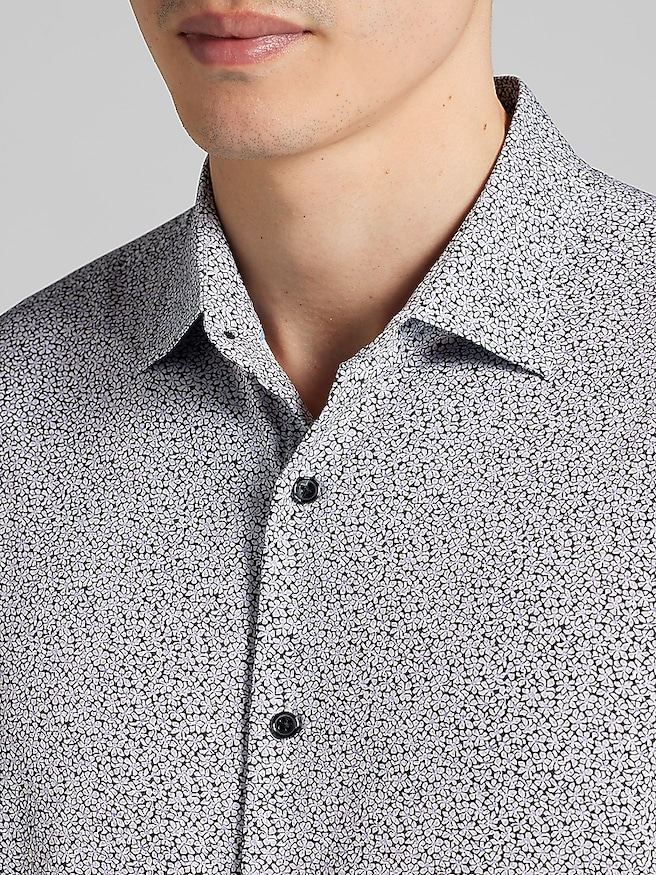
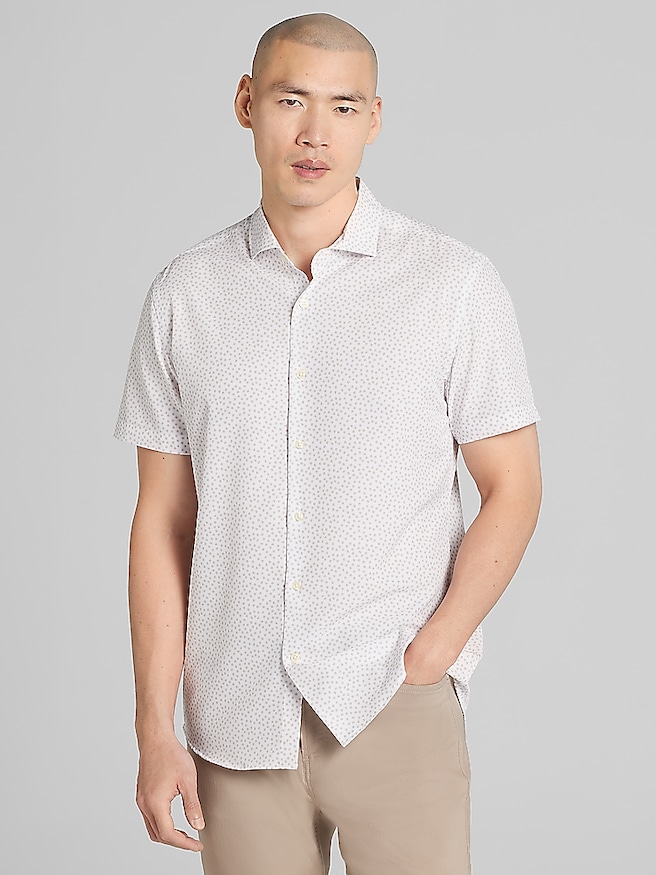
Men's short-sleeve shirts for weddings are a natural fit for casual ceremonies, beach celebrations, and relaxed receptions when the invitation allows a less formal look. Paired with tailored trousers and polished shoes, a collared short-sleeve shirt can feel considered and celebratory without borrowing the full structure of a suit. The distinction is in the details: a collar that holds its shape, a smooth button placket, sleeves that sit neatly around the upper arm, and fabric that drapes rather than clings. Solid white, pale blue, and soft neutral shades offer a clean foundation, while a restrained floral, fine stripe, or small geometric pattern can bring personality to a more easygoing setting. The couple's dress code remains the deciding factor. A short-sleeve shirt generally suits a casual wedding better than a formal or black-tie event, where long-sleeve dress shirts and the requested attire are more appropriate. For guests, the goal is a polished appearance that respects the occasion without competing with the wedding party. Fit makes a substantial difference here. Shoulder seams should sit near the edge of the shoulders, and the buttons should lie flat when standing or sitting. A close fit through the torso looks tidy, but enough room across the back allows comfortable movement during dinner, greetings, and dancing. Sleeves usually look most balanced when they end around the middle of the upper arm rather than near the elbow, though proportions vary with the shirt's cut and the wearer's build. A shorter, even hem can work untucked at a distinctly casual celebration; a longer, curved hem generally looks more intentional tucked into trousers. When the ceremony and reception have different levels of formality, the shirt should suit the more dressed-up portion of the day. A clean, understated design is often easier to coordinate across both settings than an oversized print or strongly contrasting trim. In photographs, that simplicity also helps keep attention on the people and the occasion.
Fabric gives a wedding shirt much of its character, from the crispness of the collar to the way the body falls over a waistband. Cotton is a familiar choice for its soft feel and versatility, with the weave influencing the final appearance. A fine, smooth cotton weave tends to look more refined, while an Oxford-style texture has a more relaxed presence. Linen offers visible texture and a fluid, slightly irregular surface that pairs naturally with less structured wedding attire. Its creases are part of its character rather than a flaw, although a freshly pressed linen shirt still creates a more finished impression for the ceremony. Cotton-linen blends can bring together some of cotton's smoothness and linen's texture, with the exact feel depending on the fiber proportions and construction. Fabrics containing stretch may provide additional ease through the shoulders and torso, but stretch should complement a suitable fit rather than compensate for a shirt that is too small. Opacity matters, particularly with white and pale shades: viewing the fabric in natural light can help reveal whether an undershirt would make the overall appearance more even. A low-profile undershirt with a neckline hidden beneath the open collar keeps the focus on the shirt itself. Construction deserves equal attention. Even stitching, securely attached buttons, tidy buttonholes, and neatly finished seams contribute to a shirt that looks polished and holds up to repeated wear. Care requirements vary, so the sewn-in label should guide washing, drying, and pressing. Promptly hanging a shirt after laundering can reduce unnecessary creasing, while pressing the collar, placket, and sleeve edges helps restore definition. Some fabrics respond well to steam; others need an iron at the temperature specified on the label. Testing any treatment on an inconspicuous area helps protect color and finish. After the celebration, addressing marks promptly according to the care instructions and storing the shirt clean supports its usefulness for future occasions.
The most convincing wedding outfits give each element a clear role. A solid short-sleeve shirt lets textured trousers, a woven belt, or polished loafers add interest without making the outfit feel crowded. With a patterned shirt, quieter trousers in a coordinating shade create balance; picking up one subtle color from the print usually looks more cohesive than trying to match every detail. Tailored chinos can suit a casual reception, while dress trousers give the same shirt a more refined foundation. Linen-blend trousers offer another option when the invitation calls for relaxed tailoring. Shoes should follow the setting and dress code, with loafers, derbies, or other understated leather styles providing a more dressed-up finish than athletic footwear. A belt that relates to the shoes helps connect the outfit, although an exact color match is less important than a consistent level of formality. A blazer may suit certain casual celebrations, but short sleeves do not provide the visible shirt cuff associated with traditional suit styling. Where a jacket is central to the requested look, a long-sleeve dress shirt is generally the more dependable partner. For grooms and wedding-party members wearing short sleeves by agreement, consistent collar shapes, similar fits, and coordinated colors can create unity without requiring every outfit to be identical. Guests may place more emphasis on versatility, choosing a shirt that also works for an anniversary dinner, an engagement celebration, or a restaurant gathering. That flexibility connects wedding dressing with the wider appeal of Mens Stylish Short Sleeve Shirts, especially when the fabric and pattern feel natural within an existing wardrobe. A short-sleeve collared shirt can also make a thoughtful gift for someone preparing for a casual wedding or building a more polished occasion wardrobe. Knowing the recipient's usual size, preferred fit, and comfort with prints makes the choice more personal. Across these uses, the strongest combination is straightforward: an appropriate dress code, comfortable proportions, well-kept fabric, and finishing details that look deliberate from the ceremony through the final photograph.