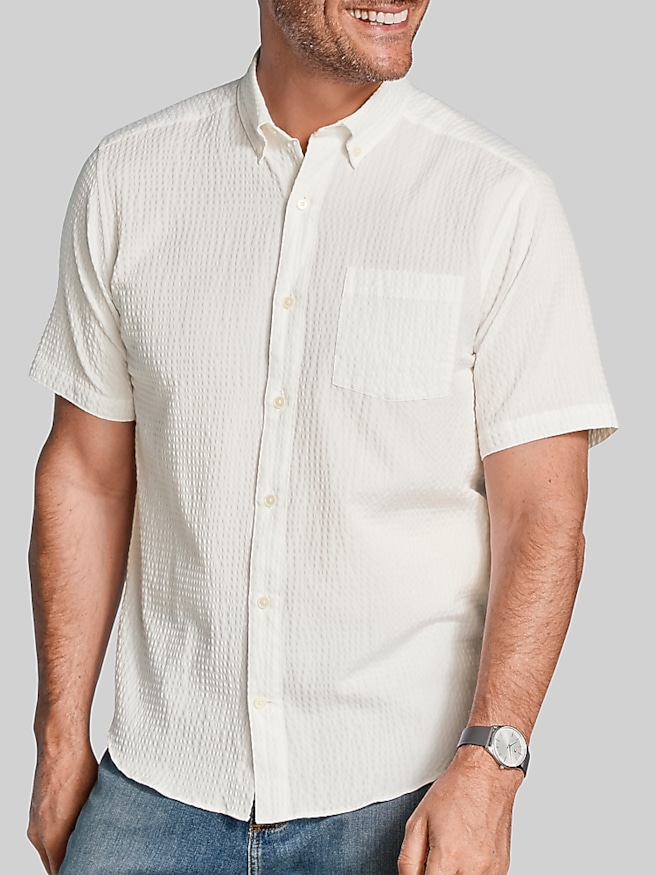
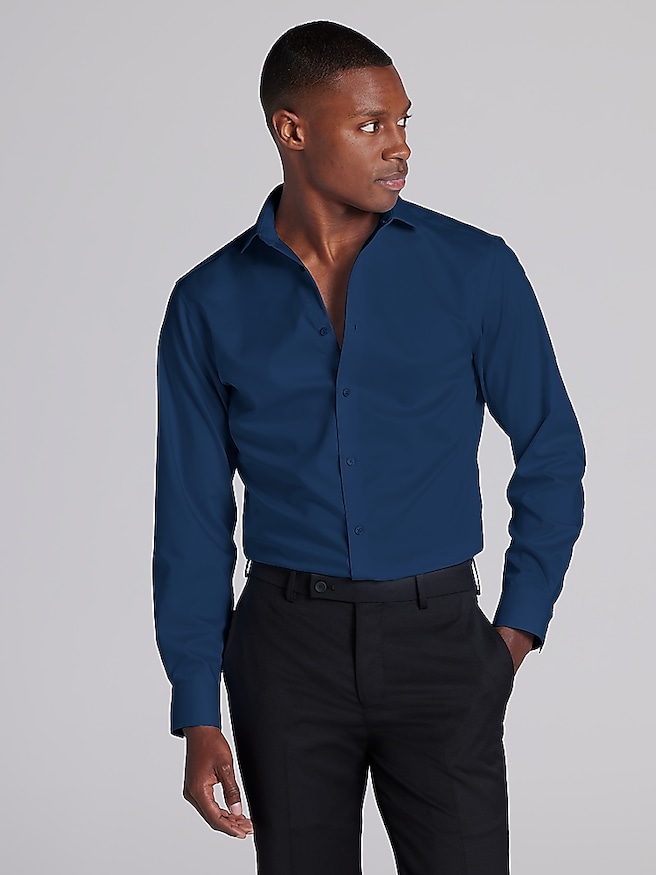
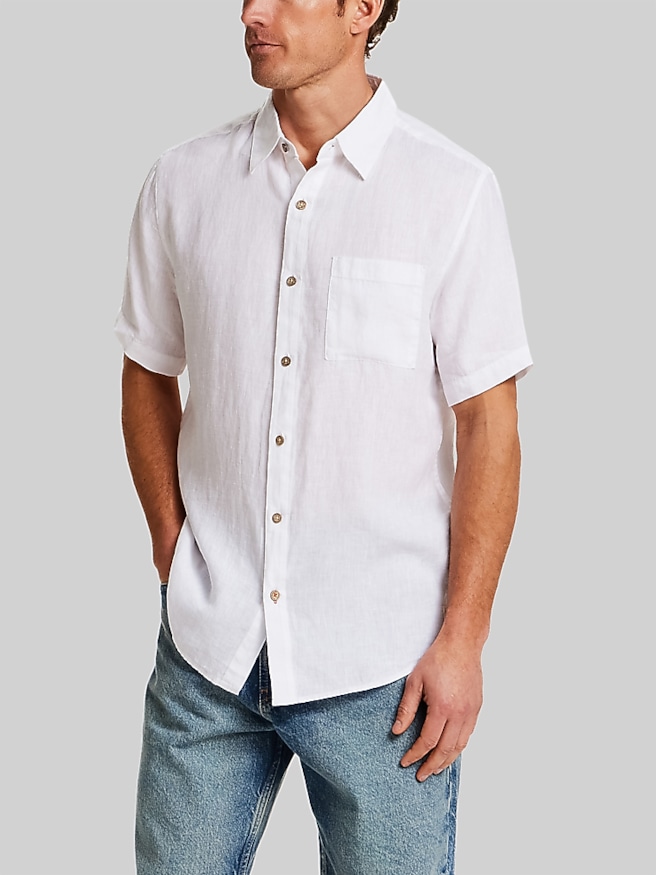
Men's regular fit shirts have a relatively straight cut through the chest and waist, with room in the shoulders, sleeves, and torso for comfortable movement. Compared with a slim fit, a regular fit generally follows the body less closely and has less shaping at the waist, creating a classic silhouette without the close-fitting feel. That balance makes these shirts useful for desk work, business travel, dinners, and occasions that call for a neat appearance over several hours. The extra ease can suit broader builds, but regular fit is also a preference for anyone who likes room to reach forward, sit comfortably, or wear an undershirt without feeling restricted. Regular fit does not mean oversized: shoulder seams should sit near the natural edge of the shoulders, the front should button smoothly, and the fabric should fall cleanly rather than gather in large folds. With the top button fastened, a dress shirt collar should feel comfortable without a conspicuous gap around the neck. Long sleeves should reach the wrist with the arms relaxed, and cuffs should close securely without squeezing. Fit names and proportions can vary, so neck, sleeve, and chest measurements provide more useful context than the fit label alone. Shirt length matters, too. A longer hem helps a shirt stay tucked during a presentation or a full day at the office, while a shorter, balanced hem can look intentional worn untucked. Regular fit dress shirts work naturally with tailored trousers and jackets, while more casual versions pair easily with chinos and jeans. The shared appeal is a familiar shape that leaves breathing room without losing definition. Under a jacket, the fabric should lie comfortably through the upper arms and chest rather than bunch beneath the sleeves. Worn on its own, the same shirt should have enough structure to look finished, whether the day involves client meetings, a family gathering, or dinner reservations.
Fabric and construction give men's regular fit shirts much of their individual character. Cotton is a common choice for its soft feel and breathability, though the weave has a considerable effect on texture, drape, and appearance. Poplin has a smooth, relatively flat surface that works well with a suit or dress trousers. Twill has a subtle diagonal weave and often offers a slightly fuller feel, with a drape that can help a shirt settle neatly through the torso. Oxford cloth has a more noticeable basket-weave texture, lending itself to relaxed office outfits and casual combinations. Linen brings a distinct texture and an easy drape, with natural creasing that is part of its appearance rather than a flaw. Cotton blends may add wrinkle resistance or help a shirt hold its shape, while fabrics containing stretch fibers can provide additional give when reaching, driving, or spending long stretches seated. These qualities depend on the fabric blend and construction; a regular fit label alone does not indicate stretch or easy-care performance. Collar shape, cuff construction, and the feel of the fabric all influence how dressy a shirt looks. A structured collar frames a tie cleanly, while a button-down collar keeps its points secured for a more relaxed finish. Even stitching, firmly attached buttons, and neatly finished seams contribute to durability, particularly at cuffs, collar edges, and other areas that receive repeated handling. Care requirements deserve the same attention as appearance. The care label determines whether a shirt is suitable for machine washing, professional cleaning, ironing, or other treatments. Prompt attention to collar and cuff marks can help prevent buildup, and avoiding unnecessary heat can reduce wear on fibers and finishes. Removable collar stays should come out before laundering when directed, and a suitable hanger helps support the shoulders between wears. Wrinkle-resistant fabric can simplify upkeep, but it still benefits from proper washing, drying, and storage. A shirt that fits comfortably and suits an established care routine is easier to keep in regular rotation.
Color, pattern, and sleeve length make regular fit shirts adaptable to different dress expectations without changing their comfortable foundation. White and light blue create a straightforward starting point for business clothing, pairing cleanly with navy, charcoal, tan, and other familiar trouser colors. Fine stripes add definition beneath a solid jacket, while small checks bring detail to an outfit without necessarily becoming its focal point. Larger patterns and more pronounced textures tend to read as casual, especially when paired with jeans or chinos and an open collar. Pattern scale also affects the overall balance: a small shirt pattern can sit comfortably beside a broader tie pattern, while several similarly sized patterns may compete for attention. For settings with a relaxed dress code, men's regular fit short sleeve shirts offer the same easy silhouette with a different sleeve proportion. A short sleeve should fall neatly around the upper arm, with enough room for movement but without a wide, flared opening. Long sleeves bring the option of a finished cuff beneath a jacket or a tidy roll for a less formal look, provided the setting allows it. For interviews, presentations, and celebrations, a smooth shirt front, clean collar, and appropriate hem length often matter more than elaborate details. A regular fit shirt can also make a practical gift for a father, partner, graduate, or friend who appreciates classic clothing, especially when the recipient's measurements and preferred collar style are known. Familiar colors and manageable care requirements can make a gift easier to incorporate into an existing wardrobe. Someone who wears a tie daily may value collar structure and precise sleeve length, while someone with a casual workplace may care more about texture and how the shirt looks untucked. Across those uses, the strongest combination is consistent: comfortable proportions, fabric suited to the occasion, and details that support the way the shirt will actually be worn. Those qualities give regular fit shirts their lasting place in everyday dressing.