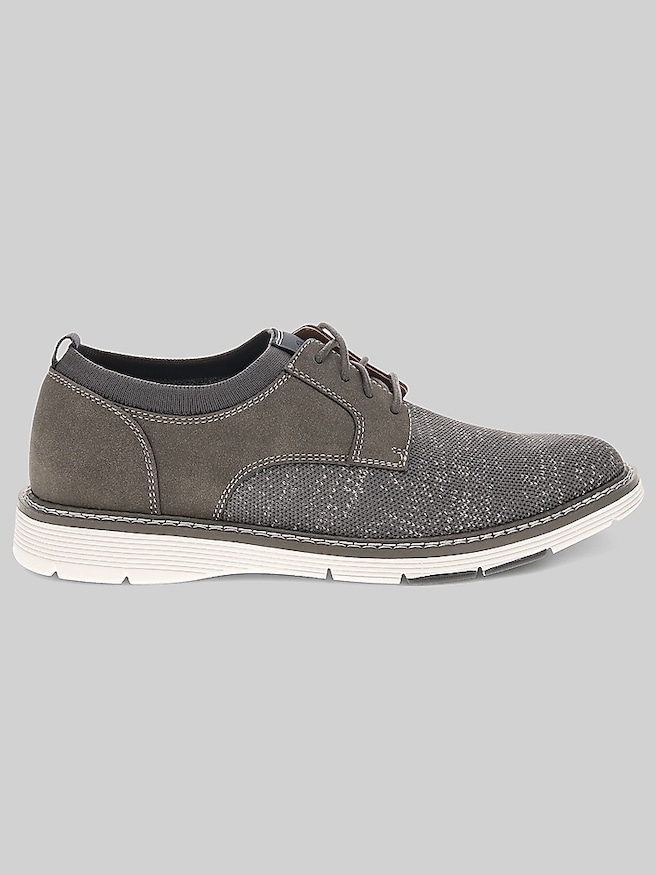
Men’s red shoes bring a distinct focal point to an outfit, whether the color is a deep oxblood beneath tailored trousers or a brighter crimson paired with dark denim. The appeal is not simply that red stands out; its range makes it adaptable to several kinds of dressing. Muted brick and burgundy tones can feel restrained enough for a business-casual setting, while clear cherry red creates a stronger contrast against navy, gray, black, and cream. The shape of the shoe matters just as much as its color. A streamlined lace-up gives red a polished character, a loafer makes it feel relaxed but considered, and a sneaker introduces a sportier note. With a navy suit, a dark red leather shoe can add depth without competing with the tailoring. With straight-leg jeans and an unpatterned shirt, a brighter shoe becomes the main accent rather than one of several competing details. Keeping the trouser hem neat helps preserve that effect: excessive fabric pooling around the ankle can hide the shoe’s shape and make an otherwise sharp outfit look unfinished. Red footwear also does not need an exact match elsewhere in the outfit. A subtle burgundy stripe in a shirt or a small red detail in a pocket square can create a connection, but a full set of matching accessories often feels more deliberate than necessary. For outfits that call for a quieter foundation, the neutral tones of Mens Charcoal Shoes provide another styling direction. Red remains a useful choice for dinners, birthday celebrations, creative workplaces, and wedding guest attire when the dress code allows some personality. At highly formal events or in conservative professional settings, the expected footwear color and level of formality deserve attention before making a bold choice. The most convincing combinations let the shoes express something personal while the rest of the outfit stays comfortable and coherent.
Materials and construction influence how red shoes look, feel, and hold up to repeated use. Smooth leather gives the color a defined surface and can develop character with appropriate care, while suede softens the shade with a textured finish that changes subtly as its nap catches the light. Patent leather creates a much glossier effect, making even a darker red more visually prominent. Textile and mesh uppers can suit casual footwear, although breathability, support, and durability depend on the complete construction rather than the upper material alone. Leather linings, fabric linings, padded collars, and cushioned footbeds each affect the experience against the foot, especially over several hours. A shoe worn mainly for seated dinners has different demands from one worn for a commute, a full day at a desk with frequent walking, or an evening spent standing at a reception. For longer periods on foot, sole flexibility, secure fastening, and cushioning deserve as much consideration as appearance. Rubber outsoles can provide practical traction and a less rigid feel, while leather soles often have a sleeker profile; neither material alone establishes how comfortable a shoe will be. Fit begins with enough room for the toes to rest naturally without pressure from the front or sides. A narrow-looking toe shape can still fit well if its internal dimensions suit the foot, but extra length is not a reliable substitute for adequate width. The heel should feel secure, and the upper should hold the foot without pinching across the instep. Trying shoes with the type of socks intended for regular wear gives a more useful sense of fit than switching to unusually thin or thick socks. Lace-ups allow adjustment across the top of the foot, while loafers depend more heavily on the relationship between the heel, instep, and opening. Although some materials soften with wear, shoes that cause pain at the outset should not be expected to become comfortable simply through persistence.
Care helps preserve both the color and the structure of red footwear, particularly when the shade is a central part of its appeal. Surface dust can dull a rich leather finish, so a gentle wipe with an appropriate soft cloth is often a better starting point than applying polish immediately. Smooth leather may benefit from a compatible conditioner, used according to the manufacturer’s directions, while polish should be chosen carefully because a poorly matched red can alter the appearance of the upper. Testing a care product on a discreet area helps reveal unwanted darkening or residue before treating the whole shoe. Suede calls for a different approach: a suitable suede brush can lift the nap and remove light surface debris without the creams intended for smooth leather. Textile uppers, decorative stitching, and mixed-material designs may need separate treatment, making the care instructions especially important. Soaking, strong household cleaners, and direct heat can damage adhesives, distort the shape, or affect color, even when the surface initially seems sturdy. Allowing shoes to dry naturally after cleaning and giving them time to air out between wears supports everyday upkeep. Properly fitted shoe trees can help leather footwear maintain its shape, and storage away from prolonged direct sunlight can reduce unnecessary fading. Durability also depends on details that are easy to overlook when color catches the eye first: secure stitching, a well-attached sole, and a heel that remains stable under the foot all contribute to useful wear. Scuffs on a toe or wear along the outer heel can become more noticeable against a saturated red finish, so early attention to minor damage helps keep the overall appearance tidy. As a gift, red shoes suit someone who already enjoys expressive accessories or wears a wardrobe of simple neutrals that leaves room for a strong accent. Knowing the recipient’s size, preferred width, and usual shoe shape is more valuable than choosing by color alone. Whether selected for everyday casual dressing or particular occasions, a comfortable fit and manageable care routine make red footwear easier to enjoy beyond its first outing.