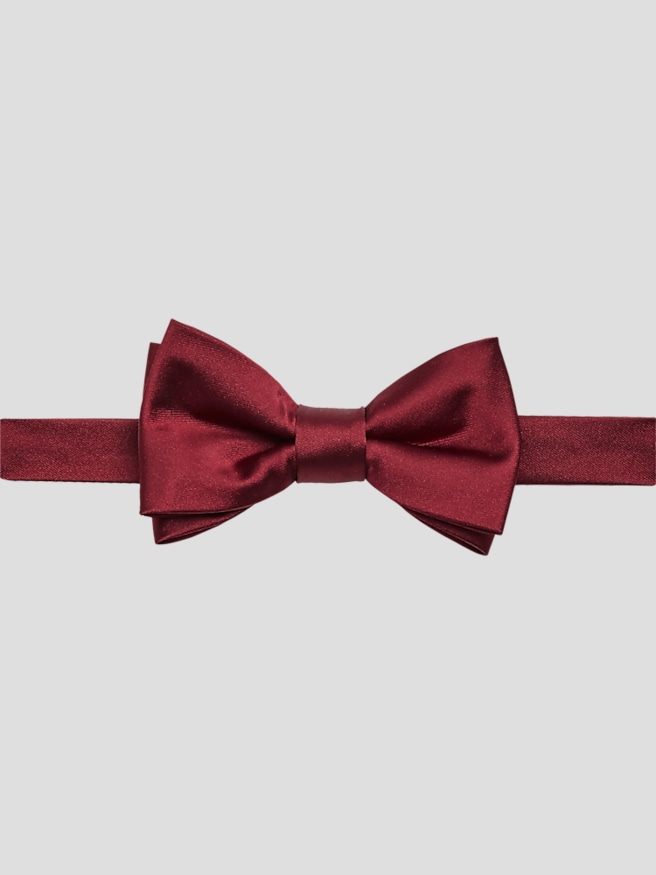
Men’s red bow ties bring a distinct focal point to tailored clothing, from a dark suit at an evening reception to a textured sport coat at a celebratory dinner. The appeal lies in how much character a small accessory can add: a clear scarlet looks bright and expressive against a white shirt, while burgundy and wine shades create a quieter effect alongside charcoal, navy, or deep brown. Shade, texture, and pattern all influence the impression. A solid red bow tie keeps the outfit crisp and lets the color speak for itself; a small dot, restrained paisley, or woven geometric motif adds detail that becomes more noticeable up close. Smooth satin catches the light and has a polished surface suited to festive evening settings, while a matte finish feels more understated for daytime gatherings or a dinner out. Satin describes a weave rather than a fiber, so a satin bow tie may be made from silk, polyester, or another material. Silk can offer a soft hand, rich color, and subtle luster, while polyester is often resilient and holds a structured shape well. Cotton brings a less reflective texture that works naturally with relaxed tailoring, and wool or wool blends can complement flannel jackets and other substantial fabrics during the cooler months. The right choice depends as much on the setting as the color palette. For a wedding guest, a deep red bow tie can add warmth without overwhelming a navy suit; for a host greeting guests at a holiday gathering, a brighter red can make a simple white shirt and dark jacket feel celebratory. Red also has a place in creative evening attire, though traditional black-tie dress codes generally call for a black bow tie. When an invitation specifies formal conventions, those expectations matter more than coordinating an accessory with the room’s décor.
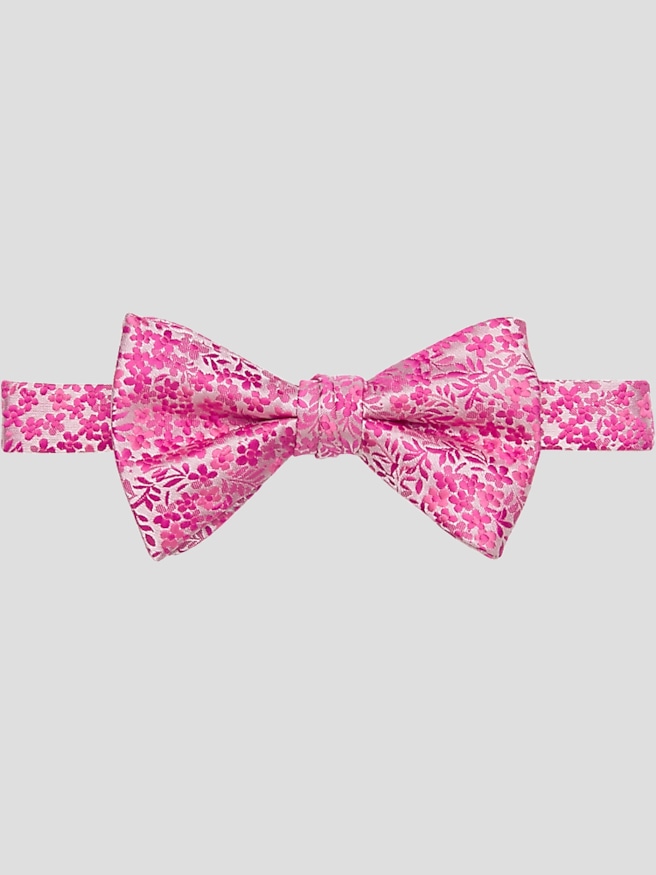
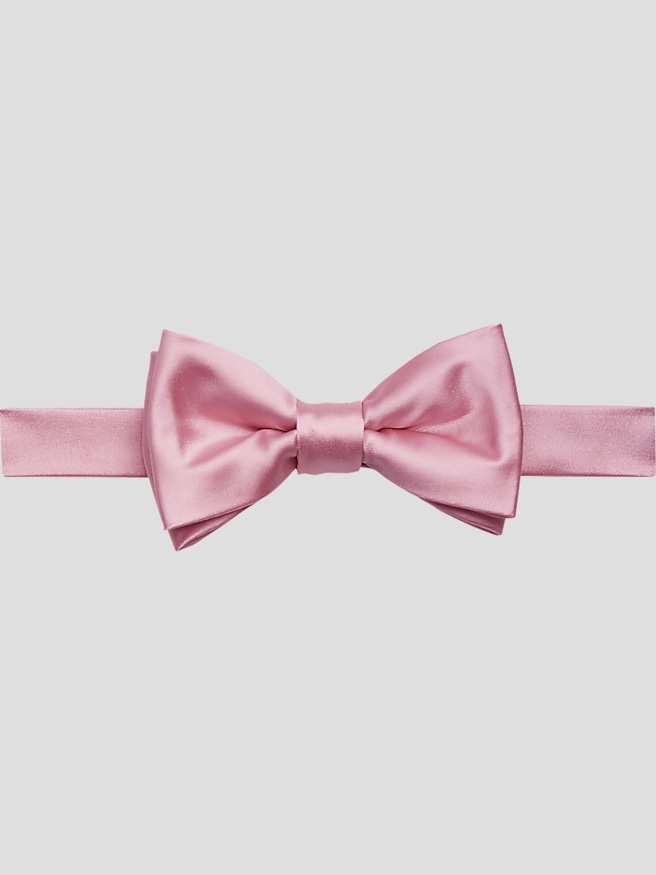
Fit and construction determine whether a red bow tie feels comfortable and looks balanced once the jacket goes on. A self-tie bow tie forms its shape when tied, giving the finished bow slight variations that many people appreciate for their relaxed, individual character. A pre-tied bow tie maintains a consistent silhouette and can simplify getting dressed for an early ceremony, a group photograph, or an evening with several stops. Clip-on styles attach at the collar instead of using a neckband, making the attachment method an important consideration for anyone who finds fastening a band difficult. For neckband styles, check the stated adjustment range against the shirt’s collar size rather than assuming one size will suit every neck. The band should sit securely beneath the collar without pulling it inward or pressing uncomfortably against the throat. Bow width matters, too: a compact shape can look at home with narrower lapels, while a fuller butterfly shape has enough presence to balance a broader jacket front. The goal is proportion, not a bow that dominates the face or disappears beneath the chin. A pointed-end shape adds a sharper outline, while a straight-ended batwing shape keeps the silhouette slim. These details become especially noticeable with a solid color, where the outline and knot take center stage. A white shirt provides the clearest contrast, and pale blue can soften the effect of a dark red bow tie with navy tailoring. With striped or checked shirts, a solid bow usually creates a calmer combination; if both pieces have patterns, varying their scale helps keep the outfit from looking crowded. A pocket square does not need to duplicate the bow tie exactly. White linen, a subtle border, or a print containing a small touch of red can connect the pieces without making them look like a uniform. For a lighter color direction with similarly expressive styling, men’s pink bow ties offer another point of comparison alongside pale shirts and neutral jackets.
A well-chosen red bow tie should suit the way it will be worn beyond a single photograph. Someone who attends several celebrations each year may appreciate a versatile, small-scale pattern or a deep red solid that works with more than one suit. For a wedding party, consistency in shade, finish, and bow proportions helps create a cohesive group, especially because glossy and matte fabrics can make similar reds appear noticeably distinct under indoor lighting. Anyone giving a bow tie as a gift can consider the recipient’s usual wardrobe and comfort with tying one: a classic self-tie shape may appeal to someone who enjoys the ritual of dressing, while a pre-tied style can suit someone who values a straightforward routine. Birthdays, graduations, anniversaries, and recognition events are all natural occasions for an accessory that adds personality without requiring a complete new outfit. For lasting wear, look at the details that receive the most handling, including stitching around the edges, the stability of the neckband, and the condition of hooks or adjustment hardware. A well-finished bow should retain a clean outline without loose threads or puckered seams. Care depends on the material and internal construction, so the care label should take priority over general assumptions about silk, cotton, or synthetic fibers. Avoid putting fragrance directly on the fabric, since sprays can leave marks, and blot spills gently rather than rubbing them deeper into the weave. Some bow ties require professional cleaning, and even a washable fiber may be part of a finished accessory that should not be immersed. After wearing a self-tie bow, untie it gently rather than pulling hard on one end; let the fabric relax before storing it flat or loosely rolled. Keep pre-tied bows where they will not be crushed, and protect rich red fabrics from prolonged direct sunlight. Those small habits help preserve color, shape, and finish, leaving the bow tie ready for the next dinner invitation, family celebration, or occasion that calls for a little more character at the collar.