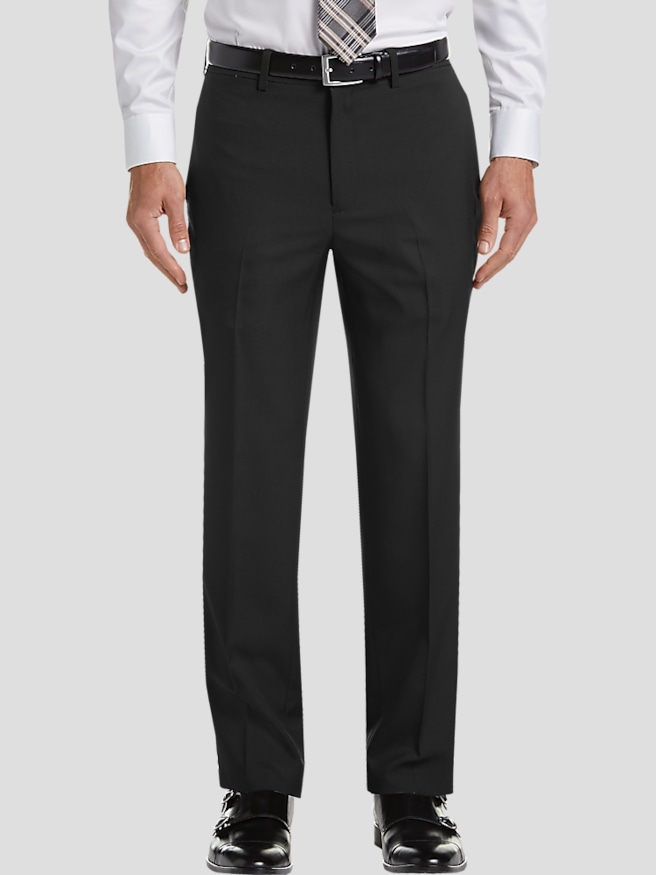
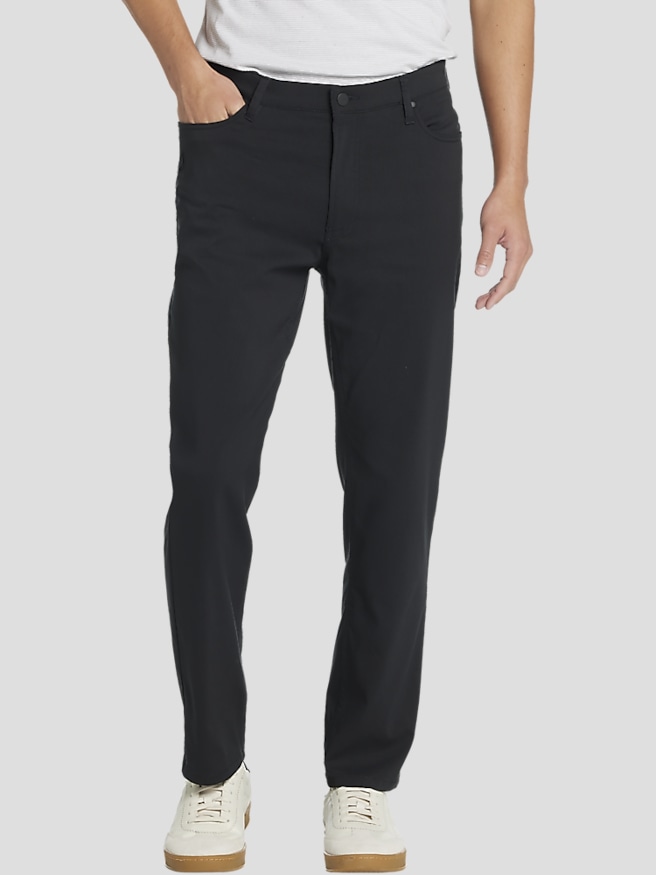
Men’s polyester pants combine a polished appearance with practical fabric qualities that suit everyday dressing, from office hours and business travel to dinners and special occasions. Polyester is a synthetic fiber valued for its strength, resistance to wrinkling, and ability to retain its shape through repeated wear. In trousers, those qualities can help a smooth front and clean leg line hold up through a morning commute, several hours at a desk, and an evening appointment. The fabric’s character depends on more than its fiber content, however. A finely woven polyester dress pant can have a smooth surface and structured drape, while a textured weave can lend a more casual appearance. Polyester blends introduce additional qualities: wool can contribute a refined texture, rayon or viscose can add softness and fluidity, and elastane or spandex can provide stretch. Polyester itself does not guarantee stretch, moisture management, or breathability; those features depend on the construction, blend, and any applied finish. A woven trouser with a crisp crease feels distinct from a soft knit pant, even when both contain a substantial percentage of polyester. Fabric weight also influences how the legs hang, how clearly pocket outlines show, and how substantial the pants feel in motion. A matte finish generally pairs easily with office clothing, while a subtle sheen can create a dressier impression. For someone who spends much of the day moving between a desk, a conference room, and a commute, the appeal often lies in a fabric that maintains a neat appearance without feeling stiff. For someone dressing for an interview or attending a wedding as a guest, a smooth drape and restrained finish can support a more formal outfit. Polyester trousers span these uses, but the details of each fabric determine whether the overall effect is relaxed, businesslike, or suited to a dressed-up setting. The category is best understood as a range of fabric constructions and silhouettes rather than a single look or feel.
Fit gives men’s polyester pants much of their character, influencing both comfort and the way an outfit comes together. A slim silhouette typically follows the leg more closely, while a classic cut generally provides additional room through the seat and thigh. A tailored fit often falls between those shapes, though fit names and proportions can vary. The most useful distinction is how the pants behave on the body: a waistband that stays comfortably in place, pockets that lie flat, and enough room to sit without pulling across the lap. Stretch can make bending and climbing stairs easier, but it does not replace adequate room through the hips and thighs. Rise matters as well, since the distance between the waistband and crotch affects where the pants sit and how comfortably a shirt stays tucked. Flat-front trousers create a clean surface beneath a tucked shirt, while pleats can provide extra room and a more traditional line. Hem length changes the impression further. A slight break over dress shoes feels familiar and polished; a cleaner, shorter finish can emphasize a tapered leg without letting excess fabric collect at the ankle. Navy, charcoal, black, and shades of gray are versatile foundations for button-down shirts, fine-gauge knits, sport coats, and leather footwear. A textured polo with straight-leg polyester pants can feel appropriate for a relaxed office, while a dress shirt and coordinating jacket bring the same general category into more formal territory. For shoppers comparing stretch-focused constructions and performance-oriented details, Mens Tech Pants offers a related category to explore. Technical features should be assessed individually rather than assumed from polyester content alone. Waistband flexibility, pocket placement, and the feel of seams can matter as much as the fabric during a long day. A phone resting comfortably in a front pocket, a shirt that stays neatly tucked during a presentation, and a hem that clears the shoe without bunching are small details that make trousers feel well suited to daily life.
Care and durability are important parts of the appeal of polyester pants, especially for men who rotate a few dependable pairs through workdays, travel, and social plans. Polyester generally absorbs less moisture than many natural fibers and can dry readily, although a finished garment’s drying time depends on its blend, thickness, and construction. Wrinkle resistance can make packing and daily upkeep easier, but it does not mean the pants will never crease or need attention. Care instructions remain the deciding factor: some polyester trousers are machine washable, while others require dry cleaning because of their blend, lining, trim, or tailoring. When machine washing is permitted, following the label’s water temperature and drying directions helps protect the garment’s shape and finish. Excessive heat can damage polyester, and pressing should follow the stated iron setting; a pressing cloth can help reduce the risk of unwanted shine when ironing is allowed. Hanging trousers neatly after wear helps preserve their line, and emptying pockets prevents keys or a wallet from weighing down the fabric between uses. Durable fibers can withstand regular wear, but repeated friction at the inner thighs, seat, or pocket edges may still cause surface changes or pilling. A comfortable fit with sufficient ease can reduce strain on seams and closures. These practical qualities make polyester pants useful for professionals, commuters, students preparing for interviews, and anyone who prefers a consistent, put-together wardrobe. They can also make a thoughtful gift for a father, brother, partner, or adult son when waist size, inseam, and preferred fit are already known. Measurements from a well-fitting pair provide a more reliable starting point than a size label alone. Across dressier trousers and casual silhouettes, the strongest choice is a pair whose fabric, proportions, and care requirements match the wearer’s routine, whether that means sitting through meetings, walking between appointments, or getting dressed for an important celebration.