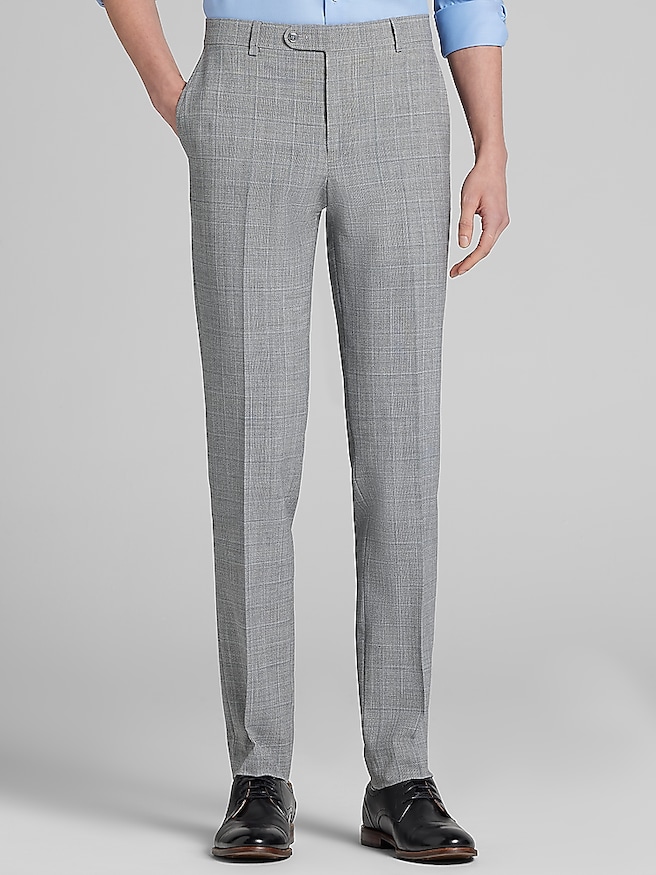
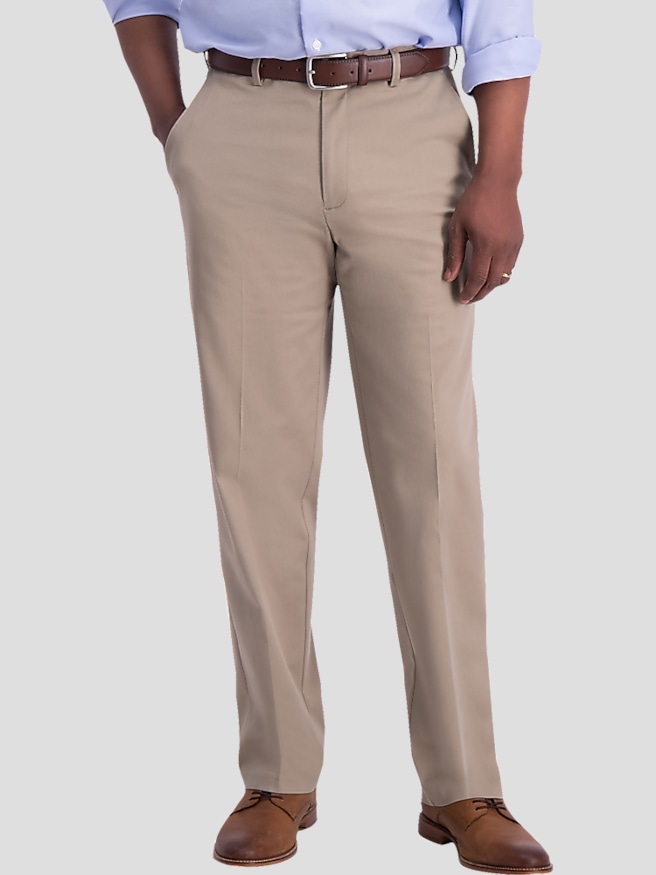
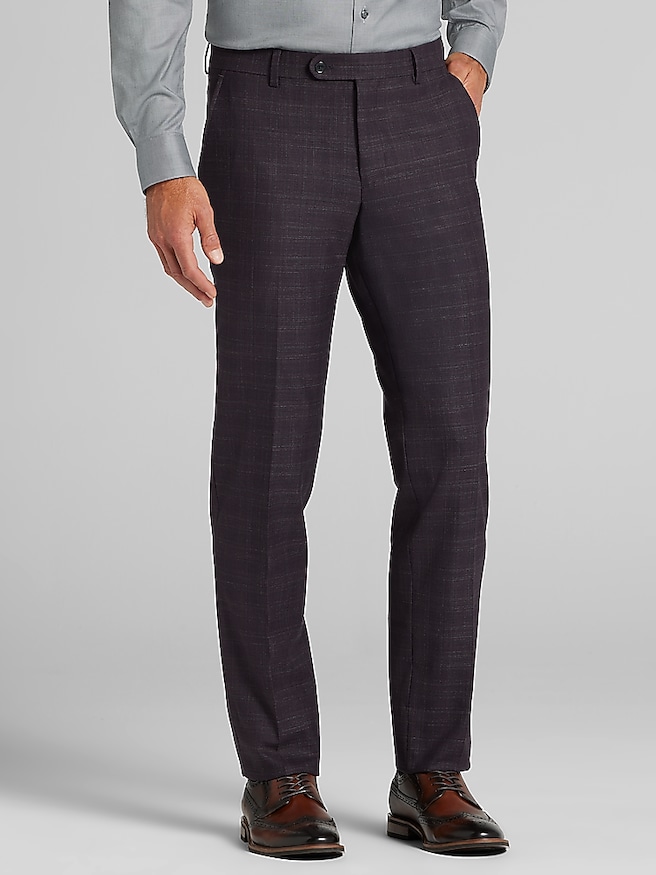
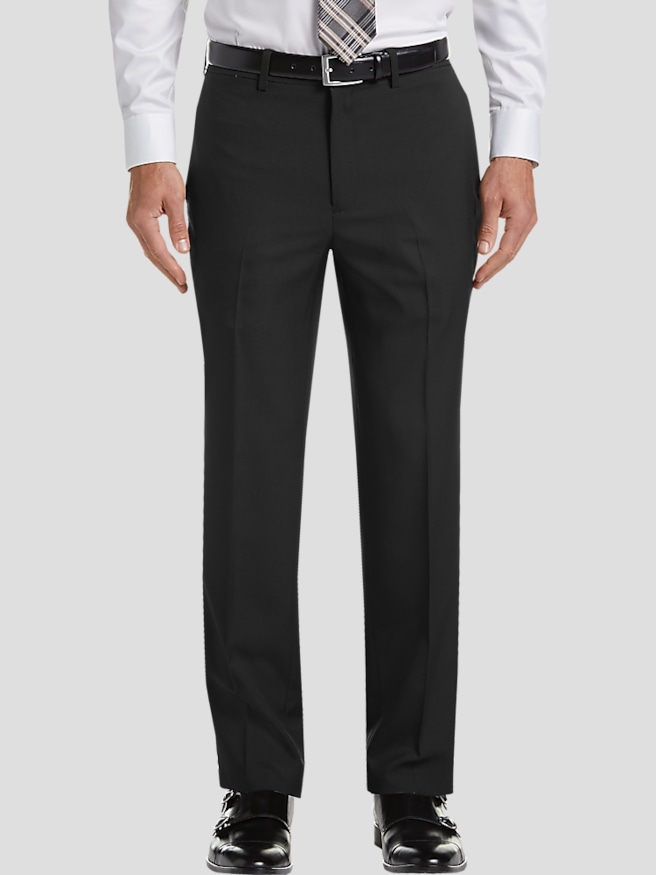
Men’s plaid pants bring depth and character to an outfit without requiring bold colors or elaborate styling. A fine check can read almost like a solid from across the room, revealing intersecting lines only up close, while a broad windowpane makes the pattern a more noticeable part of the look. Glen plaid offers another approach, combining small checks and larger crossings for a textured effect that feels at home with tailored clothing. The scale and contrast of the pattern influence how dressy the pants appear: charcoal crossed with soft gray tends to feel restrained, while a stronger contrast gives even a simple sweater more presence. For an office setting, subtle plaid trousers paired with a solid shirt create interest without competing with a jacket or tie. For dinner or a gathering with friends, an open-collar shirt or a fine-gauge knit can soften the same tailored silhouette. Navy, brown, gray, and muted earth tones are especially easy to build around during the cooler months, when layered clothing adds texture of its own. A useful starting point is to pick up one of the quieter colors in the plaid with a shirt or sweater, allowing the pattern to connect the outfit rather than dominate it. Smooth leather footwear lends polish, while suede adds a softer finish that works well with brushed fabrics. When a jacket is part of the outfit, a solid fabric usually gives plaid pants enough visual space; mixing patterns works best when their sizes are clearly distinct. A small shirt stripe, for example, can sit comfortably beside a larger check when the colors remain restrained. The appeal is in that flexibility. Plaid can feel traditional with a tucked-in shirt and leather belt, relaxed with a textured pullover, or expressive with a sharply defined windowpane, giving the wearer room to reflect personal taste while keeping the overall look considered.
Fabric and construction shape how men’s plaid pants feel throughout the day, so the pattern is only part of the decision. Wool is valued for its breathability, resilience, and natural drape, making it a useful choice for tailored trousers worn through meetings, meals, and evening plans. Lightweight wool can feel smooth and fluid, while wool flannel has a softly brushed surface that gives checks a warmer, slightly hazy appearance. For a closer look at this fabric category, Plaid Wool Pants For Men focuses on the combination of wool and patterned tailoring. Cotton offers a more familiar, often less formal feel, although its weight and weave make a substantial difference in how structured the pants look. Blended fabrics may add wrinkle resistance or stretch, but the fiber percentages and care label are more informative than a broad fabric name alone. Stretch can make sitting, climbing stairs, or getting into a car more comfortable; it should support a sound fit rather than compensate for pants that are too tight. At the waist, trousers should sit securely without a belt having to pull the fabric into folds. The seat should lie smoothly, and the thighs should allow movement without pulling the plaid lines out of shape. A slim cut creates a closer outline, a straight leg offers a cleaner vertical fall with more room, and a fuller cut can provide ease while still looking tailored. Pleats can add space through the upper leg, while a flat front creates a simpler surface for the pattern. Neither detail determines fit on its own. Trying the pants while seated is particularly useful for anyone who spends much of the day at a desk or behind the wheel. Length matters, too: a slight break gives the hem a traditional finish, while little or no break keeps the ankle area crisp. The best choice depends on the leg opening, footwear, and preferred silhouette, with enough clearance to keep the hem from dragging. Thoughtful alterations can refine that balance without changing the character of the pants.
Well-chosen plaid trousers should also suit the practical demands of the person wearing them. For regular office use, a comfortable waistband, secure closures, neatly finished seams, and pocket openings that lie flat can matter as much as the pattern. Checks that meet neatly at visible seams are a useful sign of attention to construction, though matching may vary around shaped areas and pockets. A partial lining can help some wool fabrics move more smoothly against the legs, while reinforced stress points help support repeated wear. Care begins with the garment label, since similar-looking fabrics can require very distinct treatment. Pants labeled for dry cleaning should be handled accordingly, while washable pairs need the specified water temperature and drying method to help preserve their dimensions and finish. Excessive heat can affect fibers and stretch components, so pressing should follow the fabric’s requirements, ideally with a pressing cloth when appropriate. Between cleanings, airing trousers and gently brushing away surface dust can help keep them fresh. Hanging them neatly on a suitable trouser hanger reduces unnecessary creasing, and rotating pairs gives fabric time to recover after a long day. Small issues deserve early attention: a loose button or opening hem is easier to address before it causes more wear. For travel, a restrained plaid can serve several settings, moving from a daytime appointment to dinner with a change of shirt or shoes. For celebrations, the pattern offers personality without the formality of a complete matching suit, provided the venue and dress code allow separates. Plaid pants can also make a thoughtful gift for someone who already enjoys tailored clothing, especially when the size, preferred rise, and usual leg shape are known. A familiar color palette and a modest check are often easier to integrate into an established wardrobe than a high-contrast statement pattern. Whether worn for a workday, a family gathering, or an evening out, the strongest choice combines a pleasing pattern with comfortable proportions and fabric that fits the occasion.