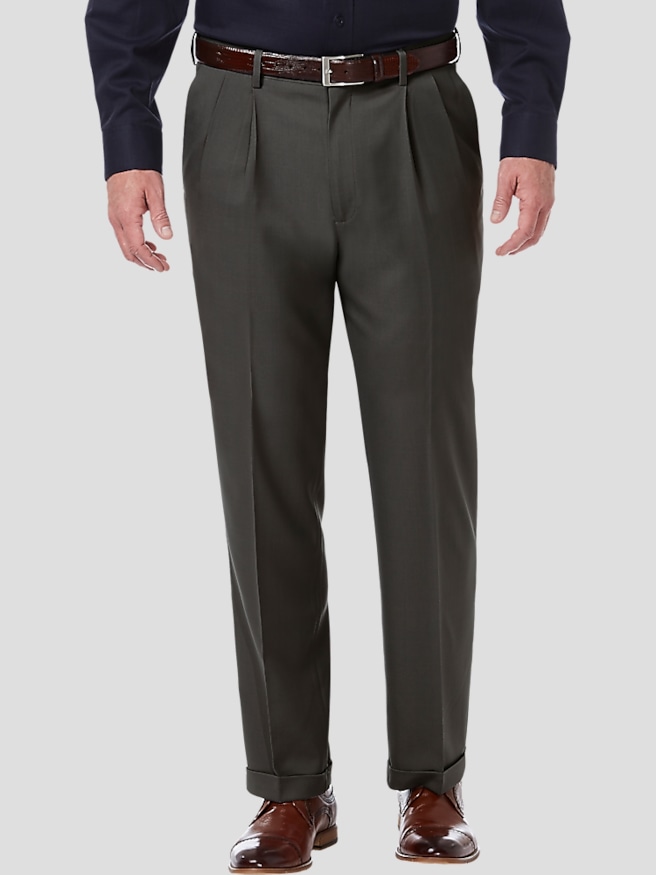
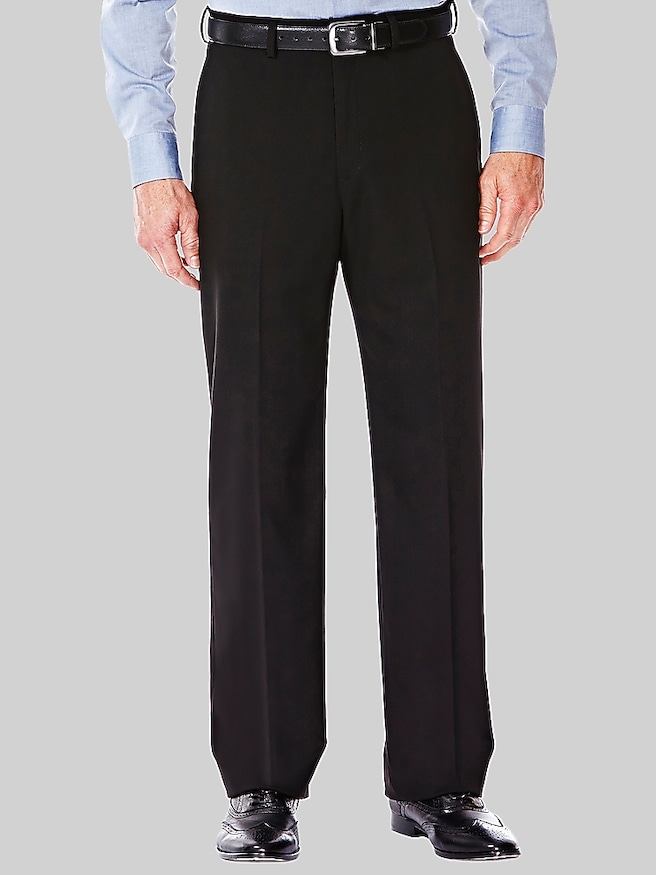
Men’s performance dress pants combine the tailored appearance of traditional trousers with fabrics and construction designed for easier movement, comfortable extended wear, and practical care. They suit days that move from a commute to a desk, from a presentation to a client lunch, or from a flight to an evening reservation without much opportunity to change. The defining balance is polish without unnecessary stiffness: a clean waistband, a smooth drape through the leg, and enough flexibility to sit, walk, and climb stairs comfortably. Performance features vary by fabric and design, but common examples include stretch, wrinkle resistance, moisture management, and machine-washable construction. Polyester and nylon can contribute strength, shape retention, and quicker drying, while elastane adds flexibility. Blends containing rayon can have a softer feel and fluid drape, and wool blends can bring a more traditional trouser texture. The fiber blend, fabric weight, and weave all affect how the pants feel and hang; a stretch percentage alone does not tell the whole story. Two-way stretch generally allows flexibility along one axis, while four-way stretch accommodates movement along both the length and width of the fabric. Moisture-wicking construction helps move perspiration away from the skin, whereas breathability describes how readily air or moisture vapor can pass through a fabric. Neither feature should be assumed simply because pants are labeled “performance.” Wrinkle-resistant fabrics can help reduce the creasing associated with sitting and packing, though they are not necessarily wrinkleproof. Depending on the design, a flexible waistband can ease pressure while seated, and an interior shirt-gripping strip can help keep a dress shirt tucked in. These details matter most when they support the overall silhouette rather than make the trousers look like exercise clothing. A matte finish, discreet pockets, and a well-defined crease can preserve a dressier appearance while the fabric handles the movement of an ordinary workday.
Fit determines whether that performance feels useful and looks refined. The waistband should sit securely without digging in, and the seat should lie smoothly rather than pull into horizontal lines or sag below the body. Pockets that flare open can signal that the hips need more room, while persistent bunching below the seat may indicate excess fabric or a mismatch in the cut. Slim-fit performance dress pants create a narrower line through the thigh and lower leg, but stretch should not be used to compensate for an overly tight size. Straight fits provide a more consistent line from the thigh toward the hem, making them versatile with dress shoes and many business-casual combinations. Athletic cuts typically allow additional room through the seat and thighs while maintaining a more tapered lower leg, which can suit a muscular build without requiring an oversized waist. The most comfortable fit leaves enough ease for a full stride and a seated position while retaining a clean outline when standing. Length also changes the effect: a slight break lets the hem rest lightly on the shoe, while little or no break gives a more streamlined finish. Excess length can collect around the ankles and obscure an otherwise good fit. Navy, charcoal, and medium gray work naturally with white or light blue dress shirts, while tan and other neutral shades lend themselves to less formal office combinations. A fine-gauge knit polo creates a relaxed look, and a tucked-in shirt with a leather belt and loafers adds definition without requiring a jacket. For presentations, business dinners, and receptions where separate trousers are appropriate, a sport coat can add structure. Coordinated separates do not automatically replace a matching suit when an invitation or workplace calls for one. Performance dress pants are most useful when their degree of formality matches the setting, allowing comfort to support the outfit rather than determine its entire character.
Care and construction help these trousers remain dependable beyond the first few wears. Performance does not automatically mean machine washable, so the care label remains the authority for washing, drying, pressing, and professional cleaning. For washable fabrics, the specified cycle and water setting help protect both the fibers and the finish. Prompt removal after washing or drying can reduce set-in creases, and smoothing the waistband, seams, and legs before hanging helps preserve the shape. Excessive dryer heat can affect stretch fibers, while an iron that is too hot can leave shine or damage certain synthetic blends. Some technical fabrics also require avoiding fabric softener to protect moisture-management properties. A little attention to those instructions is more reliable than assuming every pair can follow the same laundry routine. Between wears, emptying pockets and hanging trousers neatly helps prevent unnecessary stretching and distortion. Durability depends on more than fabric strength: secure stitching, reinforced stress points, a dependable closure, and pockets that lie flat all contribute to everyday usefulness. Stretch recovery matters as well, since fabric that returns to shape after movement is less likely to look loose at the knees or seat. For schedules centered on office hours and business travel, Men's Performance Work Pants offer a related option for movement-conscious workplace dressing. Performance dress pants are especially relevant for professionals who spend part of the day seated and part on their feet, frequent travelers who value simpler care, and anyone building a wardrobe around versatile separates. They can also make a thoughtful gift for a recent graduate, someone starting a new role, or a recipient who regularly attends business functions, provided the waist size, inseam, and preferred fit are known. The strongest choice is not necessarily the one with the longest list of technical claims. It is the combination of appropriate fabric, balanced proportions, useful features, and manageable care that makes a pair easy to wear repeatedly.