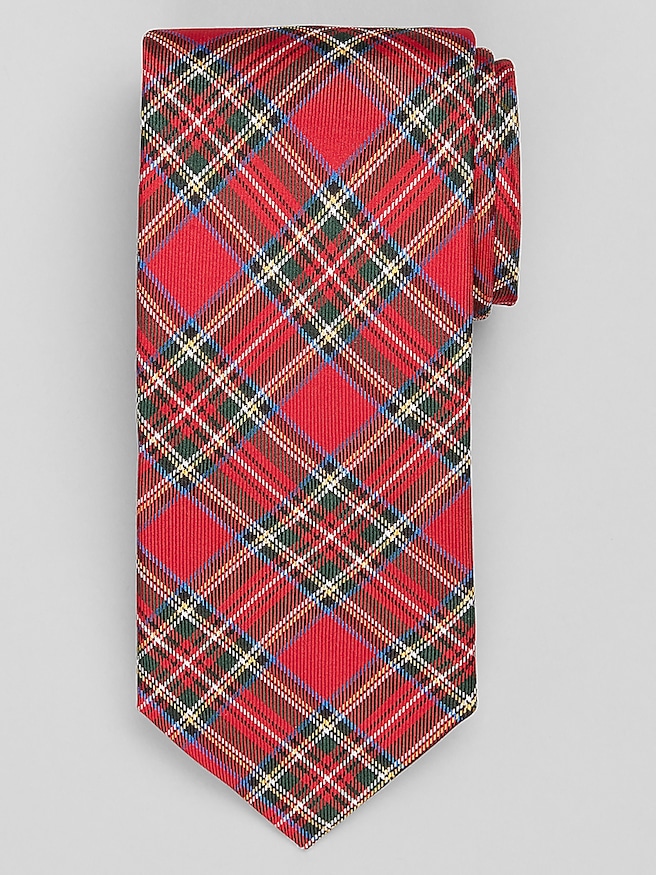
Men’s ombre plaid ties bring together two distinct design elements: the intersecting lines of a plaid pattern and a gradual shift from one shade to another. The result has more depth than a flat geometric print, with colors that can appear softly blended or sharply contrasted depending on the design. A dark blue ground moving into smoky gray creates a restrained effect, while burgundy fading toward rose adds warmth against a crisp white shirt. The plaid gives the eye a clear structure to follow, so the color transition feels deliberate rather than busy. This combination suits anyone who likes patterned neckwear but prefers something less predictable than a traditional stripe. Against a solid dress shirt, the crossing lines stay visible and the gradient becomes the focal point of the outfit. Light blue, white, and pale gray shirts provide especially straightforward foundations because they leave room for the tie’s changing tones. A navy suit can pick up the deepest blue in a plaid, while a charcoal jacket lets wine, silver, or muted purple shades stand out without overwhelming the overall look. When a shirt has its own pattern, contrast in scale matters: a very fine stripe generally creates more separation from a broad plaid than another pattern of similar size. The same principle applies to sport coats, where a quiet texture can complement the tie without competing with its grid. For a business presentation, a low-contrast ombre plaid adds interest near the face while keeping the impression composed. For a wedding guest outfit, a richer gradient can bring personality to a familiar suit. These ties also fit naturally into dinners, graduations, family portraits, and other occasions that call for thoughtful dressing rather than a highly prescribed uniform. Their appeal lies in that balance between recognizable tailoring and expressive color, offering a small but noticeable change to the shirts and jackets already in regular rotation.
Fabric, construction, and proportions all influence how an ombre plaid tie looks once it is knotted. Silk often gives color a luminous quality, allowing the lighter and darker areas of the pattern to catch the light as the fabric moves. Polyester can offer a smooth finish and resistance to everyday wrinkling, though the feel and drape depend on the weave and construction rather than fiber content alone. A more textured fabric softens the contrast between shades and pairs comfortably with brushed jackets or heavier tailoring during the cooler months. Smooth, lightly lustrous cloth tends to look crisper with a clean-finished suit. Whether a plaid is woven or printed also affects its surface character; woven patterns can have visible dimension, while printing can produce finely controlled color transitions. Neither method by itself determines quality. Even edges, secure stitching, and a blade that hangs straight are more useful signs of careful construction. The inner lining contributes body and helps the tie recover after knotting, but excessive bulk can make a large knot feel crowded beneath the collar. Tie widths around 3 to 3.25 inches often create a balanced, contemporary proportion, although the strongest match depends on jacket lapels, shirt collar, and personal preference. A narrower blade tends to sit more naturally with slimmer lapels, while a fuller blade complements broader tailoring. Length matters just as much: with the knot finished, the front tip should generally reach the belt buckle or the waistband on trousers worn without a belt. Taller builds, larger neck measurements, and more substantial knots can require additional length to achieve that placement. A four-in-hand knot uses relatively little fabric and has a slightly asymmetrical shape that works well with many point collars. A half-Windsor offers a fuller, more centered look when the collar has enough space. Because an ombre pattern changes along the fabric, the knot may show a deeper or lighter shade than the blade, adding another layer of contrast without introducing an extra accessory.
For everyday wear, the most versatile ombre plaid ties usually repeat at least one color already present in a wardrobe. Someone who wears blue shirts and gray trousers can make good use of a tie that bridges those shades, while a person drawn to brown jackets may prefer gradients with rust, gold, or deep green. A pocket square does not need to duplicate the plaid; a simple white square or a subtle accent drawn from the tie keeps the combination from looking overly coordinated. Under a V-neck sweater, only the knot and upper portion of the blade remain visible, giving the pattern a quieter presence. With an open sport coat, more of the gradient shows, making the tie a stronger part of the outfit. A small range of complementary patterns can make familiar tailoring feel more personal, and Mens Unique Ties offers another direction for exploring distinctive neckwear. An ombre plaid tie can also be a thoughtful gift for a graduate beginning a professional role, a father who enjoys dressing for special occasions, or a partner whose wardrobe already includes tailored clothing. Familiar shirt colors, preferred tie width, and usual dress codes are more useful clues than choosing solely by the pattern on its own. Lasting wear depends partly on care after each outing. Reversing the steps used to tie the knot, rather than tugging the narrow end through a tightened loop, reduces strain on the fabric and stitching. Letting the tie rest untied helps creases relax; hanging it smoothly or rolling it loosely avoids the pressure of a knot left in place. Care labels should determine cleaning methods, since silk, synthetic fibers, dyes, and internal linings can respond differently to moisture and heat. Blotting a spill gently instead of rubbing limits abrasion, and prompt professional attention may be appropriate for delicate fabrics. Stored away from direct sunlight and crowded drawers, an ombre plaid tie can retain the clear lines, smooth drape, and nuanced color that make it an appealing finishing touch.