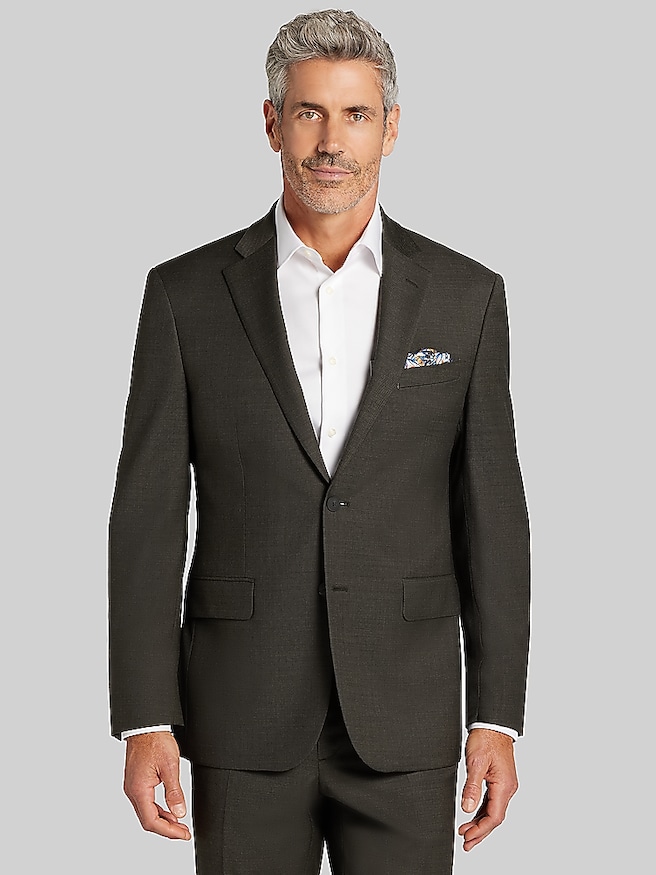
Men’s olive jackets bring an understated green tone to everyday outerwear, with styles that can feel rugged, streamlined, or slightly more dressed up depending on their shape and fabric. Common silhouettes include bomber jackets, field jackets, utility jackets, overshirts, and softly structured sport coats. Each gives olive a distinct character: a bomber’s shorter body and ribbed edges create a compact, athletic outline, while a field jacket’s longer cut and practical pockets emphasize its utilitarian roots. An overshirt keeps the look relaxed with a shirt-style collar and straightforward button front. A tailored olive jacket takes the color in a more polished direction, especially with subtle texture and restrained detailing. Olive itself covers a useful range, from pale, dusty green to deep shades with brown or gray undertones. Those variations affect how a jacket works with the rest of a wardrobe. A muted, brown-leaning olive sits comfortably beside tan chinos and dark brown leather, while a deeper green creates a crisp contrast with an off-white shirt or gray trousers. Materials matter just as much as color. Cotton twill has a familiar, substantial hand and develops a relaxed appearance with wear; canvas adds a firmer texture that suits workwear-inspired shapes. Nylon can produce a smooth, clean surface, while fleece gives casual styles a softer, more tactile finish. Wool blends offer texture and structure for jackets intended to look more refined, and suede adds a rich surface with natural variations in shading. Fabric weight, weave, lining, and finishing all influence how a jacket hangs, so two olive jackets with similar outlines can feel noticeably distinct. Matte fabrics tend to emphasize the earthy quality of the color, whereas a slight sheen makes seams, folds, and design details more visible. The appeal is versatility without anonymity: olive has more visual character than a basic neutral, yet it remains easy to combine with clothing already in regular rotation.
Fit determines whether an olive jacket becomes an effortless everyday layer or something that spends more time on a hanger. A comfortable shape leaves room for the clothing usually worn underneath without creating unnecessary bulk through the chest, back, or sleeves. With a set-in sleeve, a shoulder seam close to the natural shoulder generally creates a cleaner outline; intentionally relaxed and dropped-shoulder designs follow a looser proportion. The front should close without pulling sharply across the chest or forming strained lines around buttons and zippers. Enough room to reach forward, sit down, and bend the elbows makes a meaningful difference during a commute, a meal out, or an afternoon spent walking through a museum. Sleeve length also changes the impression: cuffs that land near the wrist look deliberate, while excess fabric bunching over the hands can make an otherwise good fit seem oversized. Body length deserves similar attention. A shorter bomber pairs naturally with mid-rise trousers because the waistband remains part of the silhouette, while a longer utility jacket creates a more elongated line over jeans or chinos. Slim, tailored, and relaxed cuts each have a place; the best choice depends on preferred proportions and intended use rather than a single rule about body type. Styling can be equally straightforward. An olive jacket over a white T-shirt, dark straight-leg jeans, and clean sneakers creates a familiar casual combination with enough contrast to show the jacket’s shape. A textured polo and stone-colored chinos look more considered without becoming formal. For a casual office or a dinner reservation, a softly structured olive jacket can work with a pale blue shirt, charcoal trousers, and brown loafers, provided the setting allows a relaxed approach. Keeping the surrounding colors simple lets olive act as the focal point without dominating the outfit. Small details such as a stand collar, visible pocket flaps, dark hardware, or tonal buttons can then provide interest without needing a bold pattern elsewhere. For a broader look at casual outerwear silhouettes, explore Mens Cool Jackets alongside olive styles that complement an established wardrobe.
An olive jacket’s long-term usefulness depends on construction and care as much as its initial appearance. Even stitching, neatly finished seams, secure pocket attachments, and closures that move smoothly are worthwhile details, particularly for a jacket expected to handle frequent wear. Pockets should suit actual habits: a secure interior pocket can be convenient for small essentials, while roomy exterior pockets may appeal to someone who prefers to keep the basics close at hand. A lining can help a jacket slide easily over shirts and knitwear, though an unlined design has its own relaxed appeal and allows the inside construction to remain visible. Care requirements vary considerably by material, making the garment’s care label the starting point rather than the color or silhouette alone. Some cotton and synthetic fabrics may permit machine washing, while structured jackets, wool blends, and suede may need specialized treatment. A washable shell does not automatically mean that its lining, trim, or internal structure can tolerate the same process. Prompt attention to small marks, appropriate cleaning products, and avoiding unnecessary washing can help preserve the fabric’s finish. Suede needs products and tools intended for that surface, and persistent stains are better assessed by a qualified cleaner than repeatedly scrubbed. Proper storage matters, too: adequate space helps prevent crushing, and a well-shaped hanger supports the shoulders of many woven jackets. Following the label’s drying instructions helps protect fit, texture, and color. These practical considerations are especially useful when choosing an olive jacket as a gift for a partner, father, brother, friend, or graduate building an everyday wardrobe. A familiar silhouette and a shade that works with the recipient’s usual shoes and trousers often make a more personal choice than an unusual design detail. Someone who lives in denim may appreciate the character of cotton twill, while someone who favors collared shirts may gravitate toward cleaner lines and a more tailored finish. A well-chosen men’s olive jacket earns its place through comfortable proportions, manageable upkeep, and the ability to make ordinary combinations feel complete.