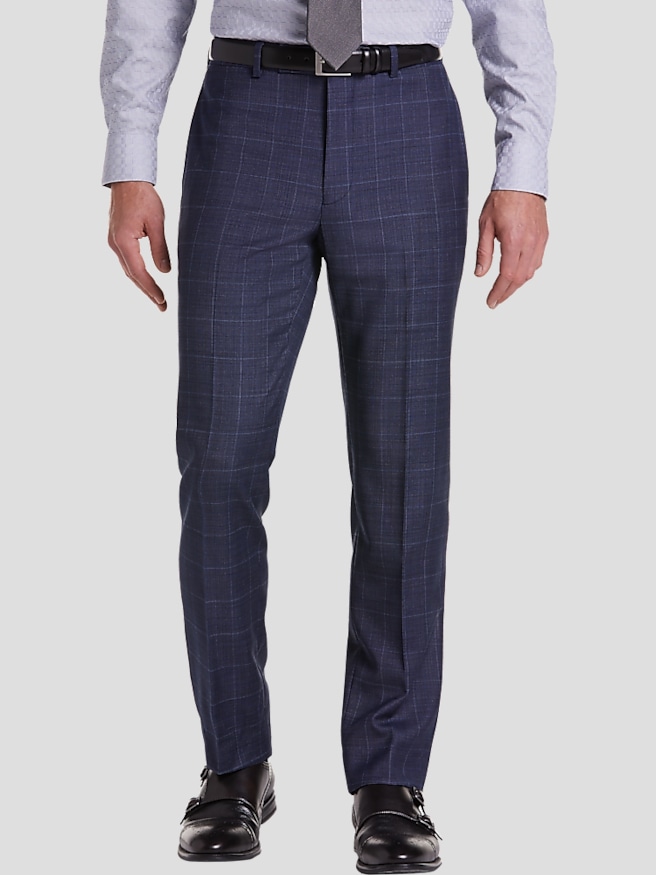
Men’s modern fit formal outfits bring a defined silhouette to dressed-up occasions without the close feel of a slim cut or the fuller proportions of a classic fit. Modern fit generally offers comfortable room through the chest and thighs, with gentle shaping at the waist and a clean taper through the trousers. The result is polished rather than restrictive: a jacket that follows the torso, pants that fall neatly over dress shoes, and enough ease for sitting through a ceremony or moving across a reception floor. Exact proportions vary by garment, so the fit designation is a starting point rather than a guarantee of identical measurements. A well-fitting jacket rests smoothly across the shoulders, its lapels lie flat, and its buttoned front stays free of pronounced pulling. Trousers should sit securely at the waist and drape cleanly through the seat, with pockets that remain flat instead of flaring open. These details give modern fit suits their appeal for wedding guests, graduates, professionals, and anyone building a formal wardrobe with lasting usefulness. Two-piece suits create an uncluttered foundation, while a coordinating vest adds depth and maintains a dressed appearance when the jacket comes off. Deep navy and charcoal work well for many weddings, ceremonies, and business-formal settings; black brings a more solemn or evening-focused character. The invitation still sets the standard. A formal suit can suit many celebrations, but an explicitly black-tie event generally calls for a tuxedo, traditionally distinguished by satin or grosgrain lapel facings and coordinating formal details. Modern fit can describe either a suit or a tuxedo, making the cut separate from the level of formality. That distinction matters when choosing an outfit for a ballroom reception, an awards dinner, or a milestone celebration where the setting deserves more than everyday office attire. Consistent proportions across the jacket, shirt, and trousers help the entire outfit look intentional.
Fabric gives a modern fit formal outfit much of its character, affecting how it hangs, how warm it feels, and how readily it recovers after hours of wear. Wool is a familiar choice for suiting because it combines breathability, resilience, and a graceful drape. A smooth worsted wool surface lends itself to crisp, formal lines, while subtle woven texture can give a solid color added depth without relying on a bold pattern. Wool blends bring varying combinations of softness, structure, and practical performance, depending on their composition and construction. Fabrics containing a modest amount of stretch may offer extra flexibility at the elbows, waist, and knees, particularly during a long event with plenty of sitting and standing. Stretch, however, does not replace adequate room or careful tailoring; fabric pulled tight across the back or thighs will still interrupt the silhouette. Lining and garment construction also influence comfort. A fully lined jacket has a finished interior and can move smoothly over a dress shirt, though overall warmth depends on both the shell fabric and the lining. During the cooler months, a medium-weight fabric can feel substantial for an outdoor arrival while remaining manageable inside a heated venue. An overcoat with enough room over the shoulders helps preserve the jacket’s shape on the way there. Durability depends on more than fabric weight alone: secure seams, smoothly functioning closures, and sufficient ease at stress points all contribute to dependable wear. Care should follow each garment’s label, with professional cleaning when specified rather than automatic cleaning after every brief outing. Airing a suit after wear, gently brushing away surface dust, and hanging the jacket on a broad, supportive hanger help maintain its appearance between cleanings. Trousers benefit from hanging neatly without crowded folds, and pockets keep their shape better when emptied before storage. Having matching pieces cleaned together when needed can also help maintain a consistent appearance over time. Those habits matter for clothing expected to look composed at more than one important occasion.
The supporting pieces determine whether a modern fit formal outfit feels understated, ceremonial, or distinctly suited to evening. A white dress shirt provides a clear contrast against dark tailoring and works across a wide range of formal settings. Pale blue can soften a navy or charcoal suit for occasions that allow a less traditional combination, while restrained patterns are best kept secondary to the overall dress code. Shirt fit deserves the same attention as jacket fit: a collar should close comfortably, sleeves should reach the wrist, and excess fabric should not bunch beneath the jacket. A small amount of shirt cuff visible beyond the sleeve creates a neat transition, especially when reaching for a handshake or raising a glass. Tie width generally looks most balanced when it relates to the lapel width, and a smooth silk tie in a solid color or quiet pattern keeps the effect refined. A tuxedo usually calls for a bow tie and a formal shirt appropriate to its details, rather than simply borrowing every accessory from a business suit. Pocket squares can introduce contrast without exactly matching the tie, with white offering a restrained finish. Polished leather lace-up shoes ground a dark suit; black is a dependable choice for more formal combinations, while dark brown can complement navy or charcoal where the occasion permits. Sleek formal footwear is the more appropriate companion to a tuxedo. Trouser length influences the final impression, too: a slight break gives a traditional finish, while minimal break emphasizes a cleaner, more contemporary line. For wardrobes that move between special occasions and professional settings, Men’s Modern Office Outfits offers a related perspective on modern proportions in workplace dressing. Formal clothing can also make a thoughtful graduation or career-milestone gift when the recipient’s measurements, preferences, and upcoming occasions are known. Whether worn for a single significant celebration or brought out for recurring events, the strongest outfit feels cohesive from shoulder to shoe, with balanced details and enough comfort to keep attention on the occasion.