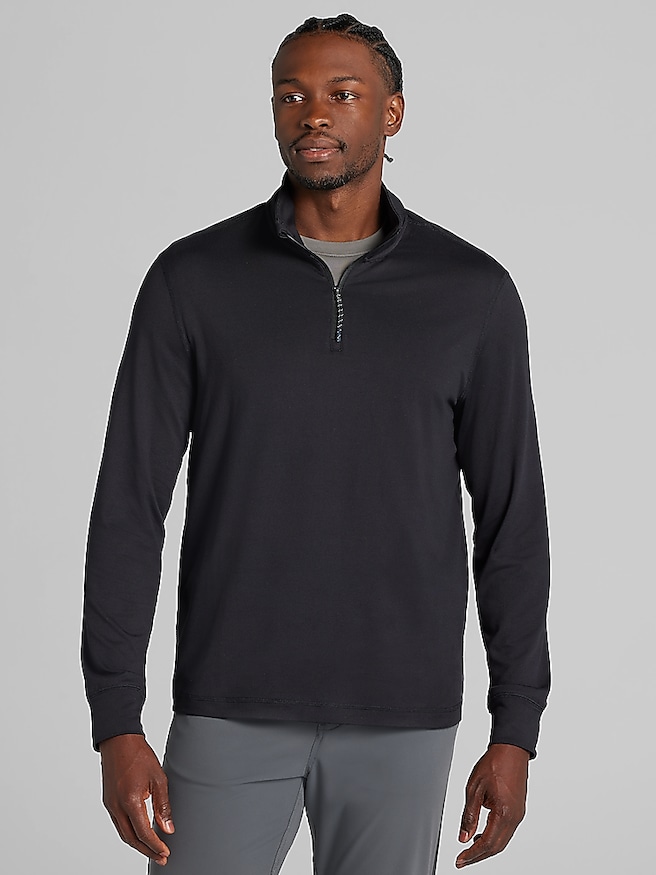
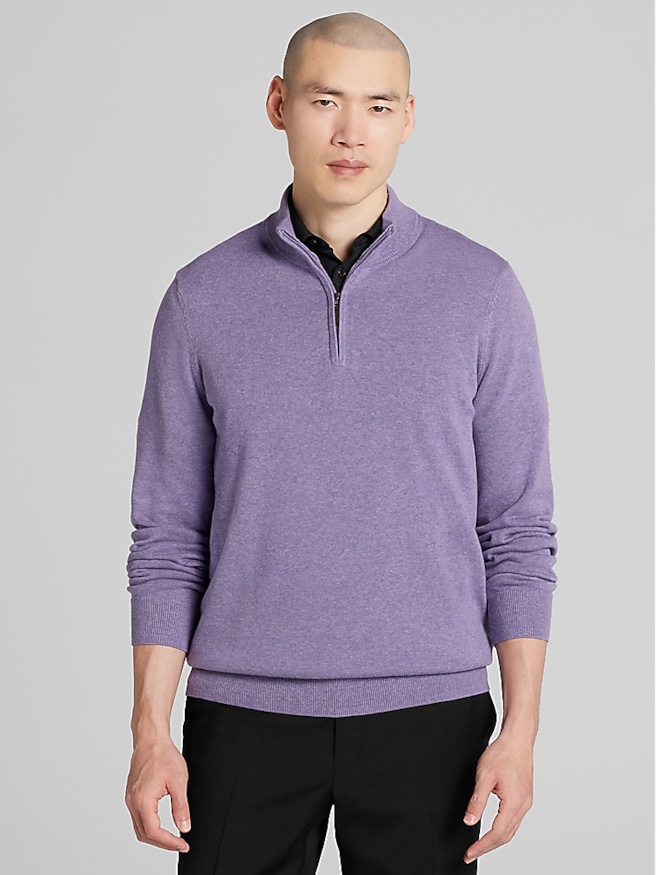
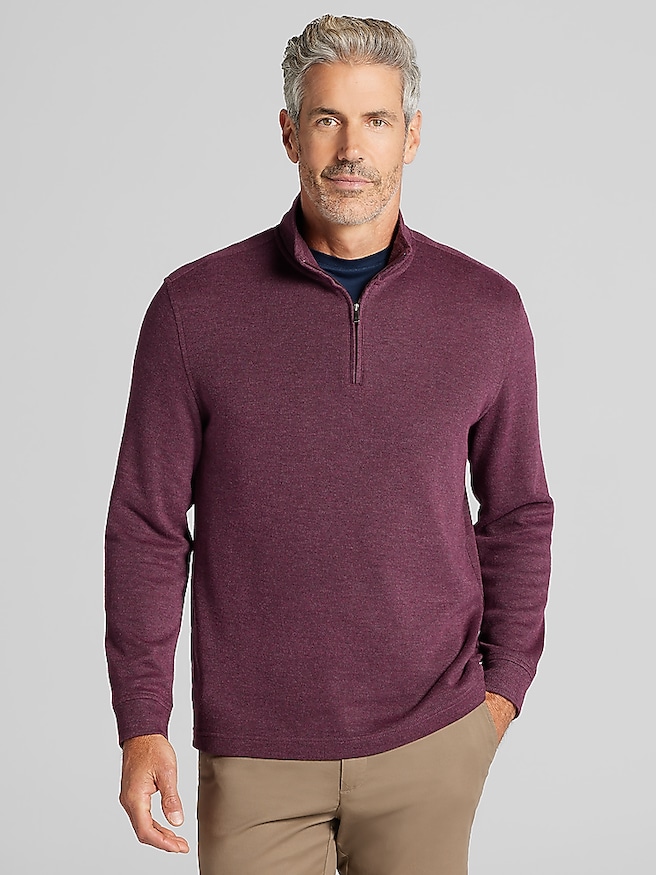
Men's lightweight quarter-zip pullovers combine a partially zipped neckline with a low-bulk knit construction, making them useful for everyday layering, business-casual outfits, travel, and recreational activities. The zipper lets the collar sit open over a T-shirt or button-down, while a higher closure creates a more contained neckline without the bulk of a full sweater. Fabric makes a noticeable difference in how a pullover feels and functions. Cotton and cotton-rich blends generally have a familiar, soft hand that works well for desk days, casual dinners, and everyday wear. Fine-gauge cotton knits can look especially clean over a collared shirt, while jersey constructions often feel more like a favorite T-shirt. Polyester and nylon blends are common choices for a smoother, sport-oriented finish; fabrics with elastane or spandex can add stretch for reaching, swinging a golf club, or carrying a travel bag. Moisture-wicking and quick-drying properties depend on the fabric and its treatment, so those features should be confirmed in the garment description rather than assumed from its appearance. A soft performance knit may suit an active commute, while a matte cotton blend can feel more at home with office trousers. Fine-gauge wool and wool blends offer another option when a lightweight knit texture is the priority, though their care requirements may differ from those of synthetic fabrics. Lightweight describes the feel and bulk of a garment, not a universal fabric weight or a guarantee of breathability. A dense, smooth knit and a more open-textured knit can behave differently even when both feel light in the hand. For outdoor activities, a stated UPF rating identifies tested ultraviolet protection; thin fabric alone does not establish that protection. Details such as a covered zipper backing, smooth interior seams, and a soft collar edge also matter, particularly when the pullover will be worn directly over a short-sleeve tee. Together, these characteristics help distinguish an everyday layering piece from one better suited to movement-focused use.
The most comfortable fit leaves enough room for the intended base layer without allowing excess fabric to gather around the waist or beneath a jacket. A trim cut can create a clean line over a thin T-shirt, while a classic fit provides more space for a woven shirt through the chest, upper arms, and midsection. Neither approach should make the zipper ripple or pull the neckline out of shape. On styles with set-in sleeves, shoulder seams generally sit near the shoulder edge; raglan sleeves use an angled seam that allows a different line across the upper body. Sleeve length deserves attention because fabric bunching at the wrists can make an otherwise lightweight pullover feel cumbersome. Cuffs should rest comfortably near the wrist, and the hem should stay reasonably settled when reaching forward or sitting down. A ribbed hem creates a slightly gathered finish, while a straight hem tends to hang more freely. Both can work untucked, provided the length looks balanced with the pants underneath. For a business-casual setting, a smooth, solid-colored quarter-zip over an Oxford shirt pairs naturally with chinos or tailored trousers. Keeping the shirt collar neatly inside the neckline avoids a crowded look, especially when the zipper is partly open. With dark jeans and clean sneakers, the same general silhouette takes on a more relaxed character. Charcoal, navy, and other understated shades coordinate easily with patterned shirts, while a textured knit can add interest to a simple combination of solid colors. Lightweight pullovers belong to the broader Men's Quarter Zip Shirts category, with their less bulky construction making them particularly useful beneath an unstructured jacket. A smooth surface generally slides under another layer more easily than a pronounced texture. For travel, a pullover that fits comfortably while seated and folds without taking up much bag space can earn a regular place in a carry-on. For golf or other movement-focused activities, comfortable reach through the shoulders matters more than a sharply tapered appearance.
Care and construction play an important role in how well a lightweight quarter-zip keeps its shape and finish. A lighter fabric does not automatically mean a shorter useful life, but it does make thoughtful handling worthwhile. Even stitching, securely finished seams, and a zipper that moves smoothly are practical signs to consider, along with cuffs and hems that recover after a gentle stretch. The collar should sit comfortably without an abrasive edge, and the zipper pull should be easy to handle without feeling oversized against the fabric. Care labels remain the best reference because cotton, wool, and performance blends can require different washing and drying methods. Where machine washing is permitted, turning the garment inside out and washing it with similar colors can help limit surface abrasion and color transfer. Closing the zipper before washing can also reduce contact between exposed zipper teeth and other fabrics. Technical finishes may have specific restrictions on fabric softeners or other laundry additives, so a familiar laundry routine may need adjustment. Drying instructions deserve equal attention: excessive dryer heat can affect stretch fibers and contribute to shrinkage in some blends, while certain knits are better dried flat to preserve their shape. Once dry, folding a soft knit rather than leaving it on a narrow hanger can help prevent stretched shoulders. Keeping hook-and-loop fasteners and rough accessories away from the surface helps reduce snags, and addressing a loose thread carefully is better than pulling it. These practical details are especially useful for a garment worn repeatedly between work, errands, and time away from home. Lightweight quarter-zips can also make thoughtful gifts for a dad, brother, partner, or friend who prefers straightforward clothes with several uses. A familiar color, a fabric suited to the recipient's routine, and measurements taken from a well-fitting pullover provide a more reliable starting point than guessing from a size label alone. For someone who dislikes fussy laundry, care requirements may matter as much as softness. The strongest choice balances a comfortable neckline, unrestricted movement, manageable care, and a shape that works with the clothes already worn most often.