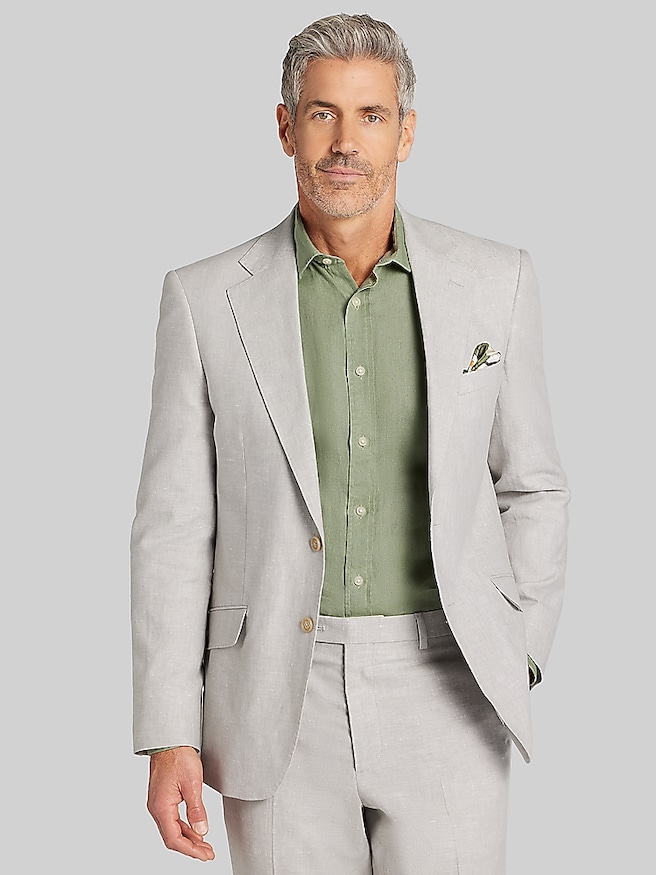
Men's leisure suits are coordinated outfits that bring the finished appearance of matching pieces to a more relaxed style of dressing. The term often describes a casual jacket and matching trousers, though it can also include walking suits built around a coordinating shirt and pants. Unlike a business suit, a leisure suit typically places less emphasis on structured shoulders, a sharply defined waist, and traditional dress-shirt-and-tie styling. Its appeal is the ease of an outfit that feels intentional without looking overly formal. The familiar leisure suit silhouette took hold in the 1970s, when open collars, textured fabrics, and expressive colors became part of everyday menswear. Modern interpretations can retain that character through a broad collar or distinctive weave, or take a quieter approach with clean lines and understated details. A shirt-style jacket with patch pockets has a different presence from a tailored blazer, while a matching button-front shirt and trousers create a coordinated look without an outer layer. Navy, charcoal, tan, and olive keep the emphasis on shape and texture; checks, subtle stripes, and contrasting panels make the fabric more noticeable. These outfits suit occasions such as a birthday dinner, an afternoon reception, a theater outing, or a relaxed anniversary celebration, provided the event does not require more formal attire. A leisure suit is not a substitute for a tuxedo at a black-tie event, and a matching casual set may feel too informal for a conservative business setting. Within the right setting, however, it offers a useful middle ground between separate casual clothes and a traditional suit. The strongest looks feel connected from collar to hem: a roomy shirt pairs naturally with trousers that have some ease through the leg, while a closer-cut jacket usually works best with a similarly streamlined trouser shape. That balance keeps the outfit relaxed rather than oversized or restrictive.
Fabric has a substantial effect on how a leisure suit looks, moves, and holds its shape. Linen has a visible natural texture and develops creases with wear, giving a matching set an easygoing character rather than a perfectly pressed finish. Cotton can range from soft and fluid to crisp and substantial, depending on the weave and weight. Polyester and blended fabrics may offer wrinkle resistance and consistent shape, although their feel varies considerably with construction. Wool blends can provide a smooth drape, while textured weaves, velvet, and suede-like finishes give a simple silhouette more depth. Fiber content alone does not determine comfort or durability; fabric weight, lining, seam construction, and the way the garment fits all matter. A dense fabric may hold a clean trouser line, while a softer one tends to follow the body more closely. Fit is especially important because matching pieces make the proportions of the whole outfit easy to see. Shoulder seams should sit naturally, and a buttoned shirt or jacket should lie smoothly across the chest without pulling into horizontal lines. At the waist, a comfortable fit leaves room to sit through dinner without the waistband digging in or the front pockets flaring. Pleats can add room through the hips and thighs, while a flat front creates a cleaner surface; neither detail automatically makes trousers loose or slim. A little extra room at the knee can make a noticeable difference when sitting, climbing stairs, or spending time on a dance floor. Trouser length also changes the overall impression. A slight break over loafers feels relaxed and familiar, while a shorter, clean hem puts more attention on the shoes. Sleeve length deserves equal attention, especially with an open-collar shirt worn directly against the skin. These small proportions help a coordinated outfit look deliberate, whether its character is understated, retro-inspired, or more expressive.
Styling a leisure suit generally works best when the supporting pieces let its fabric and silhouette remain visible. A plain knit shirt can soften a jacket-and-trouser combination, while an open-neck button-down adds a little definition without the formality of a tie. Loafers, simple lace-up shoes, and minimal sneakers each shift the mood, with the occasion's dress expectations providing the clearest boundary. A textured set rarely needs several competing accessories; a watch, a restrained belt, or a pocket square on an appropriate jacket may be enough. For celebrations that call for bolder tailoring or a more dressed-up finish, men's party suits offer a related direction with a stronger emphasis on occasion dressing. Care is another part of keeping a coordinated outfit looking cohesive. The care label takes priority over assumptions about a fabric, since linings, trims, and garment construction can require a different approach from the outer material alone. Some sets are washable, while others need professional cleaning. Matching pieces benefit from consistent care so that color and surface texture remain as close as possible over time. Prompt attention to spills, gentle handling around textured surfaces, and storage that supports the garment's shape help limit avoidable wear. Jackets generally keep their shape better on supportive hangers, and trousers stay neater when hung or folded along their intended crease. Excessive heat can damage certain fibers or leave an unwanted shine, so pressing and steaming need to follow the garment's instructions. A leisure suit can also make a thoughtful gift for someone who enjoys coordinated dressing, particularly for a milestone birthday, anniversary trip, or family celebration. Familiarity with the recipient's usual jacket or shirt size, trouser measurements, preferred fit, and tolerance for garment care makes that choice more personal. An understated color and a familiar silhouette may become a frequently worn outfit, while a distinctive pattern can reflect an established taste for expressive clothes.