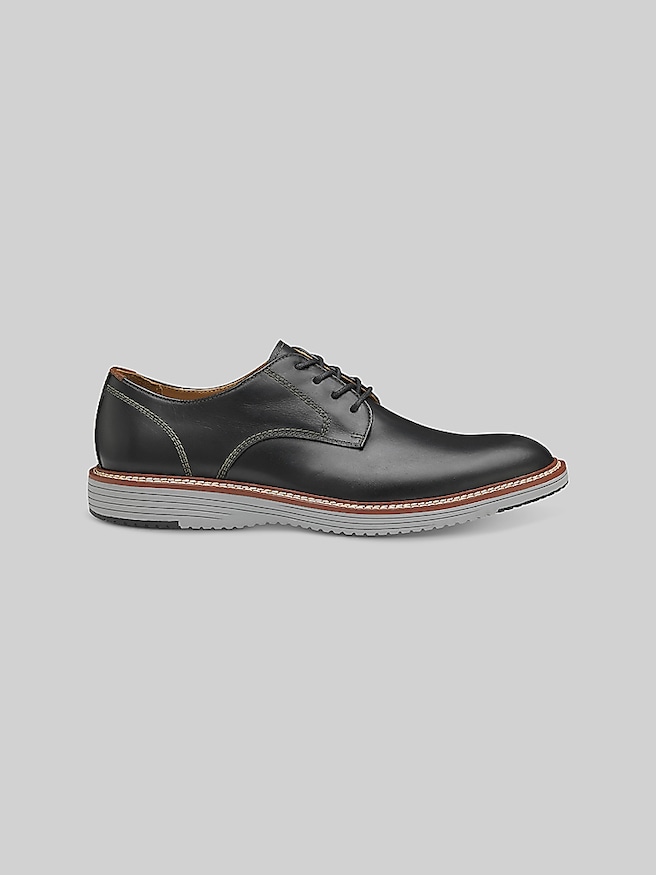
Men’s leather walking shoes bring together a polished leather upper, cushioning underfoot, and a stable sole for everyday movement. A well-designed pair balances durability with flexibility, helping the foot bend naturally at the forefoot while keeping the heel comfortably positioned. Full-grain leather retains the hide’s natural surface and is valued for its strength and character; with appropriate care, it can develop a distinctive patina over time. Top-grain leather has a more refined surface that can suit a cleaner, more uniform look. Neither material alone determines comfort, though. The lining, seams, footbed, midsole, and outsole all affect how a shoe feels during a commute, an afternoon exploring a museum, or a workday spent moving between desks and meeting rooms. Smooth interior finishing can help reduce rubbing, while a padded collar may soften contact around the ankle. Cushioning can help absorb impact, but an exceptionally soft footbed is not automatically the most comfortable choice for every wearer. Some people prefer a firmer, more structured platform that feels steady through each step. Leather also varies in thickness and suppleness: a substantial upper may feel more structured initially, while a softer leather can feel more accommodating from the start. The best match depends on foot shape, walking habits, and how the shoes will be used. For regular walks on sidewalks and indoor floors, look for a combination of secure fit, moderate flexibility, and an outsole suited to those surfaces. Leather walking shoes are particularly useful for men who want a neater alternative to athletic sneakers without committing to the stiffness of a traditional dress shoe. They can work well for city sightseeing, office routines, appointments, and casual dinners that involve a walk before or afterward. They are not a substitute for footwear designed specifically for running, technical hiking, or a workplace with protective-footwear requirements. Their appeal lies in supporting ordinary daily movement while looking composed enough to carry through several parts of the day.
Fit deserves as much attention as leather quality, especially when walking is the main purpose. The toes should have room to spread and move without pressing against the front or sides, and the widest part of the foot should sit comfortably within the widest part of the shoe. A secure heel helps limit rubbing, but the collar should not dig into the Achilles area. Try walking at a normal pace, turning corners, and taking a few stairs when possible; these movements reveal pressure points that standing still can miss. Wear the socks intended for regular use, since a thicker sock can noticeably change the feel across the instep and around the toes. Feet may expand through the day, making an afternoon fitting useful for judging everyday comfort. Width matters independently of length, and sizing up to solve a narrow fit can leave too much space at the heel. Leather may soften with wear, but a painful pinch, compressed toes, or persistent heel movement should not be treated as something that will necessarily disappear. Lace-up designs allow adjustments across the instep, while slip-on styles depend more heavily on the relationship between the upper’s shape and the wearer’s foot. For anyone who uses an orthotic, a removable footbed can be helpful, provided the shoe has enough interior depth to accommodate the insert without crowding the foot. Underneath, a rubber outsole can provide useful traction and durability, although grip depends on the tread, compound, surface, and condition of the sole. No outsole provides dependable traction on every surface. Some walking shoes use a cushioned midsole beneath a separate rubber tread, while others have a simpler sole construction; the feel can differ considerably. A comfortable shoe should bend where the foot bends rather than feel rigid through the entire stride. Consider weight as well: a substantial sole may feel reassuring, but unnecessary bulk can become noticeable during longer walks. Persistent foot discomfort warrants advice from a qualified healthcare professional rather than relying on footwear changes alone.
The visual details of leather walking shoes help determine how easily they fit into a wardrobe. A low-profile shape, restrained stitching, and a smooth upper generally look more polished than a bulky silhouette with pronounced tread. Black leather pairs naturally with charcoal trousers and other dark neutrals, while brown shades can complement navy chinos, olive pants, and dark denim. The relationship between shoe shape and trouser hem matters, too: a neat hem that rests lightly above the shoe keeps the overall line clean, whereas excess fabric can bunch around a substantial collar. For office settings that call for a refined appearance alongside practical walking comfort, Business Leather Walking Shoes offer a related direction to consider. A streamlined pair can bridge the gap between a desk-based schedule and the walking that happens before, between, and after meetings. Maintaining that appearance starts with care suited to the leather’s finish. Remove loose dirt with a soft brush or cloth, and use a lightly dampened cloth on smooth leather when appropriate, following the care directions. Let shoes dry naturally away from direct heat, which can damage leather and adhesives. Conditioner formulated for the material can help keep smooth leather supple, while a compatible cream or polish may restore its appearance; test any treatment on an inconspicuous area first. Suede and nubuck need different tools and treatments, so smooth-leather products should not be assumed suitable for those finishes. Giving shoes time to air between wears helps the interior dry, and shoe trees can help preserve shape when sized correctly. Check the heel and tread periodically for uneven wear, and address damaged stitching or loose components before they worsen. If leather walking shoes are intended as a gift, an established preference for width, fastening style, and underfoot feel is more useful than guessing from dress-shoe size alone. A familiar color and a shape that fits the recipient’s daily routine can make the choice more personal, especially for someone who values both a put-together appearance and the freedom to stay on foot.