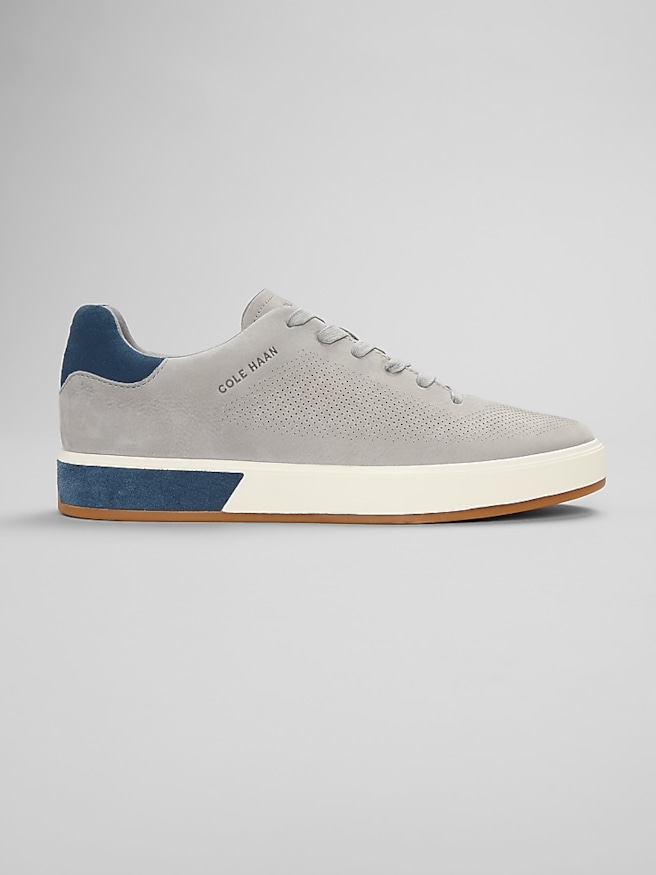
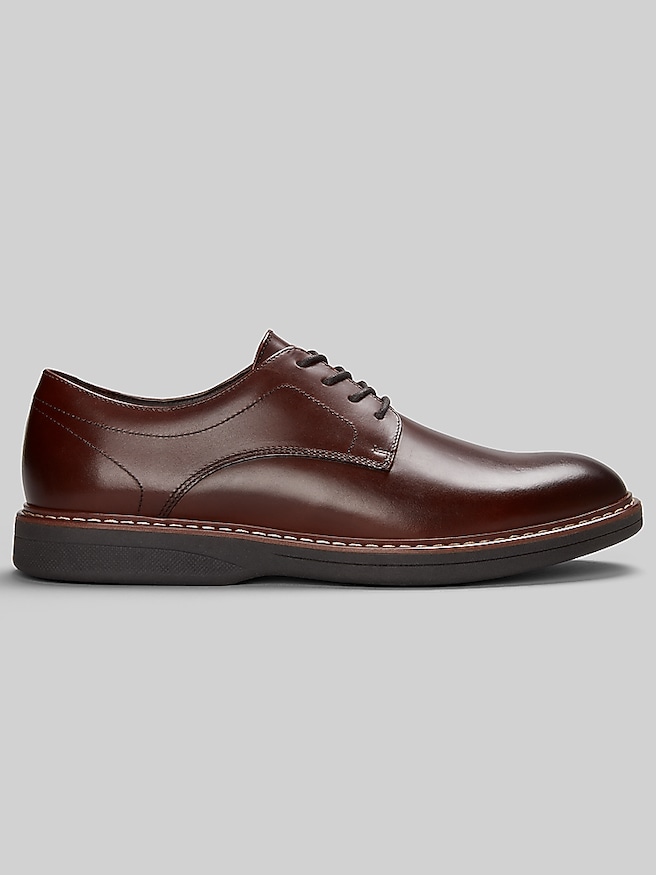
Men’s leather sneakers combine the familiar comfort of a casual shoe with the texture, structure, and polished appearance of a leather upper. Their appeal comes from that balance: they can look relaxed with jeans yet feel considered enough for chinos, a button-down shirt, or an unstructured jacket. Compared with heavily detailed athletic footwear, streamlined leather sneakers place more emphasis on clean proportions, subtle stitching, and the character of the material itself. Smooth leather creates a crisp, understated finish, while pebbled leather adds visible texture that can make small surface marks less noticeable. Suede, which is also leather, has a soft, napped surface and a more relaxed appearance, though it requires different cleaning methods than smooth leather. Full-grain leather retains its natural grain and can develop a distinctive patina with wear; more heavily finished leathers may have a more uniform appearance. The leather label alone does not determine comfort or longevity, however. Upper thickness, lining materials, seam placement, sole construction, and everyday care all contribute to how a pair feels and holds up. Leather can soften and adapt to the shape of the foot over time, but it should not need painful stretching to become wearable. Breathability also depends on the complete construction, including the lining and any coatings applied to the upper. Underfoot, rubber outsoles can provide flexibility and a stable feel, while cushioning helps soften contact with hard surfaces. Actual traction depends on tread design and the surface being walked on, rather than on the leather upper. A softly padded collar, a tongue that lies flat, and neatly finished interior seams are small details that can matter during a commute, a lunch meeting, or several hours spent on foot. Together, those elements distinguish a sneaker that simply looks sharp from one that also fits comfortably into an everyday routine.
The most versatile men’s leather sneakers usually have proportions that work with the clothing already in a wardrobe. A low-top silhouette leaves a clean line at the ankle and pairs easily with straight-leg or gently tapered pants. A slimmer sole generally reads as more understated, while a thicker sole gives the shoe a stronger casual presence. White leather sneakers create a clear contrast against dark denim and navy chinos; black offers a quieter, more continuous line with charcoal or black pants. Brown and tan bring warmth to blue denim, olive chinos, and textured tailoring. Color is only part of the equation: tonal laces, restrained stitching, and minimal decorative details can make a sneaker easier to coordinate with a collared shirt or jacket. Pairing chinos or tailored trousers with Mens Leather Dress Sneakers creates a more relaxed alternative to traditional dress shoes when the occasion permits. In a business-casual office that allows sneakers, a clean leather pair can complement an Oxford shirt and neatly hemmed trousers without making the outfit feel overly formal. For dinner or a casual celebration, dark jeans, a knit polo, and smooth leather sneakers create a balanced combination with little extra styling. The hem matters, too: pants that finish neatly near the top of the shoe let the silhouette remain visible instead of gathering over the laces. Leather sneakers are not a substitute for dress shoes at events with formal or black-tie requirements, and workplace expectations still take priority. They are also distinct from footwear built for running, court sports, or specialized training. Their natural role is everyday wear, travel, social plans, and other settings where casual footwear is appropriate but a tidy appearance still matters. For someone who moves between a desk, neighborhood errands, and an evening out, that flexibility can make them a useful wardrobe staple.
Fit and care have as much influence on long-term satisfaction as color or silhouette. Men’s leather sneakers should feel secure through the heel and midfoot while leaving enough room for the toes to move without pressing against the front or sides. Trying them with the type of socks intended for regular wear gives a more realistic sense of space, especially when the shoes will be worn for several hours at a time. Walking a few steps can reveal heel movement, pressure across the instep, or a seam that rubs near the little toe. Laces allow some adjustment over the top of the foot, but they cannot compensate for a shoe that is fundamentally too narrow or too short. A cushioned footbed may feel inviting immediately, while a supportive shape can matter more over a longer day; neither should be judged by softness alone. For anyone who uses an orthotic, interior depth and a removable footbed can be useful considerations, though those features vary by construction. Keeping leather sneakers looking presentable starts with simple, consistent attention. Dust and loose dirt are easier to remove before they settle into stitching or textured surfaces. Smooth finished leather can often be wiped with a soft, lightly damp cloth, followed by a leather-appropriate cleaner when needed, always following the manufacturer’s care directions. Suede calls for a suitable brush and products made for its napped surface rather than the same treatment used on smooth leather. Conditioner may help suitable smooth leathers maintain suppleness, but it can alter color or finish, so testing an inconspicuous area matters. Soles and laces benefit from separate cleaning, and shoes should dry naturally away from direct heat. Allowing pairs to air out between wears helps the interior dry, while using a shoehorn can reduce repeated crushing of the heel counter. Wear at the outsole, loosening seams, and changes in cushioning are practical signs to monitor over time. As a gift for a dad, partner, or recent graduate, leather sneakers are most useful when the recipient’s size, preferred fit, and usual clothing style are known. A familiar silhouette in an easy-to-coordinate color keeps the focus on everyday usefulness: footwear that feels comfortable, looks intentional, and earns repeat wear.