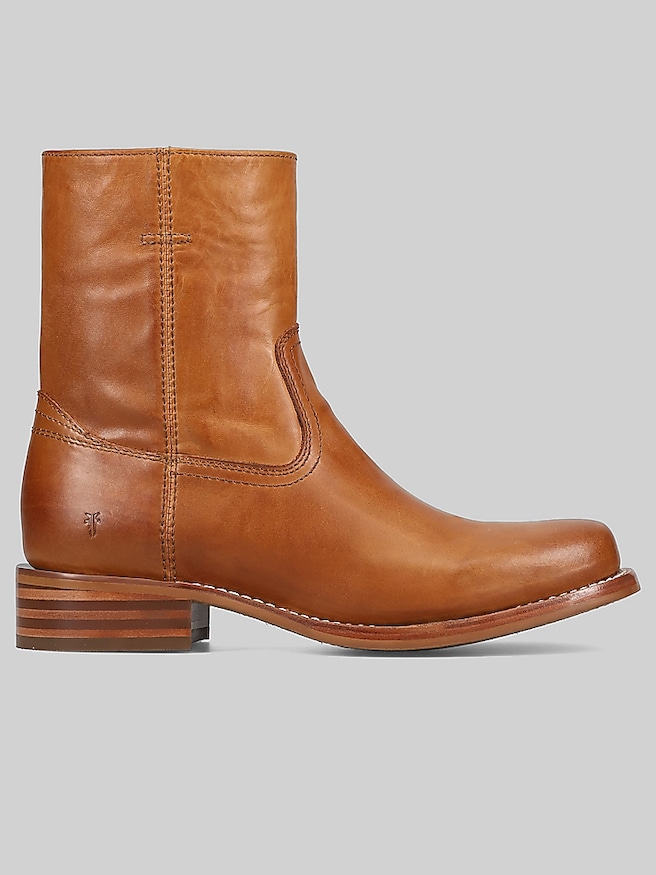
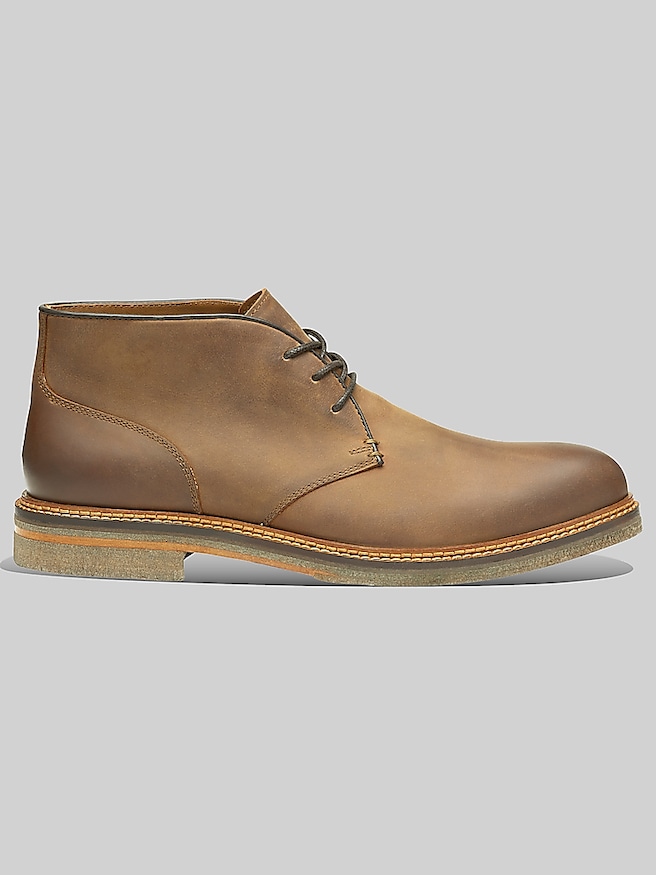
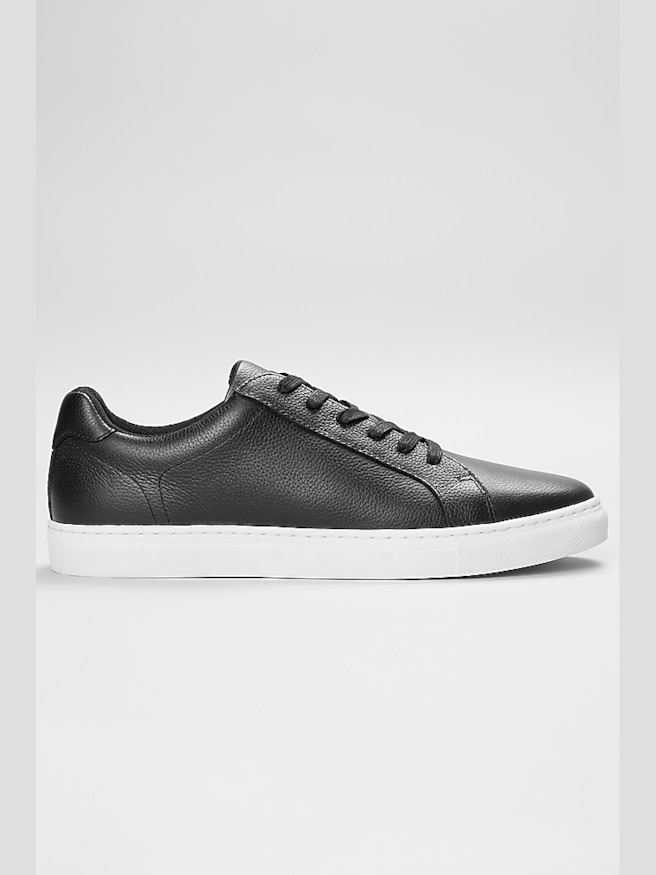
Men's leather casual boots combine the structure of a boot with the versatility of everyday footwear, making them a natural match for jeans, chinos, and relaxed trousers. Their appeal comes from the balance of material and shape: leather adds texture and character, while ankle-height silhouettes give an outfit definition without the formality of a dress boot. Chukka boots typically have an ankle-high upper, open lacing, and two or three pairs of eyelets, creating a simple profile that works with straight-leg denim or cuffed chinos. Chelsea boots use elastic side panels rather than laces, giving them a streamlined appearance that pairs comfortably with dark jeans and an untucked button-down. Lace-up casual boots allow more adjustment across the instep and can range from understated plain-toe shapes to substantial designs with prominent stitching. Moc-toe boots feature stitching around the upper edge of the toe, adding a distinctive outline that complements textured shirts, denim jackets, and other relaxed clothing. Color and finish influence the overall effect just as much as silhouette. Smooth black leather creates a sharper contrast with blue denim, while brown shades bring depth to combinations built around navy, olive, gray, or tan. A burnished toe or softly varied leather surface adds visual interest without requiring bold details elsewhere in the outfit. For a casual office, a restrained boot shape and clean trouser hem can keep the look composed; for dinner or a weekend outing, visible grain and a heavier sole can feel more at home. The trouser opening matters, too: a slim shaft fits neatly beneath narrower pants, while a fuller boot usually works better with a straight leg that falls over the upper without catching. For another take on these outfit combinations, explore men's fall casual boots with attention to how the leather finish and silhouette complement the rest of the wardrobe.
Leather type, construction, and fit all contribute to how casual boots feel and how they wear over time. Full-grain leather retains its natural grain surface and may show small variations that become part of its character as it develops a patina. Top-grain leather has been refined at the surface for a more uniform appearance, although its performance still depends on thickness, finishing, and overall construction. Suede has a soft, napped surface that gives boots a more relaxed appearance, while nubuck has a fine, velvety texture created by sanding the grain side of the hide. These finishes need care suited to their surfaces rather than the same treatment used on smooth leather. Inside the boot, lining materials, seams, and footbed design affect comfort as much as the upper. Cushioning can soften the feel underfoot, but it does not make up for a toe box that is too narrow or a shape that presses against the instep. A well-fitting pair should hold the foot securely through the heel and midfoot while leaving enough room for the toes to move naturally. Trying boots with the socks intended for everyday wear helps establish a more useful sense of fit. Some leather softens and becomes more flexible with wear, but a break-in period should not be expected to correct pinching, numbness, or toes striking the front. Lace-up styles offer adjustment as socks or fit preferences change; pull-on styles rely more heavily on the relationship between the heel, instep, and opening. Underfoot, rubber compounds and tread patterns influence flexibility, traction, and weight. A lower-profile sole keeps the appearance understated, while a deeper lug adds visual substance. Stitched construction may allow resoling, depending on the design, whereas cemented construction bonds the sole to the upper and can offer a lighter, flexible feel. Neither method alone determines quality. Secure stitching, neatly finished edges, a stable heel, and a comfortable flex point near the ball of the foot all matter in daily use.
Regular care helps leather casual boots retain their shape and appearance without removing the character that makes them appealing. For smooth leather, a soft brush or cloth removes surface dust before it settles around seams and creases. A lightly damp cloth can handle many everyday marks, followed by drying naturally away from direct heat. Leather conditioner should be compatible with the finish and applied sparingly according to the care directions; too much can change the appearance or leave the surface feeling heavy. Testing any treatment on a discreet area first is especially useful for lighter shades and deliberately varied finishes. Suede and nubuck generally call for a dedicated brush and suitable cleaning products, since conventional polish or heavy conditioning creams can flatten or darken the nap. Cedar shoe trees can help maintain the shape of the toe and absorb some interior moisture between wears, while giving boots time to air out helps keep the lining comfortable. Using a shoehorn reduces strain on the heel counter, and loosening laces before taking boots off avoids unnecessary pulling at the upper. Durability also depends on matching the footwear to its purpose. Casual leather boots suit everyday activities such as commuting, office wear, social plans, and travel, but a rugged appearance does not establish suitability for demanding trails or jobs requiring certified protective footwear. For someone who spends long stretches on foot, weight, underfoot support, and freedom of movement deserve as much attention as color. As a birthday or graduation gift, leather casual boots can be a thoughtful choice for someone building a versatile wardrobe, especially when their size and preferred silhouette are already known. The most useful pair is often one that feels familiar with the recipient's usual jeans or trousers while adding a little more structure. Comfortable proportions, appropriate care, and a finish that suits the wearer's habits give these boots a lasting place in an everyday rotation.