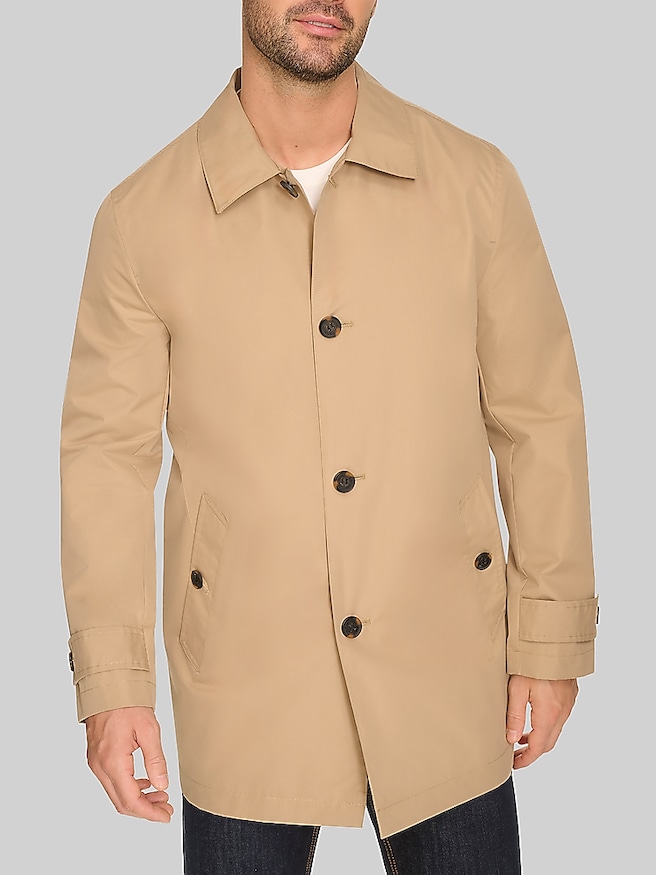
Men’s large outerwear includes jackets and coats sized to provide comfortable coverage through the chest, shoulders, and torso, with silhouettes suited to everyday wear, commuting, and dressier occasions. A large size is not the same as a big or tall size: each follows a distinct set of proportions, and measurements can vary by cut and manufacturer. Chest measurements are a useful starting point, while shoulder width, sleeve length, and the layers underneath help determine how a coat will feel throughout the day. A well-fitting jacket leaves room to reach for a steering wheel or carry a bag without pulling tightly across the upper back. Sleeves should cover the wrists with arms relaxed, and the front should close comfortably without straining over a sweater or suit jacket. Extra room should serve movement and layering rather than leave excess fabric bunching beneath the arms. Shorter jackets offer easy movement for driving and casual errands, while longer coats provide more coverage and can complement tailored clothing. When worn over a suit, an outer layer generally looks more balanced when its hem covers the suit jacket beneath it. Quilted jackets, puffers, fleece layers, and structured overcoats each bring a distinct character to a wardrobe, from relaxed weekend dressing to a polished arrival at the office. A clean-lined coat in charcoal, navy, black, or an earthy neutral can work with several trouser colors without drawing attention away from the rest of an outfit. Texture adds another dimension: a softly brushed surface feels understated with tailored pants, while a smooth shell pairs naturally with jeans and casual footwear. For layered combinations, men’s large sweaters can provide a useful middle layer beneath a jacket or coat, provided the outerwear has enough space through the upper arms and chest. The result should feel comfortable while standing, sitting, and moving, not simply look right on a hanger.
Materials shape how men’s large jackets and coats handle warmth, moisture, movement, and repeated wear. Wool and wool-blend outerwear offers a substantial feel and a naturally textured finish that works especially well with business and occasion clothing. Fabric weight, weave, lining, and overall construction all influence warmth; a wool label alone does not establish how much protection a coat provides. Blends may combine wool’s character with fibers chosen for strength, softness, or easier maintenance, so the full fiber content matters. Down insulation provides warmth with relatively little weight and often compresses easily, making it useful when packing space is limited. Its performance depends on factors including fill quality, fill amount, and the surrounding shell, and untreated down loses much of its insulating ability when wet. Synthetic insulation generally retains more insulating performance when damp, though drying time and bulk vary by construction. Fleece offers soft, breathable warmth for casual use or layering, but an unlined fleece jacket typically provides limited protection against wind. Nylon and polyester shells can be lightweight and durable, with tightly woven fabrics or added finishes helping manage exposure. Water-resistant outerwear can handle some light moisture, but it should not be treated as equivalent to waterproof protection. Waterproof performance depends on more than the face fabric, with membranes or coatings, seam construction, and closures contributing to the finished garment. These distinctions become tangible in everyday settings: a brief walk from a parking garage places different demands on a coat than a long wait at an outdoor transit stop. Someone moving between buildings may appreciate a lighter layer that is easy to carry indoors, while someone spending extended time outside may value more insulation and greater coverage. Breathability also matters when walking briskly or climbing stairs, since trapped heat can become uncomfortable even in cold air. Intended use helps put fabric claims in context and keeps the emphasis on comfort rather than thickness alone.
Construction details often determine how satisfying large outerwear is after months of regular use. A smooth lining allows sleeves to slide over shirts and knitwear without catching, while thoughtful shaping through the elbows and shoulders supports natural movement. Secure interior pockets can keep small essentials close, and comfortably placed hand pockets are useful when standing outside. Pocket depth and placement deserve attention because an overfilled pocket can distort a coat’s shape or sit awkwardly against the hip when seated. Sturdy zipper hardware, neatly finished seams, firmly attached buttons, and reinforcement around high-stress areas contribute to durability. A two-way zipper can add flexibility when sitting in a longer coat, while adjustable cuffs help refine the fit at the wrists. Hoods, stand collars, storm flaps, and covered closures may provide additional coverage, although their usefulness depends on the garment’s design and intended setting. Care requirements are another practical part of choosing outerwear that fits a routine. The sewn-in care label takes priority, whether it calls for professional cleaning, machine washing, or a particular drying method. Wool coats often benefit from gentle brushing and airing between cleanings, while insulated garments need the recommended washing and drying process to help preserve loft. Excess detergent, fabric softener, or unsuitable heat can affect certain technical fabrics and finishes. Minor marks are easier to address promptly using a method appropriate to the material, rather than vigorous rubbing that may damage the surface. Between wears, a supportive hanger helps a structured coat maintain its shoulders, and outerwear should be fully dry before being placed in storage. These habits help preserve both appearance and performance without making maintenance unnecessarily complicated. A jacket or coat can also be a thoughtful gift for a partner, father, brother, or friend, particularly when the recipient’s measurements, usual layers, and daily routine are known. Someone who wears tailoring to work may get more use from a longer, refined silhouette, while a frequent driver may prefer a shorter, less bulky jacket. The most useful choice balances fit, fabric, coverage, and care with the way the wearer actually spends the day.