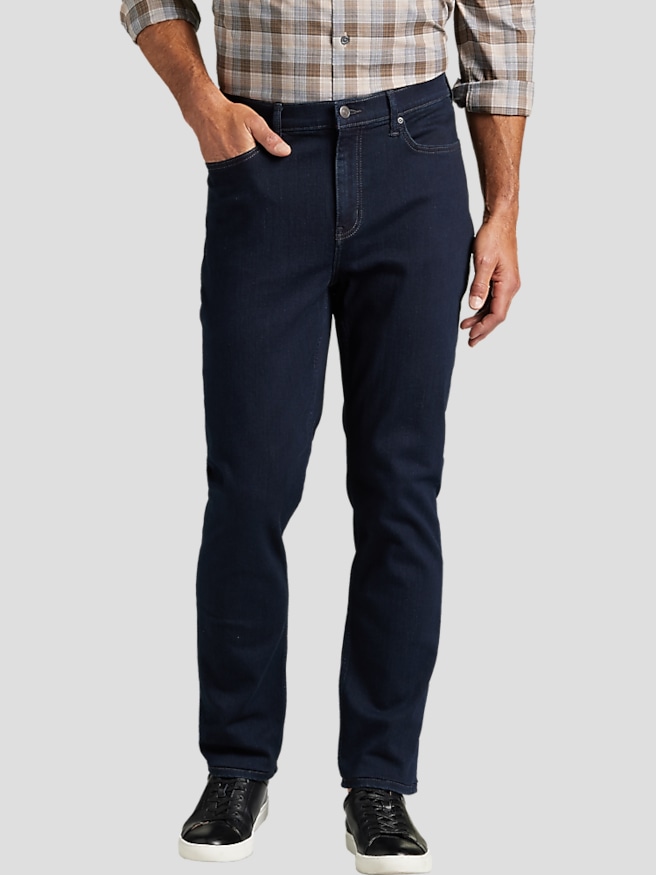
Men's jeans with button closure feature a button fastening at the waistband, but that detail does not necessarily mean a full button fly. Some designs pair a single waistband button with a zipper, while button-fly jeans use additional buttons beneath an overlapping fabric placket to close the front opening. This distinction matters for anyone who prefers the traditional construction of a button fly or the convenience of a zipper with a secure top fastening. Both styles work as everyday denim, with comfort shaped by the fabric, rise, and cut as much as the closure itself. A metal tack button is common on jeans, providing a sturdy fastening point where the waistband meets. Neatly finished buttonholes and secure stitching help that area stand up to repeated use. Cotton gives denim its familiar texture, while the twill weave creates the diagonal surface pattern visible on many pairs. All-cotton denim generally has a more structured feel and may soften with repeated wear and washing. Denim blended with elastane or other stretch fibers can provide extra give through the waist, seat, and knees, making sitting, walking, and bending more comfortable. Fiber content alone does not tell the whole story, though: fabric weight, weave, finishing, and the amount of stretch all influence how jeans feel and hold their shape. Substantial denim can deliver a crisp outline, while softer denim may drape more closely to the body. Neither needs to feel restrictive to look polished. The fastening should sit flat when closed, with enough room at the waist to breathe and sit comfortably. Pulling around the button, a fly that spreads open, or pronounced strain across the hips can signal that the size or cut is not a comfortable match. Well-balanced construction allows the closure to do its job without becoming the focal point of the fit.
Fit gives button-closure jeans much of their character, whether the goal is a streamlined everyday outfit or something more relaxed. Slim cuts follow the leg more closely, straight cuts maintain a fairly consistent line from knee to hem, and relaxed cuts typically provide additional room through the seat and thigh. Athletic cuts can accommodate fuller thighs while narrowing toward the ankle, although fit names and proportions vary. The rise is equally important because it determines where the waistband rests and affects the space between the waist and crotch. A mid-rise silhouette often works comfortably with untucked shirts, while a higher rise can provide more coverage when sitting or bending. For someone who spends hours at a desk, drives regularly, or walks between appointments, comfort through the hips and knees deserves as much attention as the appearance at the ankle. Jeans should not require constant adjustment after standing up from a chair. Length also changes the overall impression: a slight break over loafers or lace-up shoes creates a clean line, while excess fabric gathered around the ankle can make an otherwise neat outfit look unfinished. Button-closure denim fits naturally into casual dinners, weekend plans, travel days, and workplaces where jeans are appropriate. A textured polo and leather sneakers keep the look easygoing; an Oxford shirt and an unstructured jacket give the same denim a more considered finish. For outfits built around deeper indigo tones, Dark Wash Mens Jeans offer an understated foundation that pairs well with both light and dark shirts. Lighter washes and visible fading create a more casual effect, particularly with simple T-shirts and casual footwear. A tucked shirt leaves the waistband and fastening visible, making a flat, comfortable closure especially noticeable. A belt can complete the outfit, but it should not have to gather several inches of extra waistband fabric to keep the jeans in place.
Durability depends on the entire pair of jeans, not just the button at the waist. Reinforced pocket corners, even stitching, securely attached belt loops, and well-finished seams help support areas exposed to repeated movement and friction. The seat, inner thighs, knees, and pocket edges often show wear first, especially when jeans are worn frequently for commuting or everyday errands. Stretch denim benefits from a fit that allows movement without staying under constant tension, while rigid denim needs enough room to sit comfortably before any gradual softening occurs. Care should follow the garment label, since different finishes and fiber blends can require different treatment. Turning jeans inside out before washing can help reduce surface abrasion, and washing with similar colors helps limit unwanted dye transfer. Deep indigo denim may release color, particularly early in its life, so contact with light upholstery, pale shoes, or light-colored clothing deserves some attention. A mild detergent and the recommended wash setting help preserve the fabric, while avoiding unnecessary washing can reduce wear from repeated laundering. Stains still need timely treatment, and jeans should be cleaned when soiled rather than kept unwashed to preserve a particular look. When the care label permits, air-drying can reduce exposure to dryer heat; excessive heat may contribute to shrinkage or affect stretch fibers. Fastening the buttons before laundering can also help keep the fly aligned. If a waistband button loosens or a buttonhole begins to fray, an early repair may prevent a small problem from becoming a larger tear. For gifting, the most useful details are the recipient's usual waist and inseam measurements, preferred rise, and preference for rigid or stretch denim. Knowing whether a full button fly is important avoids confusing it with a standard button-and-zip closure. A familiar fit and versatile wash make these jeans a practical gift for someone who values dependable clothing that works across everyday plans.