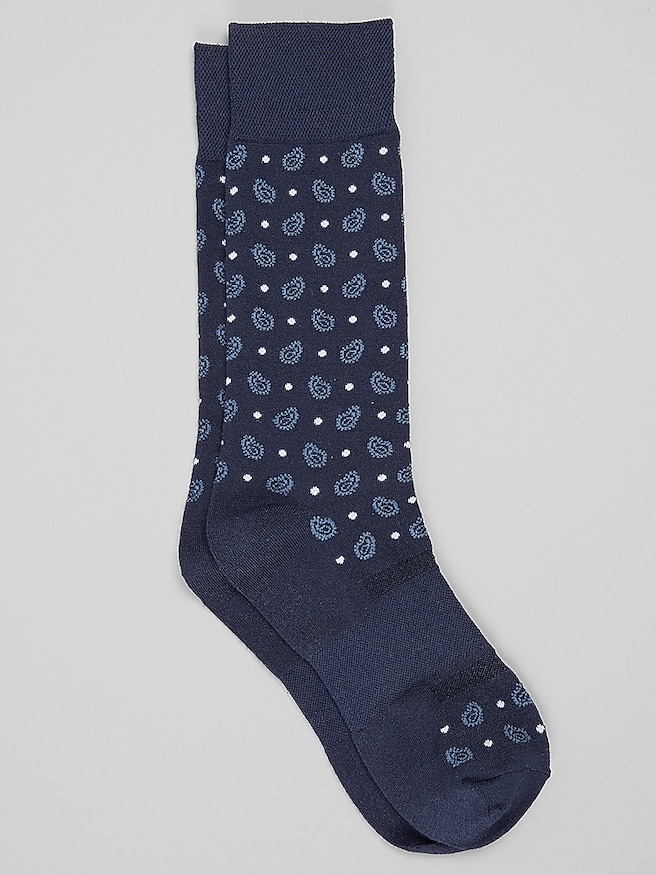
Men’s high-quality socks combine comfortable fibers, a dependable fit, and durable construction suited to the way they will be worn. The difference often becomes clear over a full day: a cuff that stays in place through meetings, a toe seam that does not rub inside a dress shoe, and a heel that still fits properly after repeated washing. Fiber content helps explain how a pair feels and performs, but no single material is the best choice for every setting. Cotton offers a familiar softness and absorbs moisture, while longer-staple or combed cotton can provide a smoother surface with fewer loose fibers. Mercerized cotton has a subtle sheen that works particularly well with polished leather footwear and tailored trousers. Merino wool can feel soft against the skin and helps manage moisture and odor, making it useful for extended wear. Cotton holds moisture more readily than many synthetic fibers, so fabric composition matters for someone whose day involves substantial walking. Nylon and polyester can contribute strength, shape retention, or quicker drying, depending on the blend and knit. A small amount of elastane supplies stretch, helping the fabric follow the foot rather than bunch beneath it. An all-natural fiber label does not automatically indicate better quality; a thoughtful blend may hold its shape and resist abrasion more effectively. Construction deserves equal attention. Reinforcement at the heel and toe supports areas that take repeated friction, while a smooth toe closure reduces bulk where shoes tend to press. Even knitting, consistent stretch, and a cuff that recovers after being gently expanded are useful signs of careful construction. Thickness is a separate consideration from quality. A fine-gauge dress sock can be durable without feeling substantial, while a cushioned casual sock may provide extra softness underfoot. The most useful balance depends on the shoe, the length of the day, and the wearer’s preference for a barely-there feel or a little more padding.
Fit connects those material and construction details to everyday comfort. Socks should follow the heel and forefoot without pulling tightly across the toes, leaving loose folds under the arch, or slipping into the shoe. Shoe-size ranges provide a starting point, though the shape of the foot and the amount of stretch in the fabric also affect the result. A heel pocket sitting noticeably above or below the heel can signal a size mismatch, and a cuff that leaves deep marks may feel too restrictive. Length changes both coverage and appearance. Crew socks are versatile with casual trousers, jeans, and many office outfits, while over-the-calf styles provide coverage when dress trousers rise while sitting or crossing a leg. No-show socks create an exposed-ankle look with compatible loafers and casual shoes, but their opening needs to sit below the shoe’s edge without sacrificing a secure heel fit. Inside a close-fitting oxford, smooth, lightweight fabric generally takes up less room than a thick cushioned knit. With roomier footwear, modest cushioning may make long stretches of standing or walking feel more comfortable. Extra padding should not make a shoe tight across the toes or instep. An elasticized arch section can help keep fabric positioned, but it is not the same as a medically specified compression garment. For business meetings, interviews, ceremonies, and evenings that call for tailoring, fine texture and restrained patterns keep the transition between trouser and shoe clean. Navy, charcoal, black, and brown are adaptable foundations; coordinating socks with trousers often creates a continuous line, while a small geometric pattern or a contrasting color adds personality. Ribbing brings subtle texture without demanding attention, and more expressive designs can work with straightforward casual clothing. Someone moving from a desk to a dinner reservation may value a lightweight pair that remains neat throughout the day, while someone spending hours on their feet may prefer additional cushioning and moisture management. Quality is less about a universal specification than a pair that feels right in its intended setting.
Care helps preserve the qualities that make well-made socks worth wearing repeatedly. The care label remains the best reference because wool, cotton, and synthetic blends can require different handling, even when they look similar. Washing socks inside out can help remove buildup from the surface closest to the foot, and keeping them away from exposed zippers or hook-and-loop fasteners reduces opportunities for snagging. A mesh laundry bag can be useful for delicate knits and smaller pairs. Appropriate detergent, the recommended wash cycle, and careful drying support both the fibers and the elastic components. Excessive dryer heat can shorten the life of stretch fibers or contribute to shrinkage, while some wool socks need gentle washing and air drying to retain their shape. Bleach and fabric softener are not suitable for every construction or finish, so the label’s directions matter more than a single laundry routine. Durability also depends on what happens between washes. Rotating pairs gives each a chance to dry fully, and shoes with rough interior edges can wear through even a well-constructed heel. Correct sizing reduces strain across the toes, while shoes with adequate space help limit concentrated pressure. Pilling alone does not necessarily mean a sock has failed, but thinning fabric, persistent slipping, holes, or stretched-out cuffs can change how it feels and functions. For gifting, socks are practical when the recipient’s shoe size, preferred length, and typical footwear are considered together. A person who wears tailored clothing most days may appreciate smooth dress-weight pairs, while someone with a casual routine may get more use from textured crews. Familiar colors are straightforward to coordinate, and a considered pattern can make a useful gift feel personal without relying on novelty. Browsing Men's Fall Socks offers another way to consider those preferences. Across a sock wardrobe, thoughtful materials, secure fit, comfortable seams, and appropriate care remain the details that make a pair easy to reach for again.