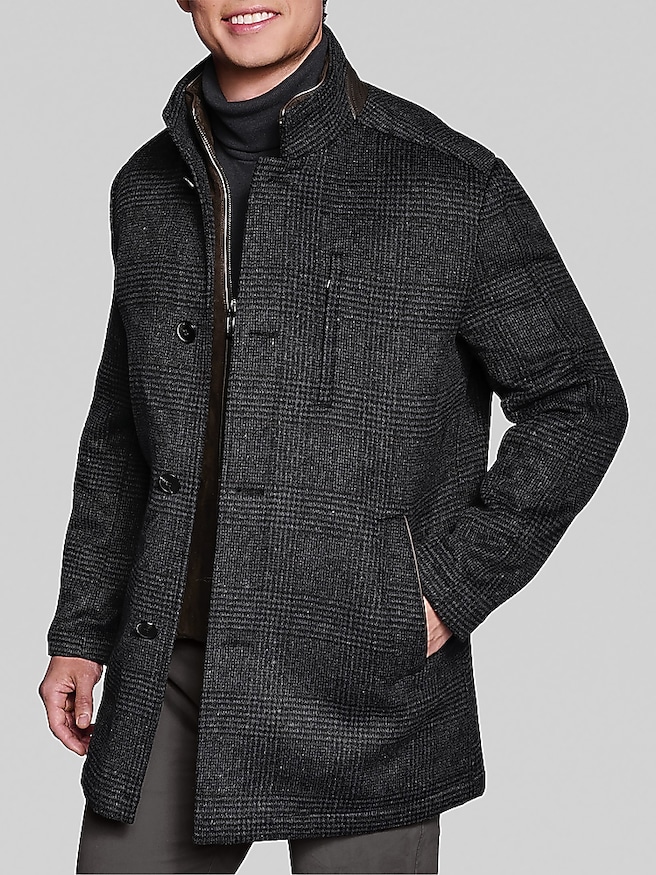
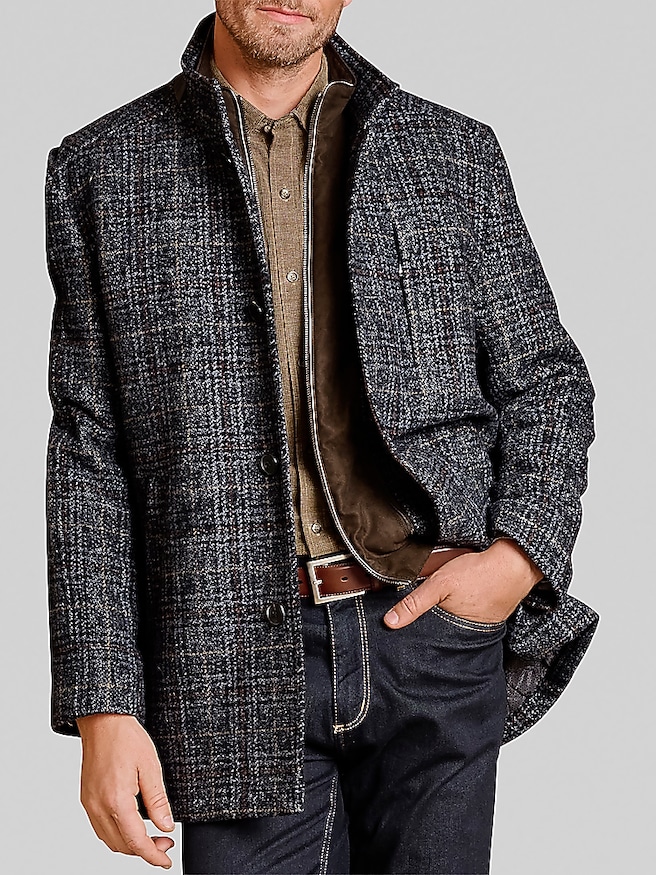
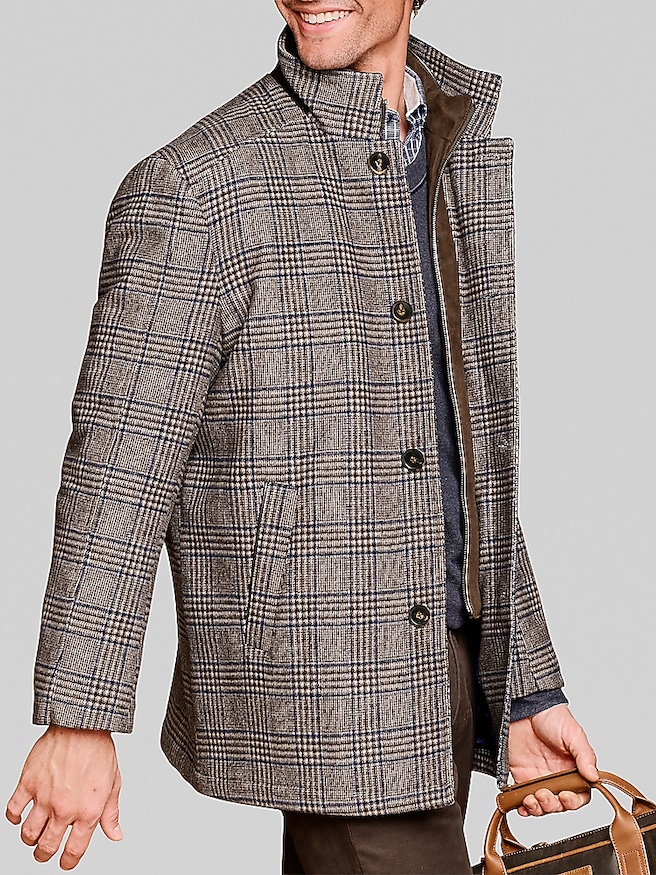
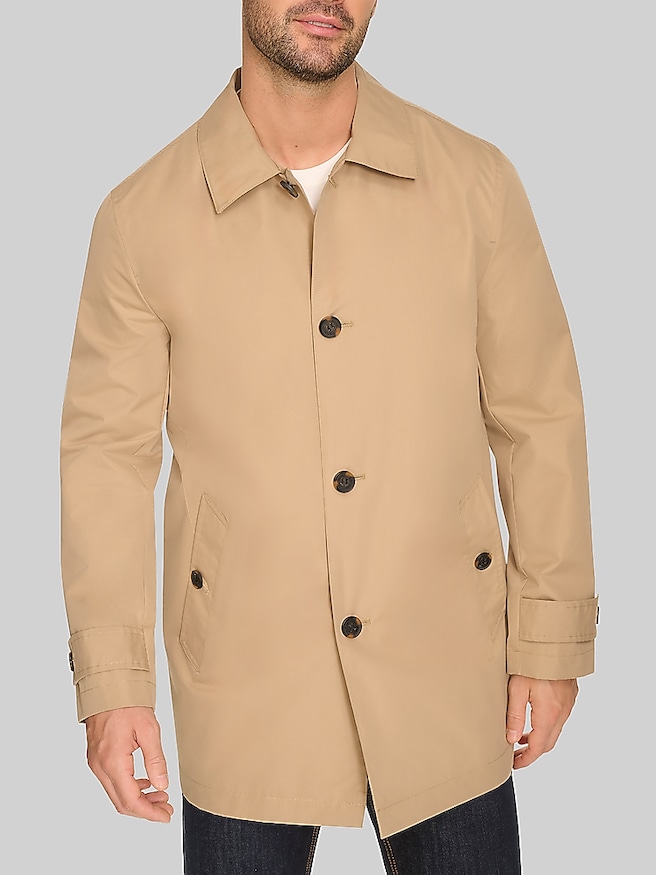
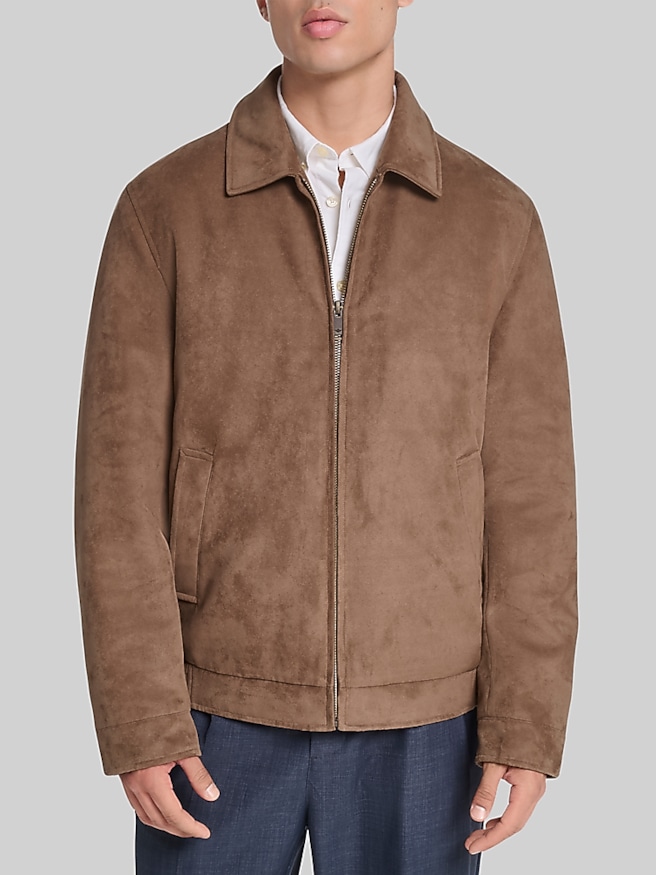
Men’s faux suede jackets recreate the soft, brushed appearance of suede with synthetic materials, often polyester or microfiber, sometimes combined with polyurethane in the fabric construction. The result is a jacket with a fine nap: tiny surface fibers that catch the light and give the color subtle depth. Brushing a hand across the fabric may leave a temporary lighter or darker patch, part of the texture that distinguishes faux suede from a smooth woven jacket. Unlike genuine suede, which is made from animal hide, faux suede gets its appearance from a manufactured textile, although linings, trims, and other components should be checked separately if material sourcing matters. Fabric weight, backing, and finishing all affect how a jacket feels and drapes. A supple version can sit close to the body without looking stiff, while a more structured fabric helps a collar, shoulder, or pocket flap hold its shape. Stretch fibers, when included, can add flexibility through the arms and back, but a soft surface alone does not guarantee stretch. Color also changes the overall impression. Tan and tobacco emphasize the familiar suede look, brown adds richness beside denim, and black or charcoal gives the texture a more understated character. The matte finish provides contrast against crisp cotton shirts, smooth knitwear, and dark jeans without needing a bold pattern. Construction details matter just as much as the surface: evenly stitched seams, neatly finished pocket openings, and a zipper that moves smoothly help a jacket feel considered in everyday use. A lining can make the jacket easier to slip over a shirt, while an unlined construction may feel less structured. Faux suede is not automatically waterproof, stainproof, or machine washable; those qualities depend on the particular fabric and its care instructions. Its appeal is the combination of tactile texture and familiar jacket shapes, with a look that can move comfortably between a casual office, a dinner reservation, and a weekend spent around town.
The silhouette determines how a men’s faux suede jacket works with the rest of an outfit. A bomber typically has a shorter body and a defined hem, often with ribbed cuffs or waistband trim that creates a gently bloused shape. A trucker-inspired jacket usually brings a pointed collar, visible seams, and chest pockets, giving the soft fabric a more architectural outline. An overshirt shape tends to be straighter and less fitted at the waist, with room to wear it open over a T-shirt or button it over a thin knit. For a closer look at the shorter silhouette, Men's Suede Bomber Jackets offers a related style direction; fabric composition remains the distinction between suede and faux suede. Fit should support the shape rather than fight it. On a conventional set-in sleeve, the shoulder seam generally sits near the natural shoulder edge, and the upper back should allow a comfortable reach without pulling sharply across the fabric. Fastened at the front, the jacket should lie cleanly through the chest instead of forming pronounced horizontal lines. Sleeves that finish around the wrist keep the proportions neat, while enough space through the arm accommodates the shirt or knit intended underneath. A shorter hem pairs particularly well with mid-rise trousers because the two pieces meet cleanly at the waist. Longer, straighter shapes can work with trim chinos or dark denim without making the outfit look top-heavy. For dinner, a brown faux suede jacket over an ivory knit and charcoal trousers creates contrast through texture rather than loud color. For an informal workplace, navy chinos and a light blue button-down keep the jacket relaxed but purposeful. Clean sneakers make the overall effect casual; loafers or leather boots give it more definition. Pocket placement deserves attention, too. Low-profile pockets keep the front streamlined, while larger patch pockets add visual weight. Keeping a phone or keys from overfilling them helps preserve the jacket’s intended line.
Care has a direct effect on how faux suede looks over time, particularly at the cuffs, collar, elbows, and pocket edges where regular contact can flatten the nap. The sewn-in care label is the starting point because two jackets with a similar appearance may require different cleaning methods. Some synthetic suede fabrics allow gentle washing, while others need professional cleaning or carefully limited spot treatment. A washable outer fabric does not necessarily mean the entire jacket is washable; linings, interfacing, trim, and construction also affect the instructions. For a fresh spill, blotting gently with a clean cloth is generally preferable to rubbing, which can spread the mark or disturb the surface. Any cleaning method or protective treatment should be approved for the material and tested in an inconspicuous area before broader use. High heat and aggressive brushing can alter the texture, so drying and surface care should follow the manufacturer’s directions rather than assumptions based on genuine suede. A broad hanger supports the shoulders between wears, and leaving breathing room in the closet helps prevent deep compression marks. Avoiding prolonged pressure from an overfilled shoulder bag can also reduce concentrated wear in one area. Durability depends on fabric quality, backing, seam construction, and use, not simply on the faux suede label. Repeated friction may gradually polish the nap or create pilling, making gentle handling useful even when the jacket feels substantial. For someone who prefers uncomplicated outfits, this kind of jacket can supply the texture that makes a plain shirt and trousers feel finished. It can also make a thoughtful gift for a dad, partner, brother, or friend whose usual wardrobe includes denim, chinos, and simple knits. Matching the recipient’s preferred jacket length, typical layering habits, and willingness to follow the care routine matters more than selecting an unfamiliar silhouette. A comfortable fit and a color that works with frequently worn clothes give a faux suede jacket a clear place in an everyday wardrobe.