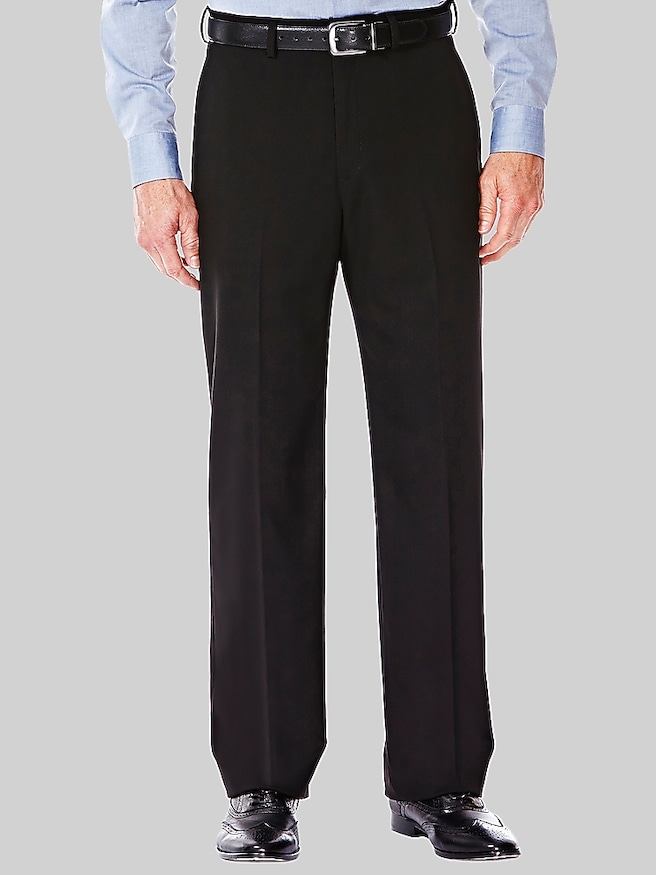
Men’s fancy pants range from tuxedo trousers for black-tie events to tailored dress pants and statement styles that make an outfit feel more dressed up. The distinction is often in the details: a satin stripe along the outer seam, a crease that runs cleanly down the leg, or a woven pattern that becomes visible up close. At a black-tie wedding or gala, tuxedo trousers belong with a matching tuxedo jacket. Even sharply pressed black dress pants won’t give the same effect if the fabric or finish is visibly out of step with the jacket. At a cocktail reception or a dressy dinner, tailored trousers can look at home with a sport coat rather than a matching jacket. Charcoal or navy makes an understated base when the jacket has a pattern, while deep brown or burgundy can give a simple outfit more character without being especially bold. The scale of a pattern matters as much as the color. A subtle herringbone may read almost like a solid from across the room, while a broad windowpane check draws the eye straight to the trousers. A solid jacket lets a larger pattern stand on its own, and a quiet knit can set off textured pants without making the outfit feel too formal. The same details that make dress pants feel special can also affect where they make sense. A lustrous finish looks at home under the lights at an evening reception, while a matte fabric with a crisp crease fits just as easily into a graduation ceremony or a business dinner. For occasions that call for polish but not a full suit, Men's Stylish Pants offers another way to explore dressy separates and smart-casual looks.
Fit shapes the look of fancy pants as much as fabric or color. A straight leg has a clean line from thigh to hem, a tapered leg narrows toward the ankle, and a fuller cut gives the fabric more room to drape. Slim trousers can look sharp with a close-fitting jacket, but a narrow leg opening is no substitute for a good fit through the seat and thigh. Pockets that flare open or creases that pull sideways across the lap are signs that the cut may be too close. Flat fronts keep the line of the trousers simple, while pleats can give a fuller thigh room to move and help the fabric hang neatly when standing. Rise matters, too. Trousers with a higher rise sit closer to the natural waist and can keep a tucked shirt from bunching where it meets a buttoned jacket. For a long ceremony followed by a seated dinner, a waistband that feels comfortable in a chair matters more than how it looks in a quick glance at a standing mirror. Shoes also change the way the hem falls. A slight break, the small fold where the fabric meets the top of the shoe, feels traditional on many straight-leg dress pants. A tapered leg often looks cleaner with little or no break, especially when extra length would bunch around the ankle. Fabric makes a difference here: a firmer cloth can hold a crease and show the shape of the leg, while a softer cloth moves more freely with each step. For a graduation gift or a milestone celebration, dress trousers can be a practical choice for someone who likes to dress up. The waist, rise, and inseam of a pair the recipient already wears comfortably are better clues than a waist size alone.
Material affects how men’s dress pants drape, how they wear, and how much care they need. Smooth worsted wool has a clean finish that works well for formal tailoring, while wool twill offers a little more visible texture and can stand up well to regular wear. A wool blend may offer a balance of structure and easy movement, depending on the fibers and the weave. Cotton blends tend to look more matte and relaxed, a good match for dressy separates when the occasion doesn’t call for formalwear. A small amount of stretch can make it easier to sit, climb stairs, or spend several hours on a dance floor, though stretch won’t solve pulling at the pockets or tightness through the seat. Surface details matter for durability as well. Raised textures and decorative trims can snag more easily, while a smooth, tightly woven cloth is often a practical choice for trousers that will see frequent use. The care label is the best starting point even when two fabrics look alike. Some cotton blends can be washed at home, while lined trousers or styles with delicate trim may call for professional cleaning. Hanging trousers neatly between wears helps them keep their shape, and smoothing the legs along the crease before hanging can prevent a second fold from setting in. Where pressing is permitted, a pressing cloth can help protect dark fabric from developing shine. It’s also worth checking the hem with the shoes that will be worn most often, since fabric that brushes the floor can fray well before the rest of the trousers shows wear. For pants worn on repeat, a durable cloth and a comfortable fit can matter more than an eye-catching finish. For a special evening, a deep color, a fine texture, or a well-defined crease may be all the detail the outfit needs.