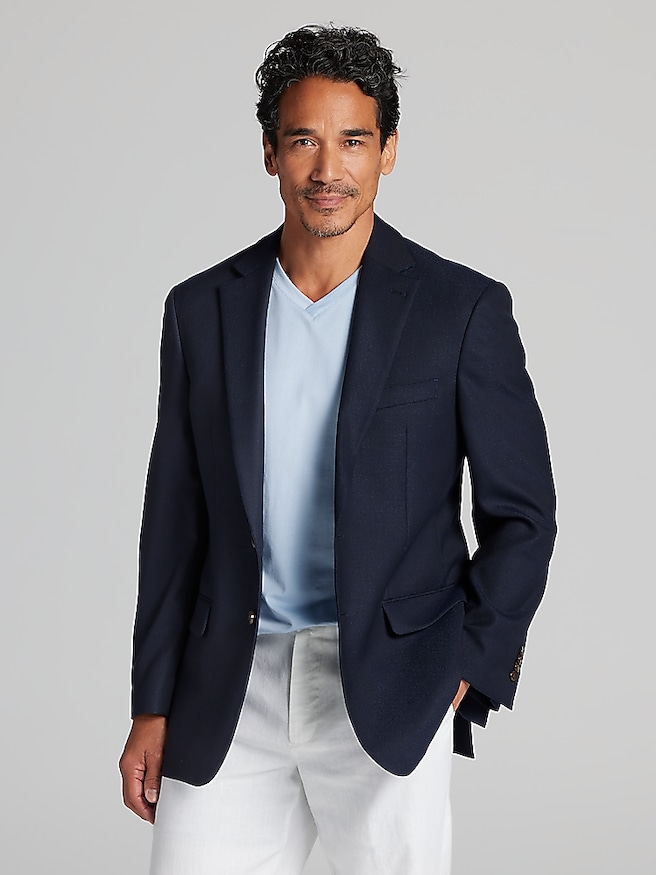
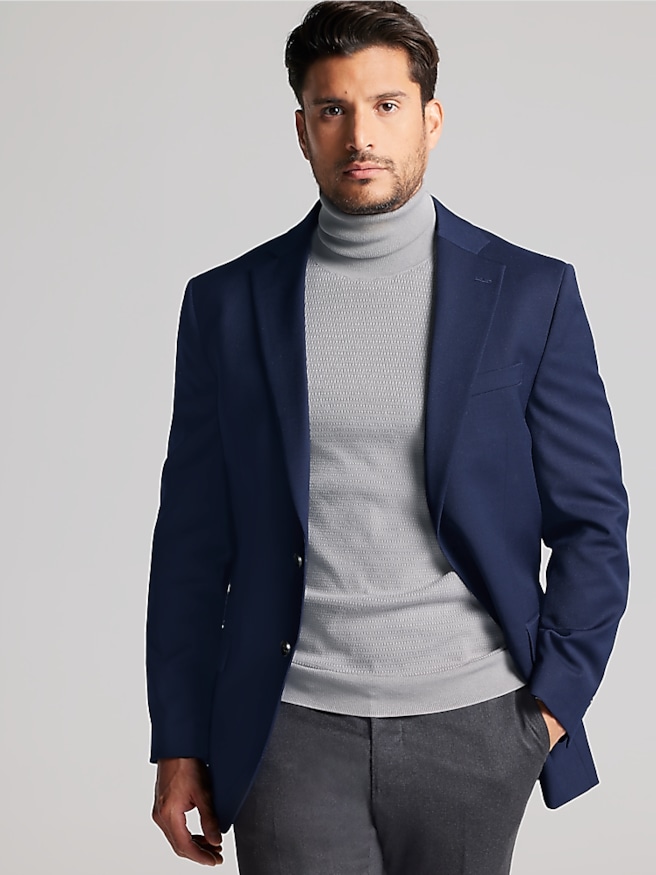
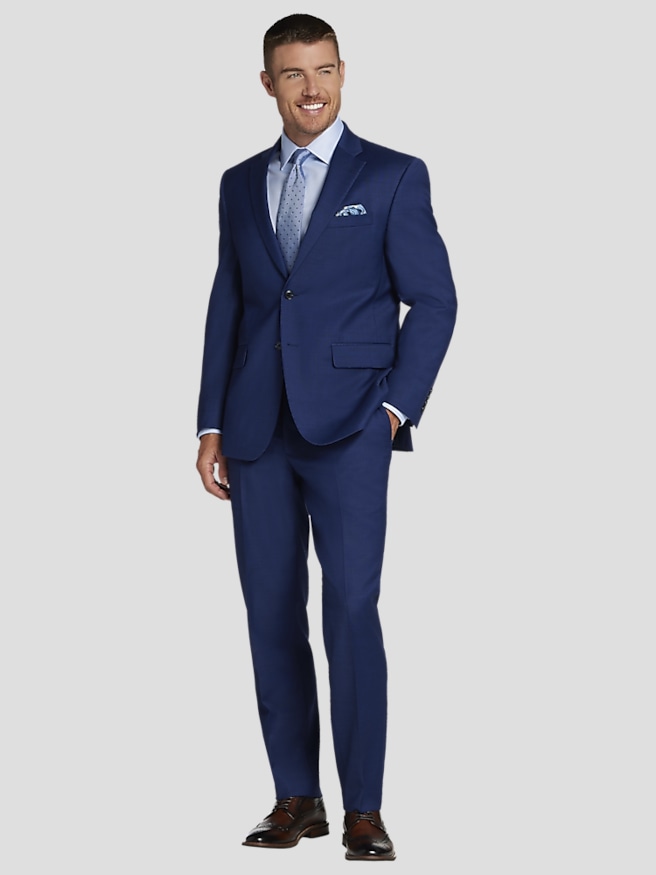
Men’s fall wedding jackets bring texture, structure, and a little extra warmth to celebrations that move between crisp outdoor air and comfortable indoor spaces. Wool, wool blends, flannel, and tweed are well suited to cooler-weather wedding attire, while colors such as navy, charcoal, olive, brown, and burgundy complement the season without looking tied to a single occasion. The right combination depends as much on the invitation and venue as it does on the forecast. A smooth, dark suit jacket worn with matching trousers creates a polished look for a formal ceremony, while a textured sport coat can suit a relaxed gathering in a vineyard, garden, or converted barn when the dress code allows separates. For black-tie celebrations, a tuxedo jacket with the appropriate formal trousers and accessories remains the clearest choice; a dark blazer does not serve the same purpose. Fabric texture helps establish the mood within those boundaries. Fine worsted wool has a clean surface and a graceful drape that works well in a ballroom or place of worship. Flannel has a softly brushed finish that adds visual depth, and tweed brings a more pronounced weave to less formal settings. Corduroy can feel at home at a casual countryside reception, though its distinctive ribs make it less formal than smooth suiting. Velvet offers another direction for evening celebrations, especially when the invitation welcomes expressive formalwear. Fabric weight matters, too: a substantial jacket may feel comfortable during an outdoor ceremony but become warm once dinner and dancing begin. A lighter wool or breathable wool blend can bridge those settings, with an overcoat providing warmth outdoors rather than relying on the tailored jacket alone. For grooms, groomsmen, fathers of the couple, and guests, the goal is a jacket that respects the occasion while feeling comfortable through the full celebration. Subtle herringbone, a restrained check, or a rich solid color can provide seasonal character without competing with the wedding party’s chosen attire.
Fit gives a fall wedding jacket its shape, and it affects everything from photographs to the ease of sitting through dinner. Shoulder seams should generally meet the natural shoulder line, with the jacket lying smoothly across the upper back rather than extending far beyond it or pulling tightly between the arms. When the jacket is buttoned, the front should close comfortably without pronounced creases radiating from the button. A close silhouette can look sharp, but it still needs enough room for a dress shirt, comfortable breathing, and ordinary movement. A more generous cut offers extra space through the chest and waist without needing to look loose or oversized. Jacket length should balance the torso and usually cover the seat, while sleeves should leave a small amount of shirt cuff visible when the arms rest naturally at the sides. These proportions are especially noticeable in wedding photographs, where a sleeve that swallows the hand or a collar that stands away from the shirt can distract from an otherwise polished outfit. Trying the jacket with the intended shirt and trousers makes its overall balance easier to judge. Sitting, reaching forward, and bringing the arms together can reveal tightness that is not obvious while standing still. For a groom greeting guests or a groomsman moving between the ceremony and reception, that practical comfort matters. Stretch fibers may add give, but they cannot make up for a jacket that is too small. Construction also influences the feel: a firmly structured shoulder creates a defined outline, while softer tailoring follows the body more closely and can feel less rigid. Lining affects how easily a jacket slides over a shirt, though warmth and breathability depend on the full combination of fabric, lining, and construction. Notch lapels offer versatility across many suit and sport coat styles, peak lapels create a more assertive profile, and shawl collars are closely associated with eveningwear. Alterations can refine sleeve length and waist shape, but starting with shoulders and a collar that sit correctly provides a stronger foundation.
Color and coordination make these jackets useful beyond a single wedding. Navy and charcoal pair naturally with white or light blue dress shirts, while brown and olive can bring warmth to an outfit built around cream, pale blue, or other restrained shirt colors. Burgundy makes a stronger statement and often looks most balanced with quiet supporting pieces. A textured jacket usually benefits from a simpler shirt and tie, allowing the weave to remain visible without a crowded mix of patterns. For celebrations where separates are appropriate, Men's Fall Wedding Seasonal Blazers offer a related direction for outfits built around coordinating rather than matching trousers. Clear contrast between the jacket and trousers tends to look more intentional than two fabrics that almost match but differ slightly in shade or texture. Footwear should follow the formality of the outfit, with polished dress shoes providing a dependable foundation and more casual choices reserved for invitations that welcome them. A pocket square can add a finishing touch without duplicating the tie exactly, and keeping bulky belongings out of jacket pockets helps preserve the silhouette. That same attention extends to care after the celebration. Follow the garment’s care label, since wool, velvet, blended fabrics, and structured tailoring may require distinct cleaning methods. Airing a jacket after wear and using a suitable clothing brush on compatible fabrics can help remove surface dust between professional cleanings. Prompt attention to spills is important; blotting gently rather than rubbing can limit further damage while appropriate cleaning is arranged. A broad, shaped hanger supports the shoulders, and enough closet space prevents lapels and sleeves from being compressed. For travel, a garment bag helps protect the surface, and unpacking upon arrival gives minor wrinkles time to relax. Avoid direct heat or aggressive pressing, which can flatten texture or leave shine on some fabrics. With sound construction, thoughtful fit, and proper care, a fall wedding jacket can remain part of a dress wardrobe for anniversary dinners, evening celebrations, and other occasions that call for considered tailoring.