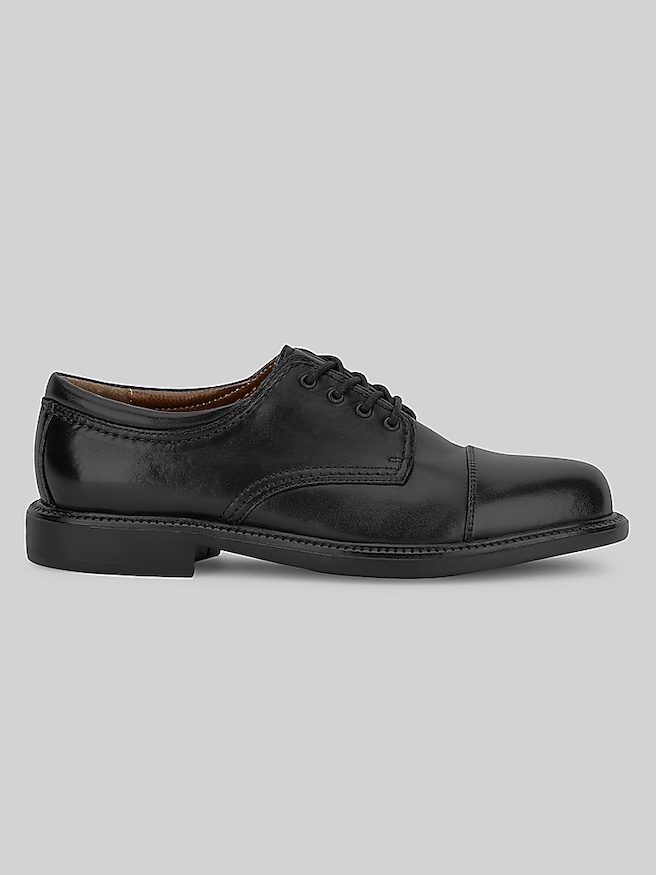
Men’s dress shoes in size 11 wide pair a polished appearance with additional room across the forefoot, making them a practical choice for men whose feet feel crowded in standard-width footwear. The size 11 designation refers to length, while wide describes the shoe’s width; a wider shoe is not simply a longer version of a standard fit. For men’s footwear, D commonly indicates standard width, and EE or 2E often indicates wide, although labels and measurements vary by manufacturer. Shape matters just as much as the marking inside the shoe. Two pairs with the same size designation can feel noticeably distinct because of their toe shape, heel proportions, instep height, and the last used to form them. A rounded or softly squared toe may provide a less tapered outline, but the shape alone does not guarantee extra interior space. A comfortable fit leaves room for the toes to rest naturally without pressure along the little toe or the joint below the big toe. The heel should feel secure without pinching, and the widest part of the foot should sit comfortably within the widest part of the shoe. For someone who spends a workday moving between a desk, conference room, and client appointments, that balance can matter more than a particularly sleek silhouette. Dress socks also influence fit, so the thickness typically worn with a suit or dress pants belongs in the equation. Lengthening the shoe to compensate for insufficient width can introduce heel movement and place the shoe’s flex point ahead of the foot’s natural bend. Size 11 wide dress shoes address width more directly, provided the overall shape suits the wearer. Leather may soften with wear, but a shoe that squeezes or causes discomfort should not depend on substantial stretching to become wearable. Fit checks are most useful while standing and walking, when pressure points, heel movement, and the way the upper bends become easier to notice.
Style gives men’s size 11 wide dress shoes their range, from understated pairs suited to everyday business clothing to dressier silhouettes for weddings and formal gatherings. A smooth black leather oxford creates a clean line beneath charcoal or navy suit trousers, while a brown leather lace-up can complement navy, medium gray, and earth-toned clothing. Oxfords have closed lacing, with the lace-bearing sections attached beneath the front portion of the upper, producing a neat, closely joined appearance. Derby shoes use open lacing, which allows more adjustment across the instep and may suit some higher-volume feet. Neither construction replaces the need for the correct width. Loafers bring a streamlined, slip-on shape to dress pants and tailored separates, though their fit depends especially on a secure heel and comfortable contact across the instep because there are no laces to fine-tune the hold. Cap-toe detailing adds definition without much ornament, while wingtip patterns and decorative perforations create a more textured, less austere look. For black-tie occasions, a simple, highly polished black shoe or an appropriate patent leather style can complement a tuxedo without drawing attention away from its clean lines. Materials affect both appearance and the experience of wearing the shoe. Smooth leather develops creases and character through use, with surface finish and leather quality influencing how it responds to conditioning and polishing. Suede offers a softer, matte texture that works particularly well with less formal tailoring, but requires its own cleaning approach. Patent finishes provide a reflective surface and need care suited to their coating. Inside the shoe, lining materials, cushioning, and the shape beneath the arch all contribute to comfort. Underfoot, leather soles offer a traditional profile, while rubber soles can provide flexibility and traction, depending on their design. A discreet rubber outsole may be especially useful when a day includes walking between buildings or spending several hours on hard floors, without requiring a bulky appearance.
Durability in wide-width dress shoes comes from the relationship between materials, construction, fit, and regular care rather than any single feature. A pair that bends comfortably with the foot and stays secure at the heel is less likely to develop the friction and excessive movement associated with a poor fit. Stitching should appear even, the sole should meet the upper cleanly, and the heel should sit steadily on a flat surface. Some constructions allow soles or heels to be replaced, while others are not intended for that kind of repair; repairability depends on how the shoe is made. For smooth leather, removing surface dust before applying an appropriate conditioner or polish helps maintain a neat finish without grinding debris into the upper. A small amount of a suitable care product is generally more useful than heavy buildup, especially around seams and creases. Suede benefits from a dedicated brush, while patent leather calls for gentle cleaning with products appropriate for its finish rather than ordinary leather polish. Allowing footwear to dry naturally after wear helps protect its shape and materials, and direct heat can be damaging. Cedar shoe trees can help absorb moisture and support the upper between wears, particularly when a pair has spent a long day beneath a desk or an evening on a dance floor. Rotating pairs also gives linings and insoles time to air out. These habits support the appearance expected of shoes worn for presentations, interviews, ceremonies, and other occasions where details count. For a gift recipient, knowing both the usual length and width is more helpful than relying on size 11 alone; preferred toe shape and familiar lacing styles can also make the choice more personal. The broader Size 11 Dress Shoes selection provides another point of comparison for shoppers considering fit and silhouette. For a wide-footed wearer, the strongest foundation remains a comfortable size 11 wide fit, appropriate materials, and a style that works naturally with the clothing and occasions already in his routine.