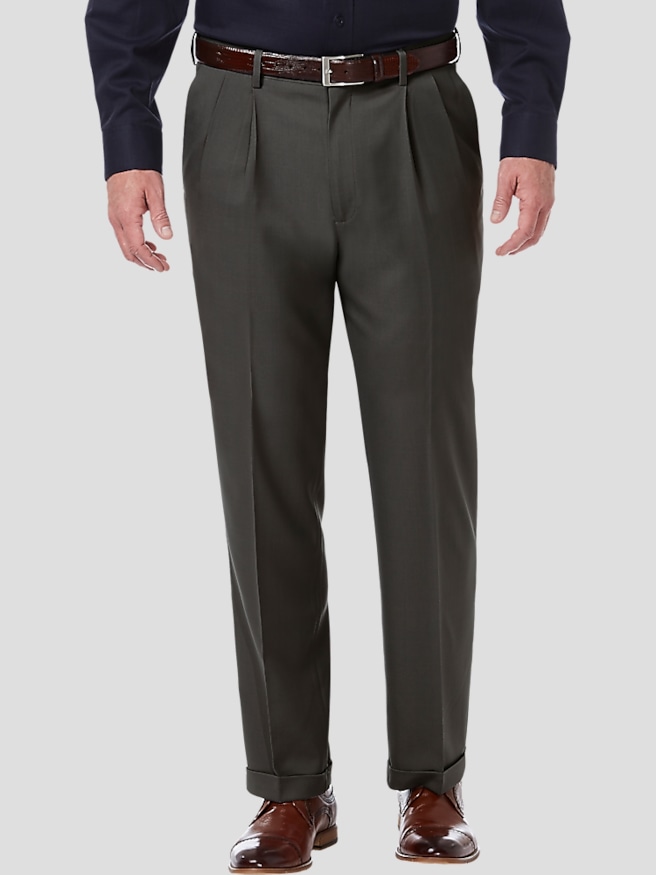
Men’s dress pants with stretch combine the clean lines of tailored trousers with fabric that gives as the body moves. Their appeal is especially clear on days that involve more than standing at a desk: sitting through a meeting, driving across town, climbing stairs, or stepping up to deliver a presentation. A small amount of spandex or elastane blended into a woven fabric can provide flexibility while helping the pants maintain a polished shape. The percentage of stretch fiber matters, but it does not tell the whole story; the weave, fabric weight, and construction also influence how trousers move and recover. Two-way stretch generally allows movement along one axis, while four-way stretch allows movement both lengthwise and crosswise. Neither description alone guarantees a particular level of comfort, so the fabric composition and fit remain important considerations. Wool-blend stretch dress pants can offer a refined drape and subtle surface texture suited to business attire and dressier gatherings. Polyester blends may contribute shape retention and wrinkle resistance, while rayon can lend softness and fluidity. Cotton-rich fabrics often have a more familiar, softly structured feel that works well in offices with a relaxed dress code. Breathability, moisture management, and wrinkle resistance depend on the specific fabric and finish rather than the presence of stretch alone. Stretch is not a substitute for proper tailoring, either. The most convincing dress-pant silhouette still has a smooth front, a balanced line through the seat and thigh, and a hem that falls neatly over the shoe. Fabric should have enough give to make ordinary movement comfortable without looking pulled tight when standing still. For someone moving between a conference room and a client dinner, that balance means trousers can feel easy throughout the day while still looking appropriate beside a crisp shirt, leather belt, and polished shoes. The result is a practical foundation for a wardrobe that needs to look composed without feeling restrictive.
Fit determines how that flexibility translates into everyday wear. Slim-fit stretch dress pants typically sit closer through the thigh and narrow toward the ankle, creating a streamlined profile that pairs naturally with a fitted dress shirt or a trim sport coat. Straight and classic fits generally provide a less tapered line, with additional space that can keep the fabric from clinging when seated. Athletic proportions may offer more room through the seat and thighs while maintaining a narrower lower leg, a useful distinction for someone whose waist measurement does not reflect the space needed through the upper leg. These names vary between designs, so measurements and the actual cut are more informative than the label alone. A comfortable waistband should sit securely without digging in, and front pockets should lie reasonably flat rather than flare outward. Stretch in the fabric and flexibility built into the waistband are separate features; pants may have one, both, or neither at a particular point in their construction. The rise also changes the feel and appearance of trousers. A rise that suits the wearer’s proportions helps the waistband stay in place and gives a tucked shirt a cleaner line. Through the leg, enough room at the knee makes sitting easier, while an appropriate hem length prevents excess fabric from gathering at the shoe. A slight break creates a traditional finish, and little or no break emphasizes a tapered shape. Color and texture broaden the ways stretch dress pants can be worn without changing their essential purpose. Charcoal and navy coordinate easily with white or light blue shirts, while medium gray can provide a softer contrast with a dark jacket. Black trousers create a sharper, more defined look for dressier combinations. The fine diagonal weave associated with Mens Stretch Twill Pants adds understated texture, offering another way to bring flexible woven pants into an everyday rotation. A fine-gauge sweater and loafers can make dress trousers feel relaxed, while a structured jacket and lace-up dress shoes reinforce their tailored character.
Long-term performance comes from more than the initial softness of the fabric. Stretch dress pants need to recover after movement so the knees and seat do not remain visibly extended after a long period of sitting. A well-balanced fabric combines flexibility with enough structure to support the intended silhouette, and neatly finished seams help the trousers withstand repeated wear. Areas such as pocket openings, the seat seam, and the hem receive regular friction, making construction and an appropriate fit important to durability. Overly tight trousers place extra strain on both fabric and stitching, even when the material stretches. Care requirements vary considerably across wool blends, cotton blends, and synthetic fabrics, so the care label is the most reliable starting point. Some stretch dress pants are machine washable, while others require dry cleaning; stretch content does not establish which method is suitable. Where washing is permitted, following the specified water temperature and drying instructions helps protect the fabric, finish, and shape. Excessive heat can damage elastic fibers, and ironing should follow the label’s temperature guidance. Hanging trousers neatly after wear can reduce unnecessary creasing, while allowing a garment to rest between wears gives moisture time to dissipate. For business travel, wrinkle-resistant fabric may help trousers emerge from a bag looking tidier, although folding technique and the length of time packed still matter. These practical qualities make stretch dress pants useful for commuters, professionals who alternate between desk work and standing appointments, and anyone who wants tailored clothing for dinners, ceremonies, or other occasions that call for a polished appearance. They can also make a thoughtful gift for a graduate beginning a professional wardrobe or a partner who regularly wears business attire. Accurate waist and inseam measurements, along with an understanding of the recipient’s preferred fit and care routine, make that choice more personal. Across these uses, the strongest combination is straightforward: fabric with comfortable movement, a cut that suits the wearer, and construction that keeps the trousers looking presentable through repeated wear.