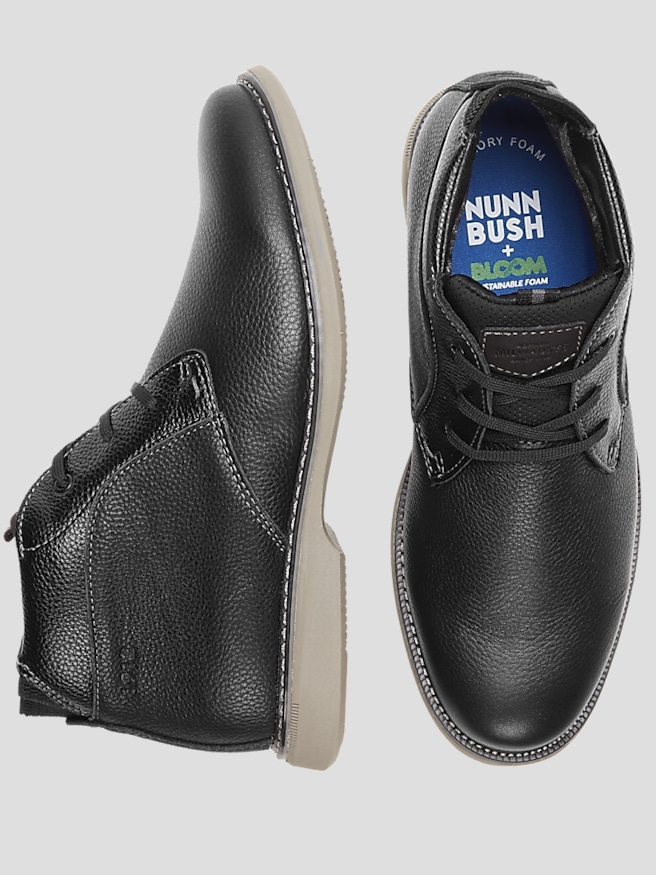
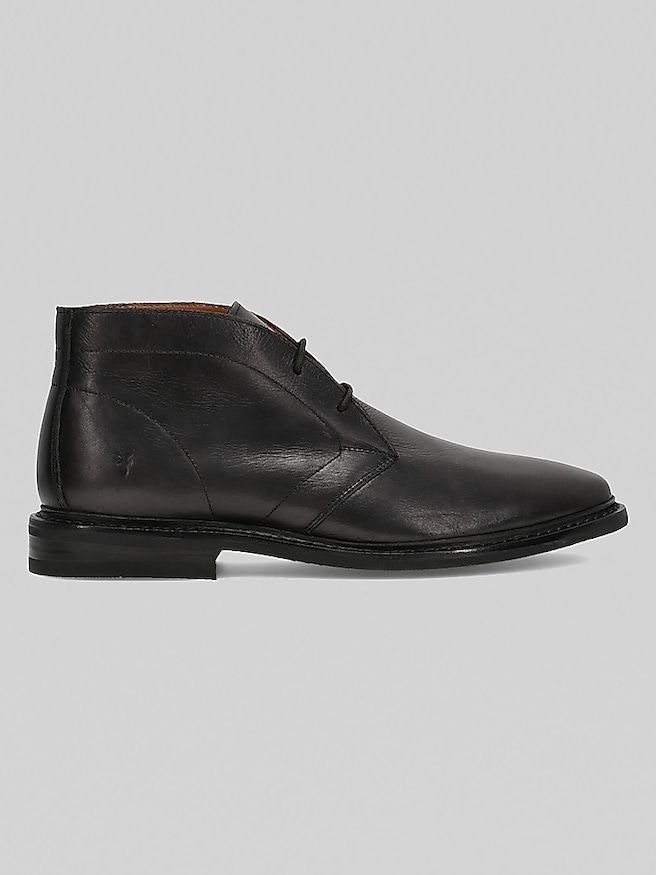
Men's dress chukka boots in black bring a clean, understated finish to outfits that sit between traditional business dress and relaxed tailoring. Their characteristic ankle-height shape and short run of laces give them a distinct profile without the visual weight of a taller boot. In black, that shape becomes especially easy to pair with charcoal trousers, navy tailoring, gray chinos, or dark denim. The details determine how dressy the result looks: a smooth upper, restrained stitching, slim sole, and gently tapered toe tend to complement tailored clothing, while a rounder toe, pronounced welt, or thicker outsole gives the boot a more casual presence. For an office where jackets are optional but presentation still matters, black dress chukkas can work with flat-front trousers, a tucked-in button-down shirt, and a fine-gauge sweater. For dinner or a business-casual gathering, the same footwear can anchor dark jeans and an unstructured blazer. The trouser hem deserves attention because it changes how the entire outfit reads. A slight break, or a hem that just meets the top of the boot, keeps excess fabric from bunching around the ankle and allows the clean lines of the footwear to show. Very narrow trouser openings may catch on the shaft, while an overly generous opening can conceal the shape altogether. Black socks maintain a continuous line beneath black trousers, while charcoal or navy socks can connect the footwear to other shades in the outfit. A black leather belt with a similar level of sheen adds cohesion without requiring every accessory to match perfectly. These boots are most at home where polished everyday clothing is appropriate; a traditional dress shoe is usually the better choice for strict formal dress codes. For someone moving from a desk to a client lunch and then an evening reservation, the appeal is a shoe that feels considered without making the outfit look overworked.
The appeal of Men's Leather Chukka Boots comes partly from the way the material balances structure with flexibility. Smooth leather can take a subtle shine that suits dress trousers, while suede creates a softer, more textured appearance that generally feels less formal. Even within smooth leather, finishes vary: some have a more uniform surface, and others show natural grain and develop visible creases with wear. Those creases are part of leather's character, although fit, construction, and care influence how they develop. A lining can help the interior feel smooth against socks, and the heel counter provides structure where the foot needs to stay secure. Underfoot, a leather sole offers a traditionally dressy appearance, while a low-profile rubber sole can preserve a neat silhouette with a different feel and level of traction. Grip depends on the tread, surface, and condition of the outsole rather than the material alone. For frequent wear, look beyond the upper to the stitching, attachment of the sole, flexibility through the forefoot, and support beneath the heel. Some constructions allow a worn sole to be replaced; others do not, so repairability is worth checking when long-term use matters. Fit should be assessed with the kind of socks normally worn to work or social occasions. The heel should feel held without painful pressure, the widest part of the foot should sit comfortably within the boot, and the toes should have room without the foot sliding forward. A small amount of movement at the heel may occur in a new boot, but persistent slipping or rubbing deserves attention. Walk, turn, and sit before deciding whether the shape works. Chukka laces offer useful adjustment across the instep, though tightening them cannot correct a boot that is too long or too wide. Leather may soften with wear, but a cramped toe box or a pressure point against a joint should not be treated as something that will necessarily disappear.
Regular care helps black dress chukka boots retain the finish that makes them useful with tailored clothing. After wear, remove surface dust with a soft brush or cloth before it has a chance to collect around seams and the edge of the sole. Smooth leather benefits from occasional conditioning with a product appropriate for its finish, followed by a light application of suitable cream or polish when the color needs refreshing. More product is not always better; thin applications and gentle buffing usually produce a more controlled result than heavy layers. Test any treatment in an inconspicuous area, especially on coated or unusually finished leather, and follow the footwear's care directions. Suede requires a different approach, using a suede brush and compatible cleaning products rather than conventional shoe polish. Black suede can lose its crisp appearance when dust flattens the nap, so brushing can make a noticeable difference without adding shine. If boots become damp, let them dry naturally away from direct heat, which can stiffen leather or affect adhesives. Shoe trees help maintain the shape between wears, and giving footwear time to dry inside supports comfort as well as longevity. Check laces, heel wear, and the outsole periodically; replacing a tired lace or addressing uneven heel wear early can keep an otherwise sound pair looking presentable. For travel, protect the uppers from buckles and other hard objects in a suitcase, and brush them before putting them away. As a gift, black dress chukkas can suit someone starting a new job, building a business-casual wardrobe, or replacing footwear that no longer feels appropriate for everyday plans. The most useful choice reflects the recipient's routine: time spent walking, preferred trouser shapes, workplace expectations, and any established fit needs matter more than appearance alone. Familiar sizing is a starting point, but width and the shape of the boot also deserve consideration. A comfortable fit, an appropriate sole, and a finish that works with existing clothing are what turn a sharp-looking pair into footwear that gets worn often.