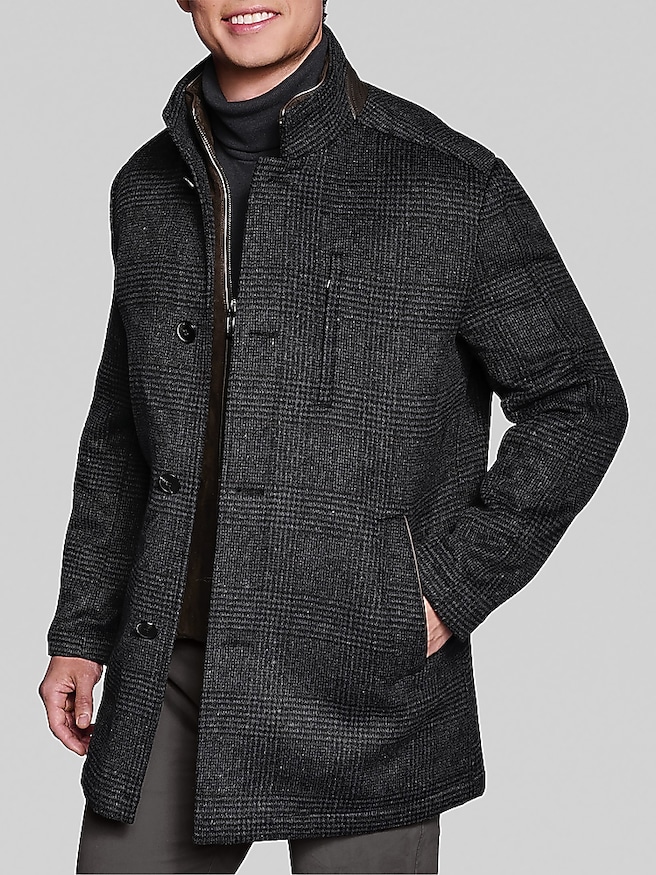
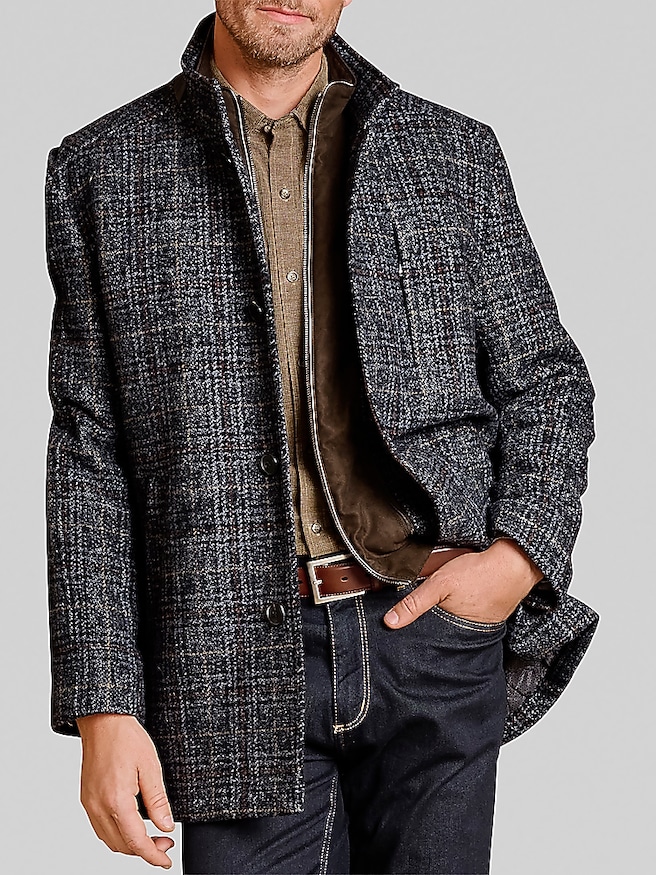
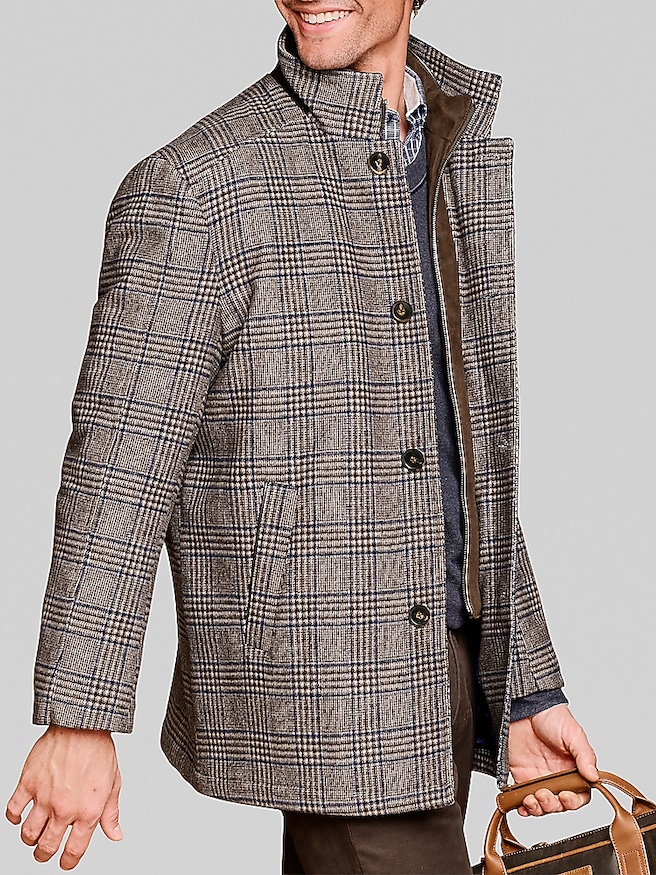
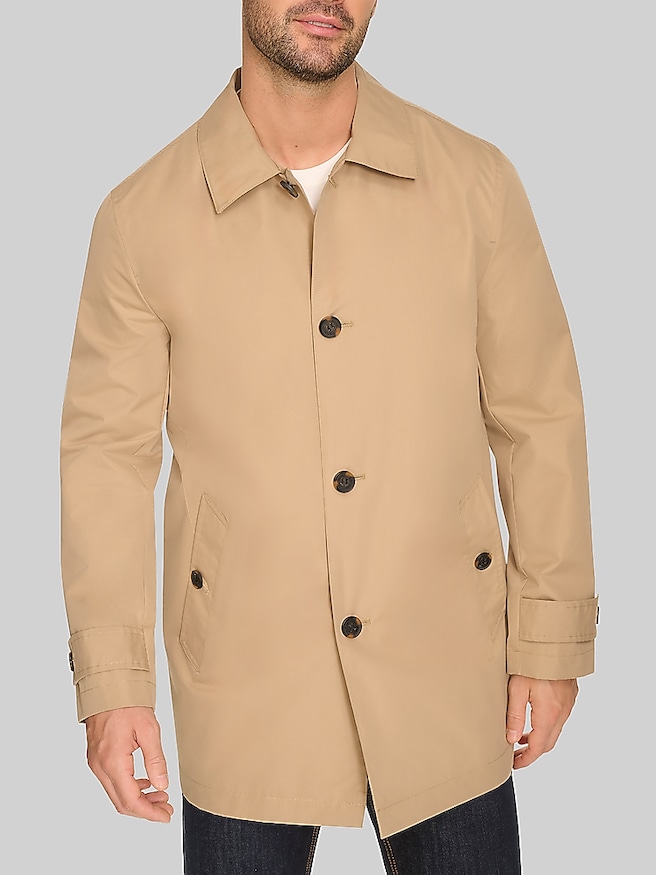
Men’s double-breasted winter coats combine an overlapping front with two vertical rows of buttons, creating a structured silhouette with more coverage across the chest than a typical single-breasted design. Their appeal is both practical and visual: the layered closure helps shield the torso from cold air, while broad lapels and a defined shoulder line give everyday clothing a more polished finish. The category includes long overcoats, shorter peacoats, and textured styles, with each shape suited to a particular routine. An overcoat that reaches toward the knee provides coverage over a suit jacket and adds warmth through the upper legs, making it a natural companion for a walk from the train station to the office or an evening outside a theater. A peacoat generally ends around the hip or upper thigh, pairing easily with chinos, corduroys, and denim while allowing comfortable movement on stairs and sidewalks. Rooted in naval outerwear, the peacoat brings a sturdy, compact character to the double-breasted shape; a longer tailored coat creates a cleaner line over business and occasion clothing. Not every double-breasted winter coat offers the same insulation, however. Fabric composition, weave density, lining, length, and room for layers all influence how warm a coat feels. A substantial wool shell can be comfortable in crisp, dry conditions, while prolonged exposure to wet snow or biting wind may call for weather-resistant outerwear designed for those conditions. For everyday use during the cooler months, this coat style works especially well for someone moving between outdoor sidewalks and heated buildings rather than spending hours standing outside. Navy, charcoal, black, and camel offer familiar foundations for a cold-weather wardrobe, while subtle herringbone or a brushed surface adds depth without relying on bold color. The result can feel formal over a suit or relaxed over a ribbed sweater, depending on the coat’s length, structure, and finishing details.
Material has a strong influence on the weight, texture, and drape of men’s double-breasted winter coats. Wool provides natural insulation and can absorb some moisture vapor without immediately feeling damp, although a wool coat should not be treated as waterproof. A tightly woven wool fabric often feels firm and smooth, holding the lapels and overlapping front in a crisp shape. A softer brushed finish has a gentler appearance and may show surface wear more readily at areas of repeated friction, such as under a shoulder strap. Wool blends combine wool with other fibers to adjust qualities such as strength, softness, weight, or ease of care; the exact fiber percentages matter more than the word “blend” alone. For a closer look at that fabric category, men’s wool blend winter coats share the same emphasis on cold-weather layering across a broader range of silhouettes. Cashmere and wool-cashmere fabrics can add softness and a fluid drape, though they benefit from thoughtful handling and protection from abrasion. Faux-shearling styles offer a more textured appearance, with warmth influenced by the pile, backing, and overall construction rather than the surface look alone. Inside the coat, a smooth lining helps sleeves slide over a blazer or sweater without catching. An insulated lining may increase warmth but also changes the amount of space needed underneath. Pockets deep enough for gloved hands, securely attached buttons, neatly finished buttonholes, and even seams are useful construction details for frequent wear. The double-breasted closure deserves particular attention because the overlapping panels should lie flat when fastened, without twisting or pulling. Some designs include an interior fastening button that helps support the underlapping panel and maintain the front’s shape. A back vent can make a longer coat easier to walk in, while a collar that sits comfortably against the neck helps the coat feel settled on the shoulders. Together, these details affect how the garment performs through ordinary days of commuting, carrying a bag, and moving between appointments.
Fit is especially important in a double-breasted winter coat because the broad front looks best when it follows the body without clinging to it. There should be enough room for the clothing worn most often underneath: a coat intended for a suit needs space for a jacket’s shoulders and sleeves, while one worn mainly over knitwear may suit a less generous cut. With the coat buttoned, the lapels should rest smoothly and the chest should remain free of pronounced diagonal pulling. Reaching forward to hold a steering wheel or lifting an arm to adjust a scarf should not create sharp restriction across the back. Shoulder construction varies, but a tailored shoulder should look intentional rather than collapsing beyond the upper arm. Sleeves should cover the wrists comfortably, including when the arms move, without swallowing the hands. For wear over tailoring, the coat should cover the jacket hem; shorter peacoats often work more naturally with sweaters and casual layers. Length also affects daily comfort. A longer hem offers extra coverage on an exposed platform, while a shorter silhouette can feel easier during frequent trips in and out of a car. Scarves, leather gloves, and sturdy boots complement either shape without competing with the coat’s distinctive button arrangement. As a gift, a double-breasted coat can be a thoughtful choice for someone establishing a professional wardrobe, attending dressier gatherings, or replacing a well-worn cold-weather staple, provided their measurements and layering preferences are known. Ongoing care helps preserve both appearance and structure. The care label should determine cleaning methods, since the shell, lining, and internal shaping materials may have separate needs. A soft garment brush can lift loose dust from suitable wool fabrics, and a broad, supportive hanger helps maintain the shoulders. After exposure to light rain or snow, allow the coat to air-dry away from direct heat before putting it away. Emptying the pockets, addressing loose buttons promptly, and storing the coat clean in a breathable garment bag can reduce strain and help it remain a dependable part of a winter wardrobe.