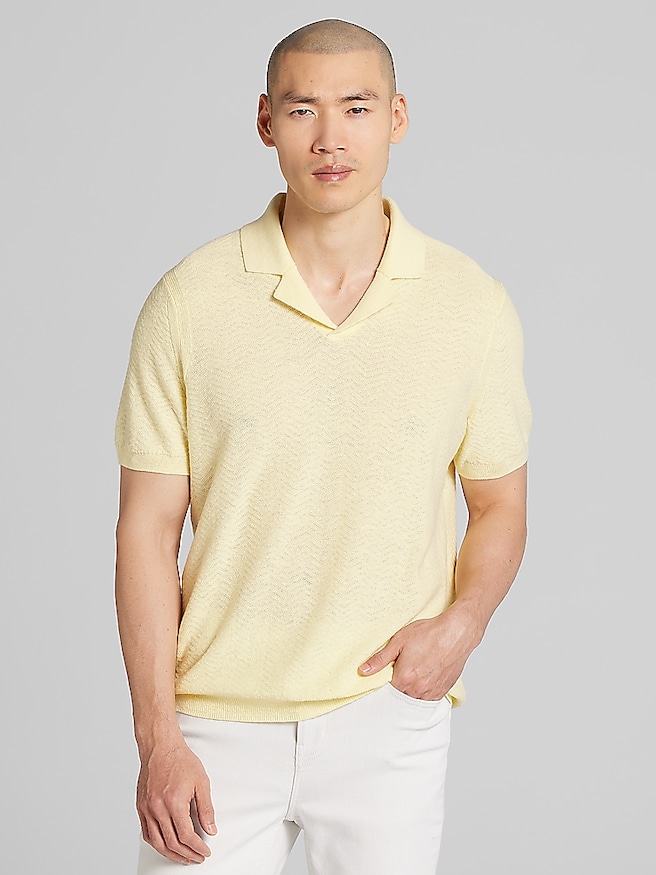
Men's designer sweaters bring attention to the details that make knitwear feel distinctive: the character of the yarn, the balance of the silhouette, the texture of the stitch, and the way a neckline frames a shirt or sits on its own. The category includes everything from understated pullovers with smooth surfaces to richly textured knits and cardigans with carefully considered closures. “Designer” describes a design-led approach rather than a particular material, so fabric composition and construction remain important when comparing styles. Merino wool typically has a finer feel than coarser wool yarns and offers natural resilience, making it useful for sweaters that need to look composed through a full day of wear. Cashmere is valued for its fine fibers, softness, and light feel, although its surface benefits from gentle handling. Cotton provides a familiar feel against the skin and can produce either a compact, substantial knit or a lighter fabric with an easy drape. Blended yarns combine different characteristics; depending on their composition, they may contribute softness, elasticity, shape retention, or easier care. The stitch changes the result just as much as the fiber. A fine-gauge knit creates a relatively smooth profile beneath a jacket, while a pronounced rib or cable pattern adds depth and visual weight. Gauge refers to the density of the knitting, not a universal quality ranking: a finer knit is not automatically better than a chunkier one. Clean seams, even stitching, neatly finished edges, and ribbing that recovers after gentle stretching are useful details to examine. Designer knitwear earns its place in a wardrobe when those details support the way it will actually be worn, whether that means a polished layer for the office, a relaxed piece for dinner, or an expressive texture that makes otherwise simple clothing feel more personal. Color also affects that versatility, with understated shades emphasizing texture and stronger hues giving the sweater a more noticeable role in an outfit.
Fit determines whether a designer sweater looks intentional, regardless of how understated or distinctive its design may be. A traditional set-in shoulder usually looks cleanest when its seam rests close to the natural shoulder, while a dropped shoulder creates a deliberately relaxed shape. Neither approach is inherently more refined; the important distinction is whether the proportions look balanced together. Through the chest and midsection, the knit should have enough room to move without pulling across the body or collecting in heavy folds. A close fit is different from a tight one, especially when a shirt is worn underneath. Visible button outlines, stretched stitches, or a hem that repeatedly rides upward can signal that more room is needed. Sleeve length deserves equal attention: cuffs should finish comfortably around the wrist rather than covering much of the hand, unless the design intentionally calls for extra length. At the waist, a ribbed hem can create a slight bloused effect, while a straight hem generally falls more freely. These differences influence how a sweater works with tailored trousers, chinos, or denim. A streamlined crewneck over a smooth undershirt gives trousers and clean footwear a relaxed but considered finish. A V-neck leaves space for a shirt collar and, when appropriate, a tie without crowding the neckline. Cardigans allow the front to remain open, making the shirt beneath part of the overall look; buttoned versions can provide a more defined outline without the structure of a jacket. Higher necklines create a stronger visual frame around the face and often work best with otherwise simple layers. When wearing knitwear under tailoring, a finer fabric and restrained sleeve volume help prevent bunching at the upper arm and underarm. The jacket should still close comfortably rather than compressing the sweater. For related knitwear options, explore Modern Men's Sweaters. Across these silhouettes, the strongest outfits tend to give one detail room to stand out: a textured stitch, a distinctive neckline, or a well-chosen color rather than several competing elements.
Thoughtful care helps preserve the qualities that make designer knitwear appealing in the first place. Always follow the garment's care label, since fiber content alone does not determine whether a sweater can be machine washed, hand washed, or professionally cleaned. Trims, dyes, blended yarns, and construction can change the appropriate method. For washable knits, the specified water temperature and cycle matter, and a detergent suitable for the fabric can help avoid unnecessary wear. Do not wring a delicate sweater to remove water; when the label permits washing, gentle pressing and reshaping are generally kinder to the knit. Drying flat, when directed, helps support the garment's weight and maintain its proportions. Hanging a damp sweater can stretch the shoulders or lengthen the body, and even dry knitwear often keeps its shape better folded on a shelf than suspended from a hanger. Pilling can occur where fibers rub together, particularly along the sides, beneath the arms, or where a bag strap rests. It does not automatically indicate poor quality, but removing pills carefully with a tool appropriate for the fabric can keep the surface looking neater. Avoid pulling them off by hand, which can draw out additional fibers. Allowing a sweater to rest between wears and addressing small snags promptly can also help extend its useful life. For travel, folding knitwear with minimal pressure on prominent seams or raised textures helps it arrive looking presentable, while keeping rough fasteners away from delicate surfaces reduces the chance of catching a thread. These practical considerations also matter when choosing a sweater as a gift. A recipient who wears tailored clothing frequently may appreciate a smooth, understated knit that layers easily, while someone drawn to casual dressing may prefer a relaxed silhouette or more visible texture. Familiar colors, a neckline that matches existing habits, and a manageable care routine often make the gift more useful than an unfamiliar statement design. The lasting appeal of a designer sweater comes from that combination of character and everyday purpose: distinctive enough to feel considered, comfortable enough to reach for often, and well suited to the person wearing it.