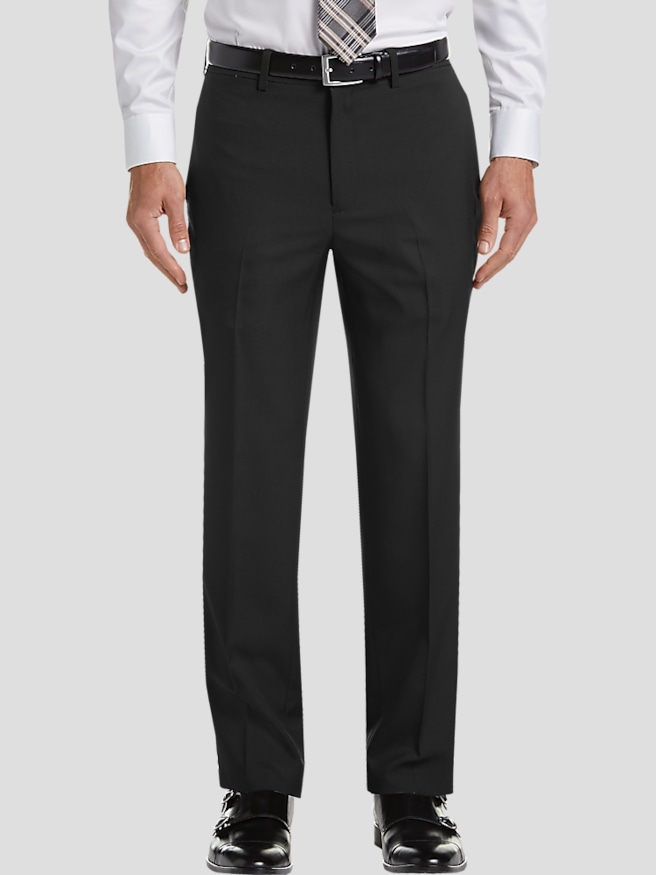
Fashionable men's trousers combine a considered silhouette, comfortable movement, and fabric that suits the occasion. Their character comes from the relationship between the waist, rise, leg shape, and hem—not simply from how narrow or loose they look. Slim-fit trousers follow the leg closely without needing to grip the thigh or calf, creating a clean outline beneath an untucked knit or a tailored jacket. Straight-leg trousers maintain a more consistent line from the knee downward, making them easy to pair with both substantial shoes and sleeker footwear. Relaxed and wide-leg cuts offer additional room and a more pronounced drape, particularly when the fabric has enough body to hang smoothly. Pleated fronts can introduce extra ease through the upper leg while adding depth to the silhouette; flat fronts provide a quieter, uninterrupted appearance. Neither detail determines how formal a pair will look on its own. Fabric, finishing, and proportions all contribute. A higher rise places the waistband farther up the torso and can help a tucked shirt stay neatly contained, while a lower rise creates a different balance between the shirt and trousers. The best-looking fit also works when the wearer sits at a desk, climbs stairs, or reaches for something overhead. A waistband that stays comfortably in place, pockets that lie reasonably flat, and fabric that falls without persistent pulling are useful signs of balanced proportions. Hem length finishes that picture. A slight break creates a small fold where the trouser leg meets the shoe, while a no-break hem ends with a crisper line. Wider legs generally need enough length to maintain their drape without gathering underfoot. Cuffs add visible weight and a traditional tailored detail, while plain hems keep the finish simple. These distinctions give fashionable trousers their range, from sharply defined dress silhouettes to roomier shapes with a relaxed, contemporary feel. Small adjustments to length or waist can also make a familiar cut look more intentional without changing its essential character.
Material influences how trousers feel throughout the day and how they hold their shape after repeated wear. Wool is valued for its drape, breathability, and natural resilience, with smooth worsted fabrics offering a refined surface and more textured weaves adding visual depth. Wool blends can combine those qualities with other fibers, although performance depends on the full fabric composition and construction. Cotton twill has a recognizable diagonal weave and a more grounded, casual character, making it a natural choice for chinos and trousers that move between office settings and everyday plans. Linen brings visible texture and a naturally relaxed finish; some creasing is part of its character rather than a flaw to eliminate. Blended fabrics may soften that effect or change the way the cloth hangs. Polyester and nylon can contribute strength or wrinkle resistance, while a small amount of elastane can add stretch for sitting, walking, and bending. Stretch is useful, but it is not a substitute for sufficient room through the seat and thighs. Fabric weight matters as well: cloth with more substance often holds a defined line, while lighter cloth can move more fluidly and reveal more of the shape beneath it. Construction supports durability alongside fiber choice. Secure stitching, neatly finished seams, reinforced stress points, and a smooth-working closure all contribute to trousers that tolerate regular use. Pocket linings deserve attention, especially for anyone who carries keys or a phone every day. Overfilled pockets can distort even well-cut trousers and place extra strain on the surrounding fabric. Care requirements vary, so the garment label should determine whether washing, professional cleaning, ironing, or steaming is appropriate. Excessive heat can affect certain fibers and stretch components, and repeated unnecessary cleaning can add wear. Hanging trousers neatly after use, allowing them to air out, and addressing small marks promptly according to care instructions can help preserve their appearance. Pressing methods should also suit the cloth, particularly when maintaining a crease or avoiding shine on a smooth finish.
The lasting appeal of Men's Trousers is their ability to serve distinct parts of everyday life without requiring an entirely separate wardrobe for each one. For an office with a business-casual dress standard, straight or gently tapered trousers can look composed with a button-down shirt and leather loafers. A fine-gauge knit offers another option when a jacket would feel unnecessary. For presentations, interviews, and dinners with a more polished dress code, a defined crease, smooth fabric, and carefully balanced length bring structure to the outfit. Dress trousers can also work for wedding guests and other celebrations when the invitation permits separates; occasions that specify a suit or tuxedo call for the corresponding attire rather than an approximate substitute. Outside formal settings, pleated or relaxed trousers can sit comfortably alongside a simple T-shirt, an overshirt, and clean, understated sneakers. The contrast works best when each piece looks deliberate rather than when the trousers appear left over from another outfit. Color makes these combinations easier to repeat. Navy, charcoal, black, and medium gray provide versatile foundations, while tan, brown, and olive introduce variety without requiring bold patterns. Subtle checks or textured weaves can add interest when the rest of the clothing stays relatively quiet. Footwear changes the overall impression, too: polished lace-ups reinforce a tailored line, loafers soften it, and sneakers bring a more casual finish. The hem should accommodate the shoes most likely to be worn, since changing from a slim loafer to a thicker sole can alter how the trouser leg falls. For someone starting a new role, refreshing everyday office clothing, or developing a more personal approach to dressing, the most useful choices reflect actual routines rather than a single photograph. Trousers can also make a thoughtful gift when the recipient's waist measurement, preferred inseam, and favored fit are known. Familiar proportions and manageable care requirements often matter more than an unfamiliar silhouette. Consistent comfort, practical upkeep, and clear styling possibilities give fashionable trousers a purpose beyond their first wear.