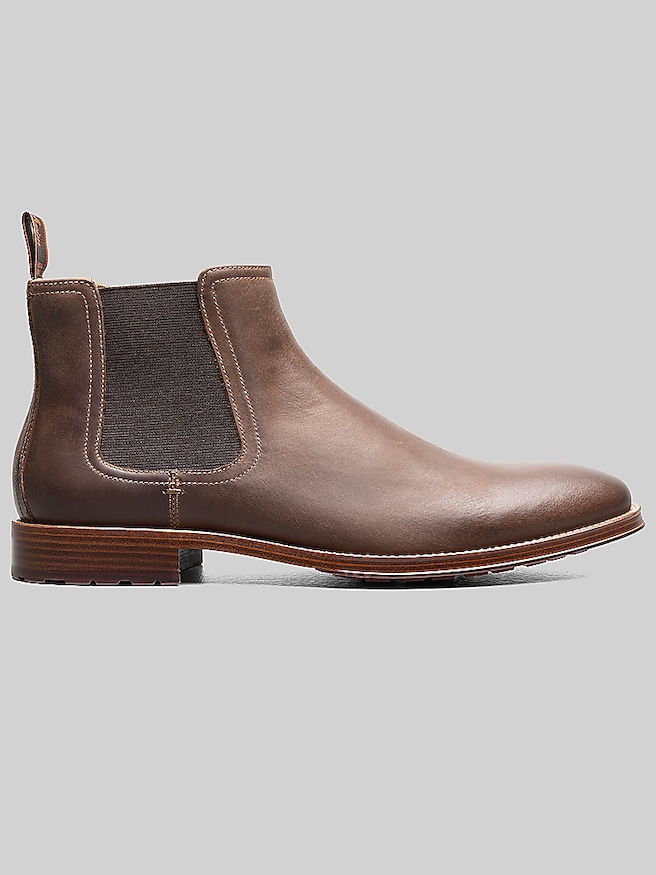
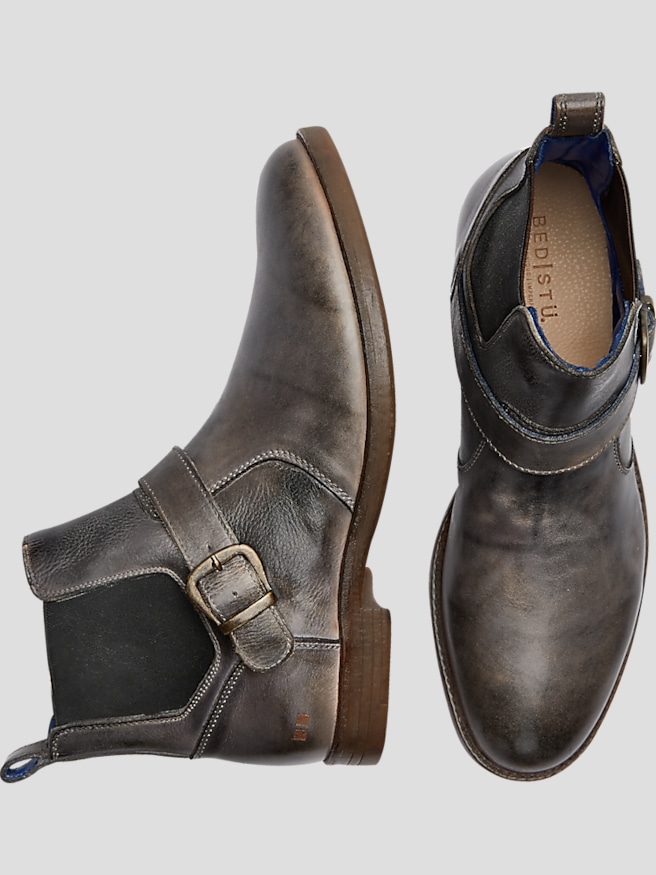
Men’s Chelsea boots for casual wear are laceless ankle boots with elastic side panels that stretch as the foot slips in and then sit close around the ankle. The clean shape makes them a natural match for jeans and chinos: they look more put together than a pair of sneakers without making an everyday outfit feel dressed up. Suede and oiled leather are especially at home with casual clothes. The soft nap of tan or brown suede adds texture next to dark denim, while the muted finish of oiled leather works well with faded jeans, an overshirt, or a ribbed sweater. Smooth leather makes for a cleaner line, particularly in dark brown or black, and can look just as relaxed with straight-leg jeans and a plain tee. The toe and sole often set the tone as much as the upper does. A rounded toe and a visibly textured rubber sole balance the weight of sturdy denim. A slightly tapered toe and a lower-profile sole sit neatly under slim-straight chinos without looking like dress shoes. The way the pants meet the boots matters, too. A hem that rests lightly on the shaft keeps the line from knee to toe uninterrupted, while a small cuff can show a bit of suede or the edge of the elastic panel. A narrow hem that catches on the shaft tends to bunch, so pants with a little room at the opening often hang better. That balance is what makes the shape useful for outfits that need to work in several settings, from errands in jeans and a sweatshirt to dinner in chinos and a knit polo. For outfits built around pressed chinos or a sport coat, Mens Business Casual Chelsea Boots offer a more polished take on the same slip-on silhouette.
A casual Chelsea boot should be easy to pull on but secure enough to walk in without gripping with the toes. Since there are no laces to adjust, the fit across the instep, or the top of the foot, does much of the work. The upper should hold the foot comfortably there without pressing down, and the forefoot should have room to flex when the heel lifts. A small amount of heel movement can happen in a new pair, especially before the sole starts to flex, but a heel that slides with every step is a sign to reconsider the fit. Toe shape matters as much for comfort as it does for appearance: a tapered boot can have plenty of length and still feel tight across the little toe. Leather may soften with wear, but it won’t add meaningful length or make up for a shape that crowds the toes. Trying boots with the socks they’ll usually be worn with gives a better sense of the fit, particularly for anyone who switches between thin cotton socks and thicker cushioned pairs. It’s worth walking far enough to notice whether the boot bends where the foot bends or the top edge rubs the ankle. A boot that feels fine when standing still can feel quite firm by the end of a long walk. For days spent crossing parking lots, sidewalks, and hard indoor floors, a flexible rubber sole with some tread can be practical. A thicker lug sole gives the boot a sturdier look and may feel heavier underfoot, while a flatter rubber sole keeps the profile trim without sacrificing the casual character. Look beyond the tread when considering durability: the stitching around the elastic panels, the firmness of the heel, and the way the sole joins the upper are all worth noticing. Those details matter on a boot that gets pulled on and off often and spends plenty of time on pavement.
The finish determines how much upkeep a pair needs and how it will look after regular wear. On smooth leather, a soft cloth can clear away surface dust, and a compatible conditioner can help keep the upper supple. Oiled leather often shows light scuffs as part of its character; some marks can be softened by buffing gently with a clean cloth. Any treatment should suit the finish, since a product that works on smooth leather can darken oiled leather or change its sheen. Suede needs a lighter touch. A suede brush can lift surface dirt once it’s dry and restore the nap where a pant hem has flattened it. Ordinary leather polish can mat suede and leave an uneven patch, so it’s best kept away from textured uppers. Whatever the material, letting the boots air out between wears and storing them upright helps them hold their shape. A shoehorn can also keep the back of the boot from folding under the heel, especially on a pair that fits snugly around the opening. With ordinary use, creases at the flex point and some wear at the heel are to be expected. A well-made upper can still have plenty of life left when the tread starts to wear down, though whether a sole can be replaced depends on how the boot is built. For a gift, the best clues are the recipient’s usual shoes and the pants they reach for most. Someone who lives in dark jeans and soft knits might get more wear from a brown suede pair than from a sharply tapered black boot, while someone who favors black denim and plain tees might prefer smooth leather with a simple sole. Because the elastic opening and instep can feel snug even in a familiar size, knowing how the recipient’s other slip-on shoes fit is often more useful than knowing the number on the box alone.