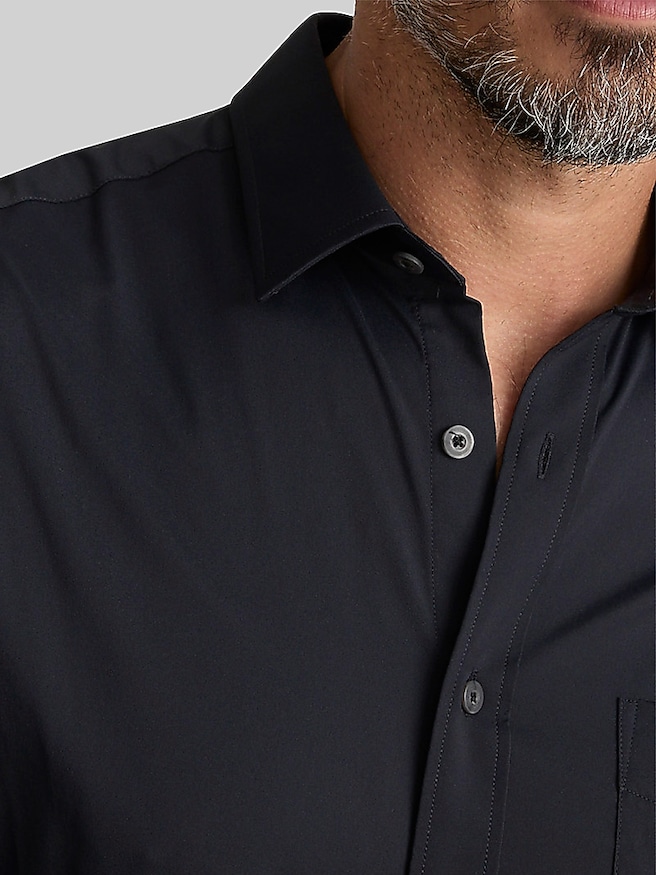
Men’s chambray is best known for the blue button-front shirt that looks a little like denim but typically feels lighter and more pliable. The resemblance comes from the yarns. Traditional blue chambray pairs dyed lengthwise yarns with white crosswise yarns, giving the surface a finely mottled look rather than a solid block of color. What sets it apart from denim is the weave: Chambray uses a plain weave, with yarns crossing over and under one at a time, while denim typically uses a twill weave that leaves visible diagonal ribs. On a classic chambray, the two sides of the fabric look much alike. Turn up a cuff and the underside usually shows much the same mix of light and dark, rather than the pale reverse associated with many blue denims. That texture is easy to miss at a distance but gives a simple outfit some depth up close. A pale blue chambray can read almost like a solid dress shirt from across the room, while a deeper blue with more visible flecks can bring out the fabric’s workwear character. Blue is traditional, but it isn’t what makes a fabric chambray: The same weave can pair other dyed colors with pale yarns. Cotton is common and often makes for a soft, breathable cloth, though the fiber content and weight vary. A tightly woven cotton chambray can have enough body to hold a clean collar line, while a softer weave can fall more loosely through the body. A linen blend can add a slightly uneven texture, and a blend with stretch may offer more give across the back and shoulders. Texture and drape matter more than shade when choosing between a shirt meant to sit neatly under a jacket and one meant to hang open over a T-shirt.
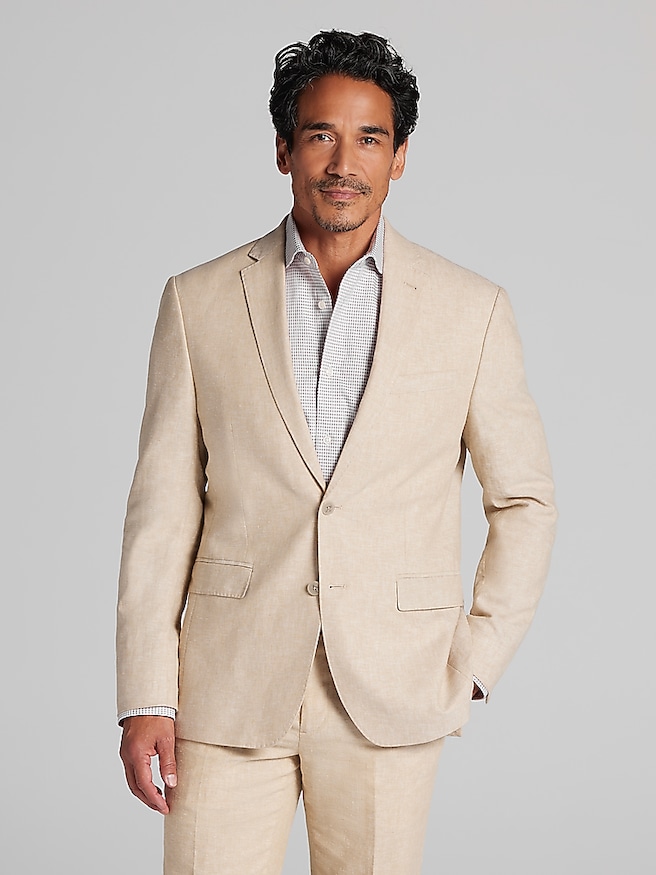
The chambray weave doesn’t dictate the cut, so shirts made from the same type of fabric can fit and look quite distinct. A traditionally cut shirt usually leaves more room through the chest and waist, while a trim cut keeps excess fabric from gathering at the waistband when tucked in. The shoulder seams should sit close to the edge of the shoulders, with enough room through the upper back to reach forward without pulling at the buttons. For a shirt worn mostly untucked, a shorter hem keeps the proportions tidy; longer, curved tails generally stay put better under a belt. Collar and pocket details also set the tone. A collar with buttons at the points and a simple chest pocket gives chambray an easy everyday look, while a clean front with a structured collar sits neatly under a blazer. At an office where chinos are the norm, a tucked blue chambray with charcoal trousers and loafers looks put together without feeling quite as formal as a crisp white dress shirt. For dinner or a laid-back gathering, a pale chambray worn open over a white tee looks deliberate with black jeans or dark indigo denim. The contrast in shade makes it easier to see where one fabric ends and the other begins. For an outfit built around tailoring rather than a single textured layer, Chambray Suits carry that same subtle color variation through a matching jacket and trousers. Chambray used in tailoring can have more body than shirting, and the cut and construction of the jacket help it hold its shape. The fabric’s matte surface pairs well with similarly understated pieces, such as a smooth solid shirt and suede shoes, when the occasion calls for a suit but leaves room for a less traditional finish.
Weight and finish have as much to do with how chambray holds up as the weave itself. A lightweight cloth is often comfortable straight away and folds easily at the cuff, while a denser fabric with substantial seams may fare better under frequent wear, especially where it rubs against a belt or bag strap. Darker dyed yarns can soften in color at the elbows, cuffs, and collar over time. That gradual change can suit a casual shirt, but it may be less welcome on a piece intended to keep a sharp, even finish. Care depends on the whole garment, not just the word chambray on the label. For machine-washable cotton shirts, washing inside out with like colors on a gentle cycle can help limit surface wear and color transfer. Heat can shrink some cotton fabrics, so follow the drying directions rather than assuming every shirt can go into the dryer on high. If the label permits hang drying, smoothing the placket, cuffs, and hem while the shirt is damp can keep those areas from drying in stiff folds. A pressed collar and placket go a long way toward making chambray look neat with tailored trousers; for an untucked shirt, a few soft creases fit the character of the cloth. A tailored chambray jacket or trouser may need entirely separate care because linings, interfacing, and other structural details can respond poorly to washing even when the outer cloth is cotton. As a gift, a chambray shirt makes sense for someone who already reaches for jeans, chinos, or easy layers and would get use out of a button-front that works with all three. A familiar collar shape, sleeve length, and cut are better clues than color alone. Someone who wears shirts tucked most days may appreciate a longer hem, while someone who wears an open shirt over a tee is more likely to use a roomier cut that falls easily through the shoulders.